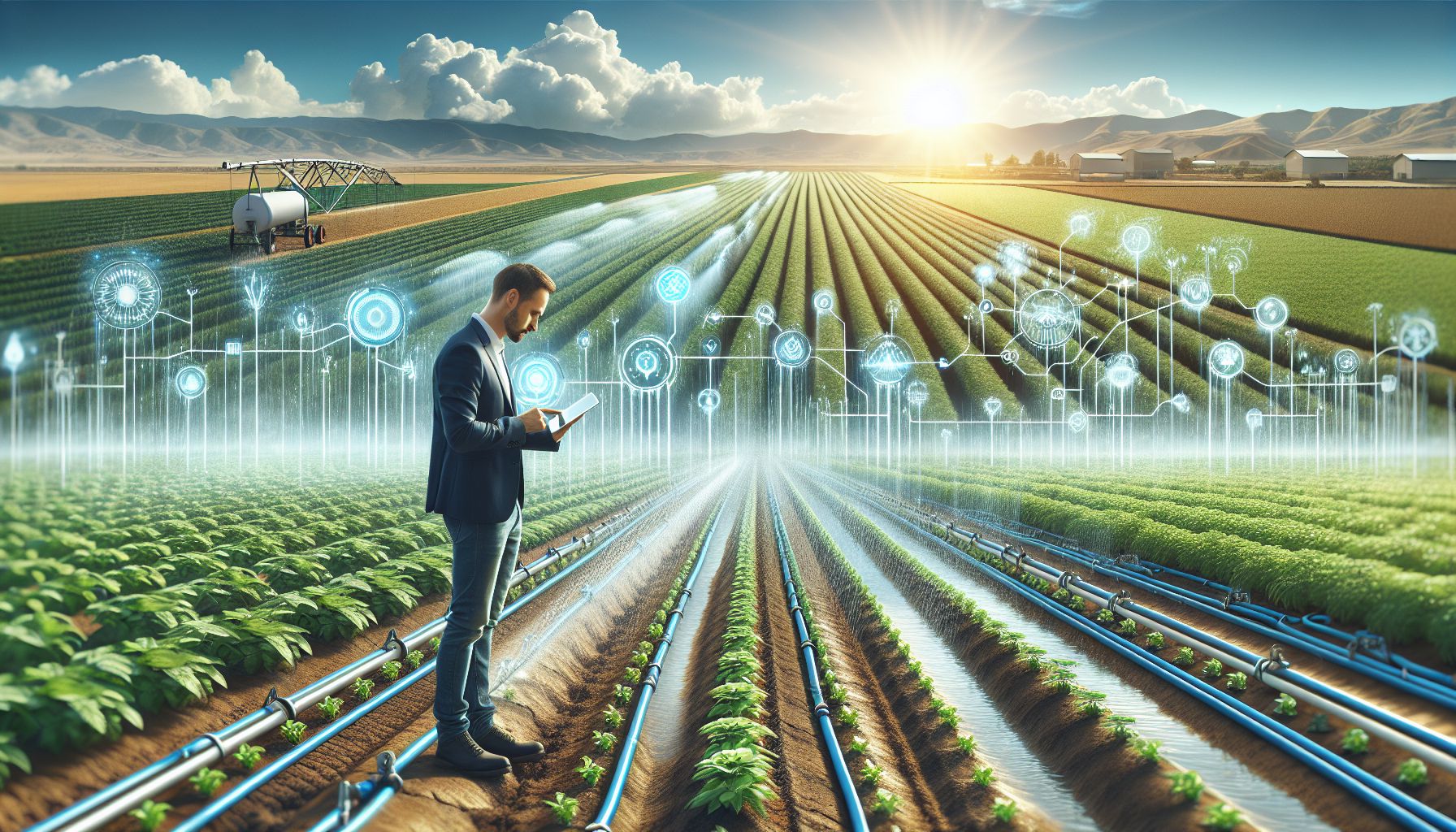
The demand for agricultural products is on the rise, driven by a growing global population and an increasing need for food security. However, agriculture is also one of the largest consumers of freshwater, making the efficient use of water resources critical. One key to achieving greater water efficiency in agriculture is through the implementation of smart irrigation systems. In this article, we will explore what smart irrigation systems are, how they work, and their benefits for water conservation in agriculture.
What are Smart Irrigation Systems?
Smart irrigation systems are advanced setups that utilize information and communication technologies to optimize the application of water in agricultural fields. These systems are designed to adjust watering schedules and amounts based on various factors such as soil moisture levels, weather forecasts, plant water requirements, and evapotranspiration rates.
Understanding the Mechanism
Smart irrigation involves a combination of hardware and software components. The hardware includes sensors, controllers, and actuators, while the software integrates data analytics and decision-making algorithms.
Sensors
Sensors are the eyes and ears of smart irrigation systems. They collect real-time data on several variables, such as soil moisture, temperature, humidity, and rainfall. This data is crucial for determining the precise water needs of crops at any given time.
Controllers
Controllers serve as the brains of the system. They process the information from the sensors and, based on pre-set criteria or real-time decisions from algorithms, command the actuators to start or stop the irrigation process.
Actuators
Actuators perform the physical task of water distribution. They are typically solenoid valves that open or close in response to the controller’s signals, thereby allowing water to flow to the irrigation lines or stopping it as needed.
Communication Systems
Modern smart irrigation systems also include communication networks that enable the seamless transfer of data between sensors, controllers, and the farmer’s management interface, which may include computer software or smartphone apps.
Benefits of Smart Irrigation
Smart irrigation systems offer a multitude of benefits for water conservation and agriculture:
Water Conservation
These systems ensure that water is only applied when and where it is needed, significantly reducing water waste. Farmers can maintain optimal soil moisture levels, which prevents both under- and over-watering.
Enhanced Crop Yields
By maintaining the ideal soil moisture balance, smart irrigation can lead to healthier plants and better yields. Stress on plants from too much or too little water is minimized.
Time and Labor Efficiency
Automation reduces the need for manual intervention in the irrigation process, saving time and labor costs. Farmers can focus on other important tasks, confident that their crops are receiving the right amount of water.
Resource Optimization
Smart irrigation contributes to the conservation of energy and reduces the wear on irrigation equipment, as the system operates only as needed. This can lead to lower energy bills and reduced maintenance costs.
Environmental Sustainability
By using water more efficiently, smart irrigation systems help to minimize the depletion of freshwater resources. Additionally, they reduce runoff and limit the leaching of fertilizers into nearby waterways, contributing to better water quality and environmental health.
Implementing Smart Irrigation in Agriculture
To implement a smart irrigation system, farmers should follow these steps:
- Assess Needs: Evaluate the specific requirements of the crops and the environmental conditions of the farm.
- Select Components: Choose the right sensors, controllers, and actuators that suit the farm’s scale and crop types.
- Install the System: Proper installation is crucial for optimal system performance.
- Calibrate and Customize: Calibrate sensors and customize the software to ensure accuracy of data and appropriateness of irrigation decisions.
- Monitor and Adjust: Continuously monitor system performance and make adjustments as necessary.
Challenges and Considerations
While smart irrigation offers many advantages, there are challenges to consider:
- Cost: The initial investment for smart irrigation systems can be significant, though costs are decreasing and returns on investment can be realized through water savings and increased yields.
- Technical Know-How: Farmers may need training and support to effectively use and maintain these systems.
- ;;Connectivity:** Adequate network connectivity is essential for data transmission, which may be an issue in remote or rural locations.
- Data Security: With increased connectivity comes the need for robust cybersecurity measures to protect sensitive agricultural data.
The Future of Smart Irrigation
The future of smart irrigation is promising, with ongoing advancements in technology leading to even more efficient and user-friendly systems. Innovations such as machine learning and artificial intelligence are expected to further refine irrigation practices. These technologies will help in predicting crop water requirements more accurately, thus facilitating adaptive and precise water management.
Conclusion
Smart irrigation systems are an essential tool for the future of agriculture. They represent a convergence of agricultural practices and technological innovation, aimed at promoting water conservation and sustainable farming. As the global population continues to grow and water resources become increasingly strained, it is imperative that the agricultural sector adopts smart irrigation practices to ensure food security and environmental sustainability.
Sources
- Foley, J. et al. (2005). Global Consequences of Land Use. Science, 309(5734), 570-574. doi:10.1126/science.1111772
- Rodell, M. et al. (2018). Emerging trends in global freshwater availability. Nature, 557, 651–659. doi:10.1038/s41586-018-0123-1
- UNESCO. (2017). The United Nations World Water Development Report 2017. Wastewater: The Untapped Resource. UNESCO. Retrieved from https://unesdoc.unesco.org/ark:/48223/pf0000247153