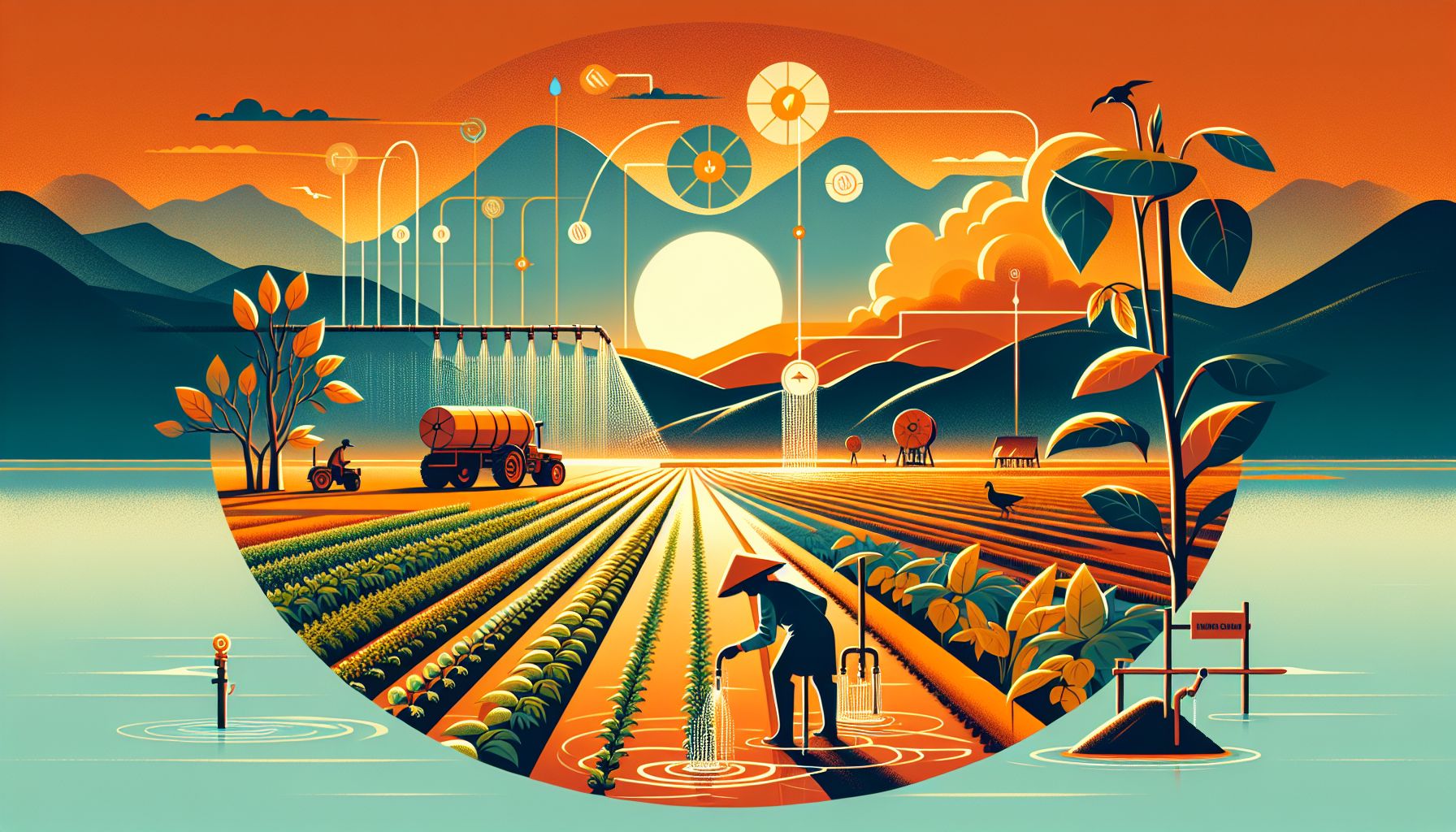
Agriculture stands as the backbone of economies worldwide, but it is also the largest consumer of water resources. With ever-increasing global populations and the resulting demand for food production, sustainable water management in agriculture is not just an environmental concern but a necessity for social and economic stability. This article delves into the essence of sustainable water management practices, delineating the strategies that can not only preserve this precious resource but also ensure that agriculture remains a viable endeavor for future generations.
The Need for Sustainable Water Management in Agriculture
Agriculture accounts for approximately 70% of all freshwater withdrawals globally, with a substantial amount of water being wasted due to inefficiency and mismanagement. The growing water scarcity, exacerbated by climate change, has thrown into sharp relief the critical need to adopt water management practices that minimize waste and promote the health of aquatic ecosystems. Sustainable water management in agriculture involves a combination of practices aimed at using water in a way that is socially equitable, environmentally sustainable, and economically beneficial.
Establishing Efficient Irrigation Systems
One of the cornerstones of sustainable water management in agriculture is the employment of efficient irrigation systems. Traditional flood irrigation, while popular, is highly inefficient. Instead, farmers can adopt more efficient systems such as:
-
Drip Irrigation: Delivers water directly to the base or root zone of plants, thereby reducing evaporation and runoff.
-
Sprinkler Systems: These can be tailored to release water similar to rainfall and be programmed to operate during cooler hours, reducing water loss through evaporation.
-
Centre Pivot Irrigation: This system can conserve water while maintaining crop yields by administering water precisely and uniformly.
Source: Food and Agriculture Organization of the United Nations (FAO)
Soil Moisture Conservation
Soil moisture conservation is another pivotal component of sustainable water management. Techniques such as mulching and the use of cover crops can significantly reduce water evaporation from the soil. Incorporating organic matter into the soil improves water retention and allows for better infiltration, thereby reducing the need for frequent watering.
Crop Selection and Rotation
Selecting the right crops makes a significant difference in sustainable water management. Drought-resistant and native crops typically require less water and are more resilient to local climatic conditions. Additionally, crop rotation can improve soil structure and fertility, thus enhancing water retention and reducing the need for synthetic fertilizers, which can pollute water supplies.
Scheduling and Water Budgeting
Timely and accurate water scheduling can prevent water wastage. Using meteorological data and soil moisture sensing technology allows farmers to apply water only when the crops need it and in appropriate quantities. Water budgeting is a planning tool that can manage the allocation of water to ensure it is used to its full potential without waste.
Integrated Pest Management (IPM)
Integrated Pest Management (IPM) is a broad-based approach that integrates practices for economic control of pests, reducing the necessity for pesticide usage, which often contaminates water bodies. IPM promotes a healthy farm ecosystem that can naturally keep pest populations in check, thus eliminating the need for excessive pesticide use and protecting water quality.
Rainwater Harvesting
Rainwater harvesting in agricultural settings involves collecting and storing rainwater for irrigation and other uses. Such systems can range from simple rain barrels to more complex structures like ponds or reservoirs. Harvesting rainwater helps in reducing dependence on groundwater and surface water resources and can be critical in times of drought.
Aquifer Management
Groundwater pumping for irrigation has led to the depletion of aquifers in many areas. Sustainable aquifer management, including recharge efforts, ensures that groundwater levels remain stable. Techniques such as Managed Aquifer Recharge (MAR) involve the intentional infiltration of rainfall or surface water into aquifers to replenish them.
Precision Agriculture
Precision agriculture is a technology-based field management strategy that optimizes the use of inputs, including water. Using technologies like GPS mapping, remote sensing, and variable rate technology, farmers can apply water only where it is needed and in the correct amounts. Precision agriculture notifies farmers about field variability, thereby addressing specific crop needs more closely.
Water Recycling and Reuse
Using treated wastewater, also known as reclaimed water, for irrigation can alleviate pressure on freshwater resources. Reusing agricultural runoff water can be another aspect of a recycling strategy, whereby water is collected, treated, and then used again for irrigation.
Agroforestry and Polycultures
Incorporating trees and shrubs into crop systems, known as agroforestry, can help stabilize the water cycle through increased infiltration, reduced runoff, and enhanced water storage in the landscape. Similarly, polycultures, or mixed cropping systems, can increase biodiversity and soil organic matter, leading to improved water retention and reduced irrigation needs.
Enhancing Water Policy and Governance
Effective policies and governance are critical for sustainable water management in the agricultural sector. Regulations must incentivize good water management practices and provide support for farmers adopting sustainable practices. Additionally, water rights and pricing must be structured to encourage conservation and equitable use.
Education and Extension Services
Extending knowledge on sustainable water management practices is fundamental for widespread adoption. Education and training programs for farmers, extension services, and sharing best practices are essential for improving water management literacy among those directly involved in food production.
Conclusion
Sustainable water management in agriculture is not a one-size-fits-all endeavor. It requires the implementation of diverse practices and technologies tailored to specific environments and situations. The impact of climate change and the ever-growing global population make it imperative to adopt these practices in order to guarantee food security, protect ecosystems, and ensure water will be available for future agricultural needs.
For a deeper understanding of these practices, explore resources provided by organizations such as the FAO, the World Bank, and various agricultural extension services:
- FAO – Water Management
- World Bank – Water in Agriculture
- U.S. Department of Agriculture – Natural Resources Conservation Service
Adopting sustainable water management practices calls for a commitment from not just farmers, but by policy-makers, researchers, and consumers. By working together to implement these practices, we can ensure that agriculture remains a sustainable and fruitful venture now and in the future.