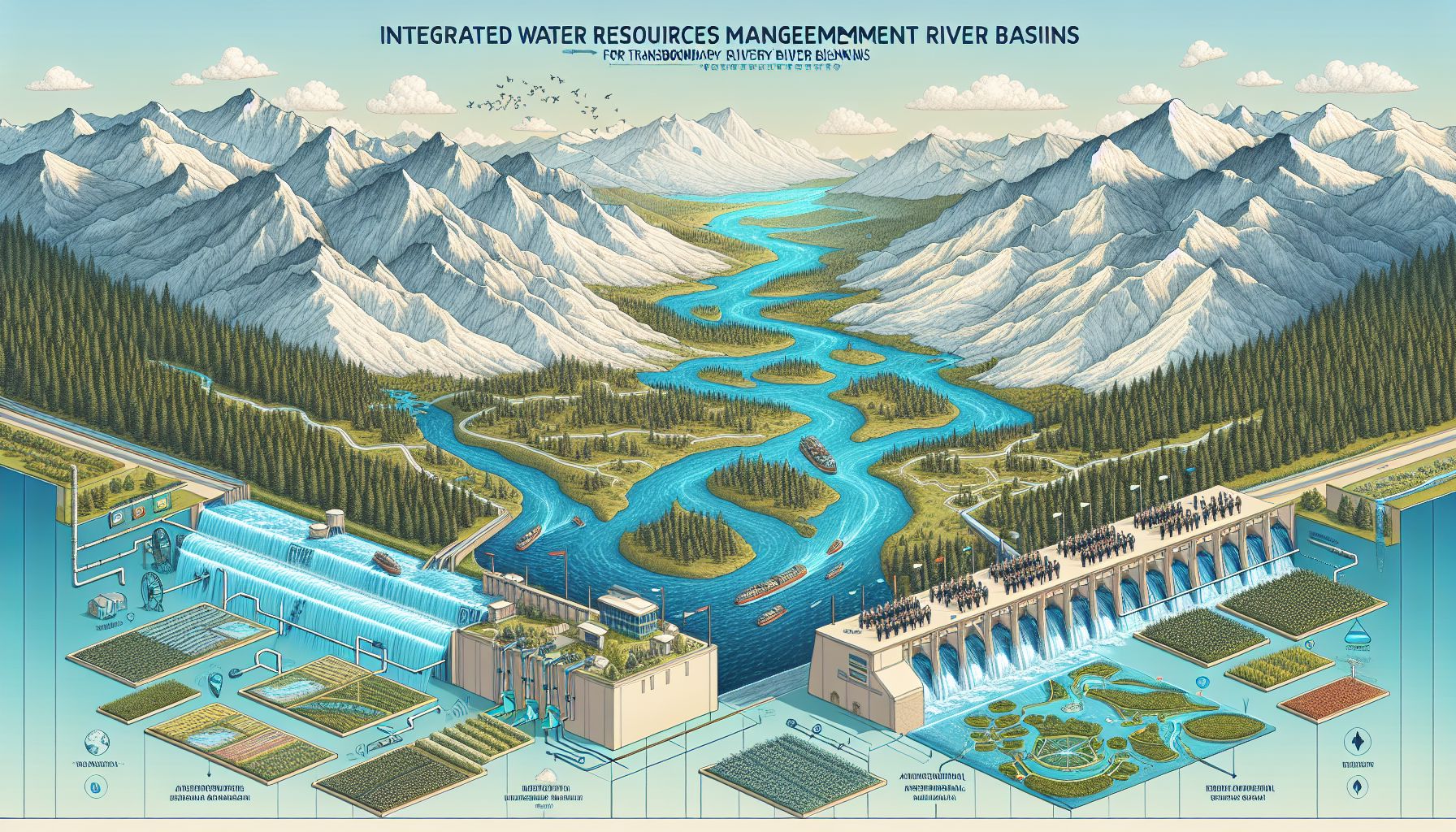
In our increasingly interconnected and constrained world, the management of water resources transcends boundaries, ideologies, and sectors. Transboundary river basins are shared by two or more countries and require a coordinated approach to ensure sustainable water supply, equitable distribution, and ecological health. Integrated Water Resources Management (IWRM) stands out as an effective framework for addressing the complex challenges posed by transboundary waters. In light of this, let’s dive deep into the concept, practices, and importance of IWRM for transboundary river basins.
Understanding Integrated Water Resources Management (IWRM)
Before we delve into transboundary issues, it’s important to have a clear understanding of what IWRM entails. The Global Water Partnership defines IWRM as a process which promotes the coordinated development and management of water, land, and related resources to maximize economic and social welfare without compromising the sustainability of vital ecosystems.
Principles of IWRM
IWRM is built upon four guiding pillars:
- Economic Efficiency: Ensuring that water use is optimized to deliver the greatest benefits to the most people.
- Social Equity: Granting fair access to water for all sectors of society, including marginalized groups.
- Environmental Sustainability: Protecting the ecosystems that maintain water cycles and quality.
- Participatory Decision-Making: Including all stakeholders, from the government to local communities, in water resources management.
Transboundary River Basin Management
Transboundary river basins like the Nile, Amazon, and Mekong span across national boundaries and are crucial sources of livelihood, energy, and biodiversity. The integrated approach to managing these basinary water resources carries unique challenges and opportunities.
Characteristics of Transboundary River Basins:
- Shared Waters: Rivers, lakes, and aquifers that cut across borders.
- Multiple Users and Uses: These waters are used for drinking, agriculture, industry, and more.
- Diverse Interests: Varying national, economic, and cultural interests overlap in these regions.
- Complex Governance: Managing shared waters involves local, national, and international laws and organizations.
Why IWRM for Transboundary River Basins?
IWRM is particularly essential for transboundary river basins due to the following considerations:
- Coordination is crucial to manage shared water resources effectively and prevent conflicts.
- A holistic approach is necessary to comprehend the interconnected impacts of water use across sectors and boundaries.
- Collaborative governance can lead to mutual benefits, from shared infrastructure to ecosystem conservation.
Practices of IWRM in Transboundary River Basins
Several practices underpin the implementation of IWRM in transboundary contexts:
1. Policy Alignment and Harmonization
It involves standardizing legal frameworks, regulations, and strategies among riparian nations to ease cooperative water management. This harmonization requires diplomacy and a willingness to prioritize shared goals over individual national interests.
2. Joint Monitoring and Data Sharing
Transboundary IWRM hinges on the collection, sharing, and analysis of water-related data among countries. Common understanding of the basin’s health and usage patterns promotes informed decision-making.
3. Integrated Planning and Investment
Long-term planning and infrastructure development need a unified vision that spans across borders. Investment in joint projects like dams, irrigation systems, and water treatment plants is a testament to cooperative management.
4. Conflict Resolution Mechanisms
Establishing clear procedures for resolving disputes is necessary to maintain cooperation and manage competition over water resources. This could include international tribunals or agreements for equitable water sharing.
5. Participatory Approaches
Engaging stakeholders at all levels, from governments to local communities, is vital for ensuring that IWRM is inclusive and takes into account the needs and knowledge of all users.
6. Ecosystem-Based Management
Recognizing and preserving the natural functions of water bodies helps maintain the health of the river basin. This entails considering the impacts on aquatic and terrestrial ecosystems within integrated management plans.
IWRM Success Stories in Transboundary Rivers
The Rhine River Commission
Following industrial pollution and disasters, the countries along the Rhine worked together to improve its condition. Their coordinated management efforts led to significantly cleaner waters, benefiting all the countries the river traverses.
The Mekong River Commission
The Mekong River Commission, involving Thailand, Laos, Cambodia, and Vietnam, is an example of successful transboundary collaboration. It aims to promote sustainable development, water quality, and fisheries management through shared information and dialogue.
Challenges and Future Directions
While IWRM is an effective framework, its implementation in transboundary river basins faces challenges such as political tensions, asymmetry in power and resources among countries, and the impacts of climate change. Addressing these challenges requires adaptive management, continuous dialogue, and commitment to peaceful cooperation.
Conclusion
Transboundary river basins are lifelines for multiple nations and their management requires careful coordination, shared understanding, and joint action. Integrated Water Resources Management presents a blueprint for such endeavors, balancing the myriad demands placed on water resources to secure benefits for all users and uphold ecosystem integrity. As global pressures on water resources intensify, the principles and practices of IWRM provide a vital path forward for cooperative and sustainable management of shared waters.
Sources
- Global Water Partnership. (2000). ‘Integrated Water Resources Management.’ TAC Background Papers No. 4. https://www.gwp.org/globalassets/global/toolbox/publications/background-papers/04-integrated-water-resources-management-2000.pdf
- United Nations. ‘Transboundary Waters.’ https://www.unwater.org/water-facts/transboundary-waters/
- The Mekong River Commission. ‘About MRC.’ https://www.mrcmekong.org/about-mrc/
Please note that while the concepts, principles, and practices outlined in this article are factual, the specific examples mentioned, like the Rhine River Commission and Mekong River Commission success stories, have been simplified for illustrative purposes. For comprehensive insights into these case studies, further reading and research through the provided sources and additional resources are recommended.