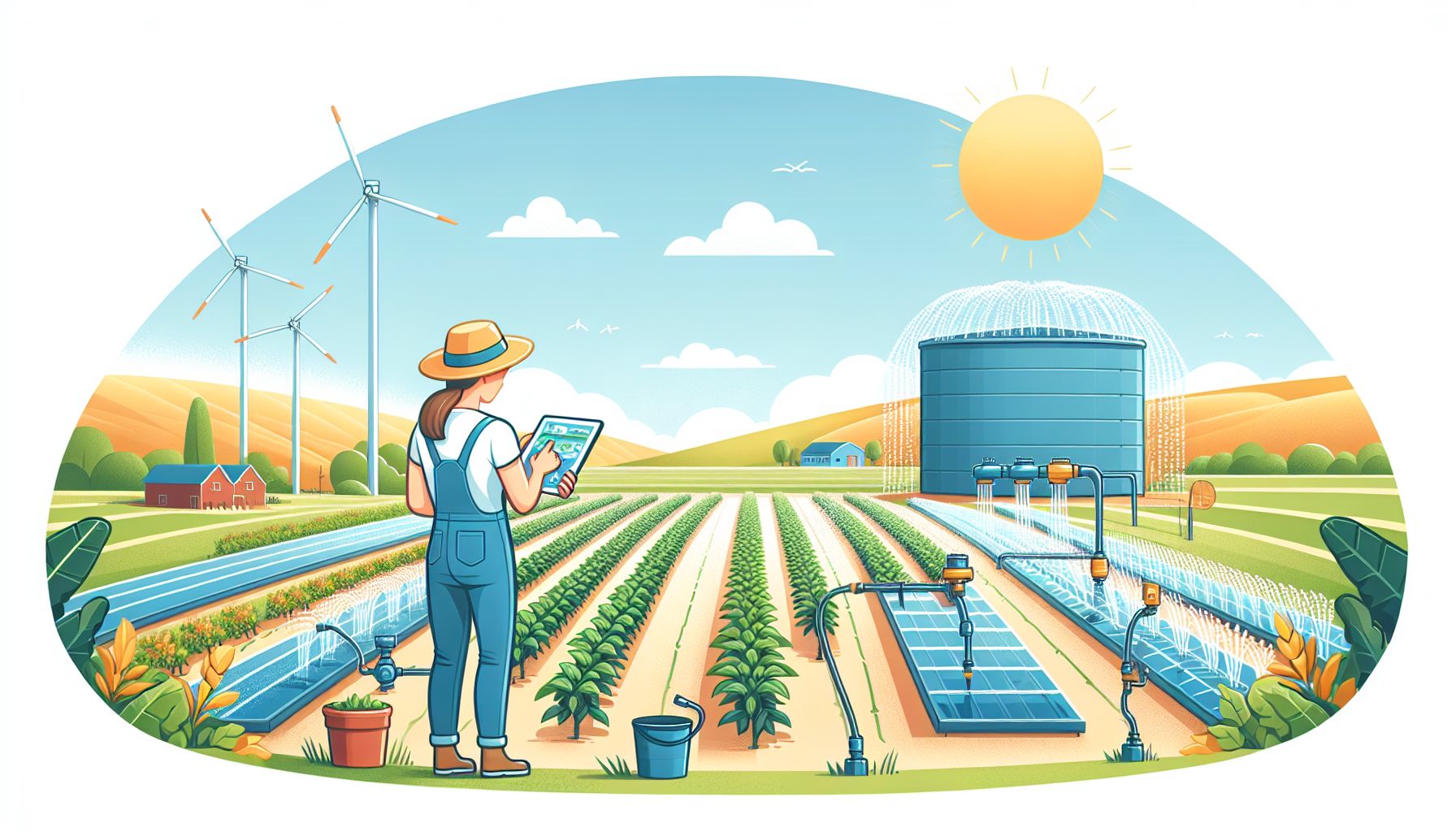
The significance of agriculture in providing sustenance to the global population cannot be overstated. However, agriculture is also one of the leading consumers of freshwater, making it crucial to adopt sustainable water management practices to ensure long-term viability of water resources and food production. The need for sustainability in agriculture water use has been further exacerbated by the challenges posed by climate change and the increasing demands of a growing population. In this article, we will delve into various sustainable water management practices that can be adopted in agriculture to conserve and efficiently utilize water resources.
Integrated Water Resource Management (IWRM)
One of the foremost holistic approaches to sustainable water management in agriculture is Integrated Water Resource Management (IWRM). IWRM is a process that promotes the coordinated development and management of water, land, and related resources to maximize economic and social welfare without compromising the sustainability of vital ecosystems.
Principles of IWRM:
-
Planning and Management: IWRM encourages cross-sectoral planning and management, taking into account the complex interdependencies between water availability, agricultural demands, and ecosystem health.
-
Participatory Approach: Engaging stakeholders, including farmers, communities, and policymakers, in decision-making processes to ensure that various interests and needs are represented and addressed.
-
Recognition of Water as an Economic Good: While recognizing the fundamental right to access safe water for basic needs, IHRM also considers the economic value of water. This incentivizes more efficient use and investment in infrastructure and technology.
-
Attention to Ecosystems: Protecting and maintaining the health of water-related ecosystems to sustain their environmental services, which, in turn, support agriculture.
IWRM in Action:
FAO provides a framework for IWRM in agriculture that includes policies for irrigation improvement, rain-fed agriculture enhancement, and support systems for farmers to adopt water-saving technologies and practices.
Conservation Agriculture (CA)
Conservation agriculture (CA) is a farming system characterized by minimal soil disturbance (no-till farming), permanent soil organic cover (mulches), and diversified crop rotations. These practices contribute to efficient water use by enhancing soil structure, increasing water infiltration, and reducing evaporation losses.
Benefits of CA:
-
Improved Soil Moisture: By leaving crop residues on the fields and using cover crops, CA helps in retaining soil moisture.
-
Reduction in Water Runoff: No-till practices result in better water infiltration, which reduces surface runoff and maximizes water availability to crops.
-
Enhanced Water Use Efficiency: Diverse crop rotations can improve water utilization by crops and reduce the need for irrigation.
CA in Practice:
The Conservation Technology Information Center provides resources and case studies on how farmers can adopt conservation agriculture practices to improve water management.
Precision Agriculture Technologies
Advances in technology have given rise to precision agriculture, which encompasses various innovative tools and practices designed to optimize field-level management regarding crop farming.
Advances in Precision Agriculture:
-
Smart Irrigation Systems: Utilization of soil moisture sensors and weather data to optimize irrigation schedules, ensuring water is only applied when necessary and in the right amounts.
-
Drip Irrigation: Precise water delivery at the root zone minimizes evaporation and runoff, maximizing water efficiency.
-
Variable Rate Technology (VRT): VRT equipment can apply water, fertilizers, and chemicals in precise amounts and locations, reducing waste and protecting waterways from contamination.
Precision Agriculture in Use:
Innovative companies like The Climate Corporation provide digital agriculture solutions that harness big data to assist farmers in making informed decisions that enhance water efficiency and productivity.
Rainwater Harvesting and Water Storage
Capturing rainwater for agricultural use is a sustainable way to supplement irrigation and reduce dependence on groundwater or surface water bodies.
Rainwater Harvesting Methods:
-
On-Farm Ponds and Reservoirs: Storage structures can capture and store runoff or directed rainwater for agricultural use during dry periods.
-
Rooftop Rainwater Harvesting: Collection systems can direct rainwater from greenhouse and farm building rooftops into storage tanks.
-
In-Field Water Harvesting Techniques: Contour bunds and trenches can be constructed to capture and redistribute runoff within the field.
Impact of Rainwater Harvesting:
The International Water Management Institute offers insights on how rainwater harvesting can bolster water security for smallholder farmers, even in semi-arid regions.
Innovative Water Management Approaches
In addition to established practices, innovative approaches can further optimize water use in agriculture.
Alternative Water Sources:
-
Treated Wastewater: Use of adequately treated wastewater for irrigation can relieve strain on freshwater sources and introduce needed nutrients to the soil.
-
Desalination: Regions with abundant seawater may consider desalination, though its feasibility depends on cost and energy considerations.
Improvement of Water Policy and Governance:
-
Water Rights and Allocation: Developing clear systems for water rights and allocations can encourage efficient use and investment in sustainable practices.
-
Education and Support Programs: Training programs for farmers on sustainable water management practices, alongside financial incentives, can promote widespread adoption.
Conclusion
Sustainable water management in agriculture is not a one-size-fits-all approach. It requires a combination of time-tested practices and modern technologies, tailored to the unique environmental and socio-economic contexts of each agricultural region. By adopting IWRM principles, conservation agriculture, precision agriculture technologies, rainwater harvesting, and considering innovative approaches to water sources and policies, the agricultural sector can become a key player in the stewardship of global water resources.
The journey towards sustainable water management is a shared responsibility. Policymakers, agricultural stakeholders, scientists, and communities must collaborate to create resilient agricultural systems capable of sustaining our food demands while protecting the vital water resources upon which all life depends. The transition to more sustainable water management practices is not only essential for our survival but also a moral imperative to ensure that future generations inherit a world with sufficient freshwater to meet their needs.
Sources
- FAO – Integrated Water Resources Management
- Conservation Technology Information Center – What is Conservation Agriculture?
- The Climate Corporation – Digital Farming Solutions
- International Water Management Institute – Rainwater Harvesting
Adopting sustainable water management practices is the conduit through which agriculture can reduce its environmental footprint while securing water for future generations and contributing to the combat against climate change. As stewolding the future of agriculture and access to freshwater, the measures laid out in this article are the stepping stones to a more sustainable and water-secure world.