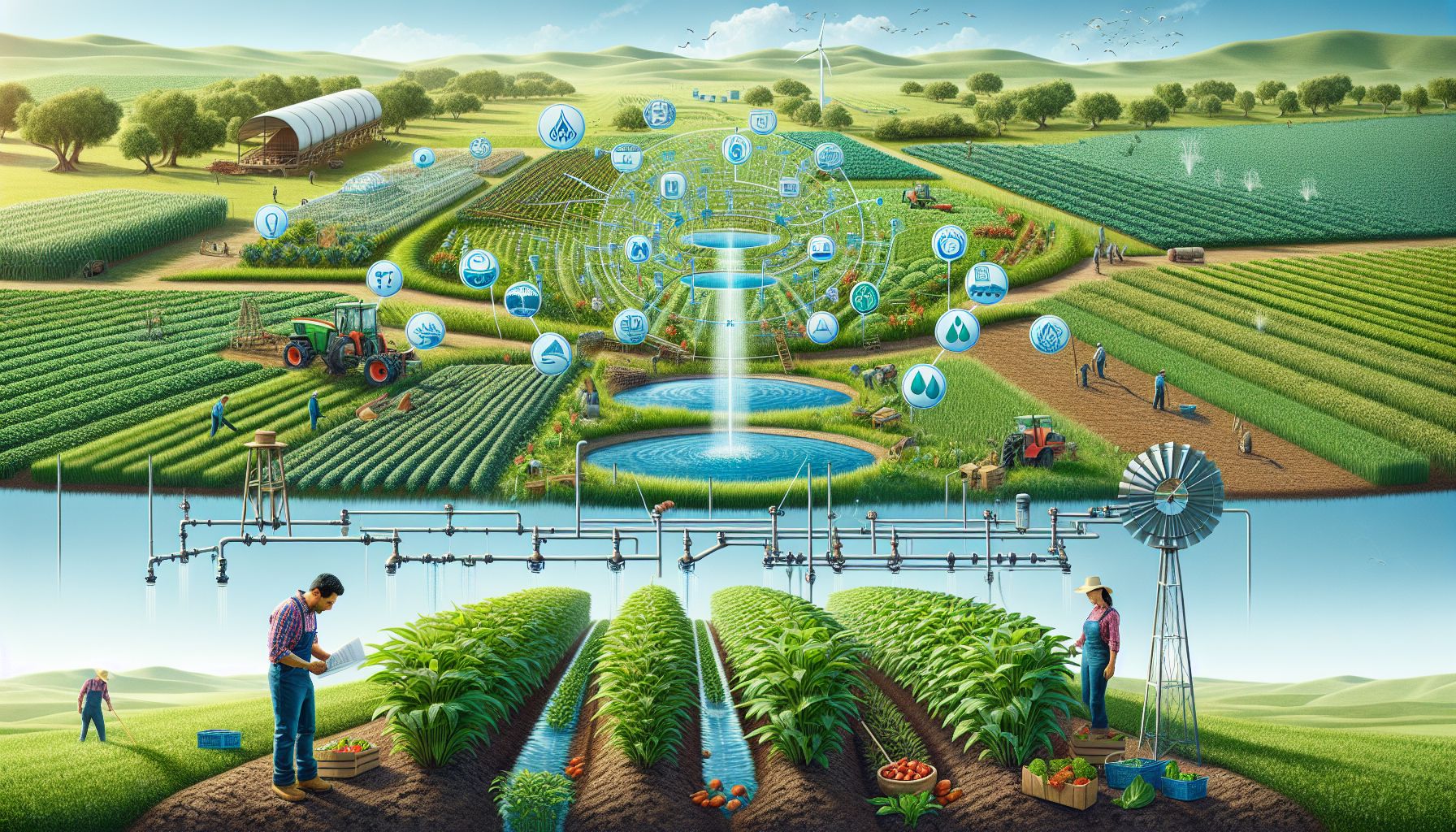
Agriculture is the backbone of many economies around the world and is a significant consumer of freshwater resources. With the global population expected to reach almost 10 billion by 2050, there is an urgent need for sustainable water management practices that ensure crop productivity while conserving water. In this comprehensive guide, we will delve into what sustainable water management in agriculture is, why it’s important, and the various practices that can be implemented to achieve it.
Introduction
Water is a critical resource for agricultural activities, from irrigation to livestock rearing. However, with the demand for food on the rise and the threat of climate change, water scarcity is becoming a pressing issue, especially in arid and drought-prone areas. Sustainable water management practices in agriculture are aimed at using water in a manner that meets the current and future food demand without compromising the ability of future generations to meet their needs.
Why is Sustainable Water Management in Agriculture Important?
- Food Security: Adequate water supply is essential for crop and livestock production, which is directly linked to global food security.
- Environmental Protection: Overexploitation and misuse of water resources can lead to environmental degradation, loss of biodiversity, and ecosystem imbalance.
- Economic Viability: Efficient use of water in agriculture helps in reducing costs, increasing profits for farmers, and ensuring economic sustainability of the farming sector.
- Social Equity: Fair and equitable distribution of water resources ensures that all members of the community, including marginalized groups, have access to water for their agricultural needs.
Sustainable Water Management Practices
1. Soil Moisture Conservation
- Mulching: Mulching involves covering the soil with organic materials such as straw or plastic sheets to reduce evaporation.
- Conservation Tillage: Minimizing tillage preserves soil structure and water.
2. Rainwater Harvesting
- Micro-catchments: Creating small depressions in the land to collect rainwater.
- Rooftop Harvesting: Collecting rainwater from rooftops for agricultural use.
3. Efficient Irrigation Techniques
- Drip Irrigation: Delivering water directly to the root zone of the plant, minimizing evaporation.
- Sprinkler Systems: Sprinklers can be adjusted to match crop water needs and reduce wastage.
- Subsurface Textile Irrigation: A specialized irrigation system that releases water near the roots through a permeable textile.
4. Smart Water Management
- Irrigation Scheduling: Using weather forecasts and soil moisture data to optimize irrigation times.
- Sensors and Automation: Employing sensors in the field for real-time monitoring of crop water needs.
5. Crop Selection and Management
- Drought-Resistant Varieties: Growing crops that are naturally more drought-tolerant.
- Crop Rotation: Rotating crops to improve soil health and optimize water usage.
6. Integrated Pest and Weed Management
- Biological Pest Control: Reducing the need for water-intensive pesticides.
- Organic Weed Management: Minimizing water loss due to weed competition.
7. Policy and Education
- Community-Based Management: Involving local communities in water management decisions.
- Government Incentives: Providing subsidies for farmers to adopt water-saving technologies.
8. Aquifer Recharge and Management
- Artificial Recharge: Enhancing natural groundwater with additional runoff or reclaimed water.
- Managed Aquifer Recharge: Controlled recharge of aquifers to prevent overexploitation.
9. Wastewater Reuse
- Treated Wastewater: Reusing treated wastewater for irrigation when fresh water is scarce.
10. Saltwater Agriculture
- Halophytes Cultivation: Growing saltwater-tolerant plants in areas where freshwater is limited.
Innovative Examples of Sustainable Water Management
- Israel’s Drip Irrigation: Israel is a leader in drip irrigation technology, which has significantly increased crop yields while reducing water use.
- California’s Sustainable Groundwater Management Act: Legislation aimed at improving groundwater conservation and management.
The Role of Technology
Advancements in technology are playing a pivotal role in sustainable water management:
- Remote Sensing: Satellites and drones for monitoring crop health and water requirements.
- Data Analytics: Crunching large datasets to provide insights for water management decisions.
- Colby AgTech: https://www.colby.edu/magazine/innovation-agriculture/
- FAO Water Scarcity Initiative: http://www.fao.org/land-water/water/water-scarcity/en/
Challenges and Solutions
Despite the potential benefits, there are challenges in implementing sustainable water management practices:
- Climate Change: Unpredictable weather patterns complicate water management.
- Economic Constraints: High upfront costs for technology and infrastructure improvements.
- Lack of Awareness and Training: Educating farmers on the benefits and methods for sustainable water management.
Solutions:
- Incentive Programs: Financial and technical support for adopters of sustainable practices.
2 as Knowledge Sharing: Through workshops, seminars, and community programs. - Partnerships: Collaborating with private industries, NGOs, and governmental agencies.
Conclusion
Sustainable water management in agriculture is an indispensable approach to ensure the long-term viability of water resources, support the demand for food production, and protect the environment. By embracing innovative irrigation methods, improving soil moisture retention, encouraging crop diversity, and investing in education, farmers around the world can contribute to a more sustainable future.
Incorporating these practices not only helps in addressing immediate water scarcity issues but also contributes to the larger goal of achieving water security in the face of a rapidly changing climate. The examples above and the embrace of new technologies signal a positive direction toward smarter, more sustainable water use in agriculture. It is imperative for all stakeholders to work together, from policymakers to local farmers, to adopt and promote these sustainable practices.
As stewards of the earth’s resources, it’s our duty to ensure that the methods we use today do not harm the ability of future generations to meet their own needs. Sustainable water management in agriculture is a marathon, not a sprint, and it requires the collective efforts of the global community to ensure that water – the source of life – remains abundant, clean, and accessible to all.
Sources
-
Food and Agriculture Organization (FAO) of the United Nations: Water Scarcity
http://www.fao.org/land-water/water/water-scarcity/en/ -
United States Department of Agriculture (USDA) Natural Resources Conservation Service: Water Management
https://www.nrcs.usda.gov/wps/portal/nrcs/main/national/water/manage/ -
Peter Rogers and Mimi Jenkins: “Water Conservation in Agriculture.” BioScience, Volume