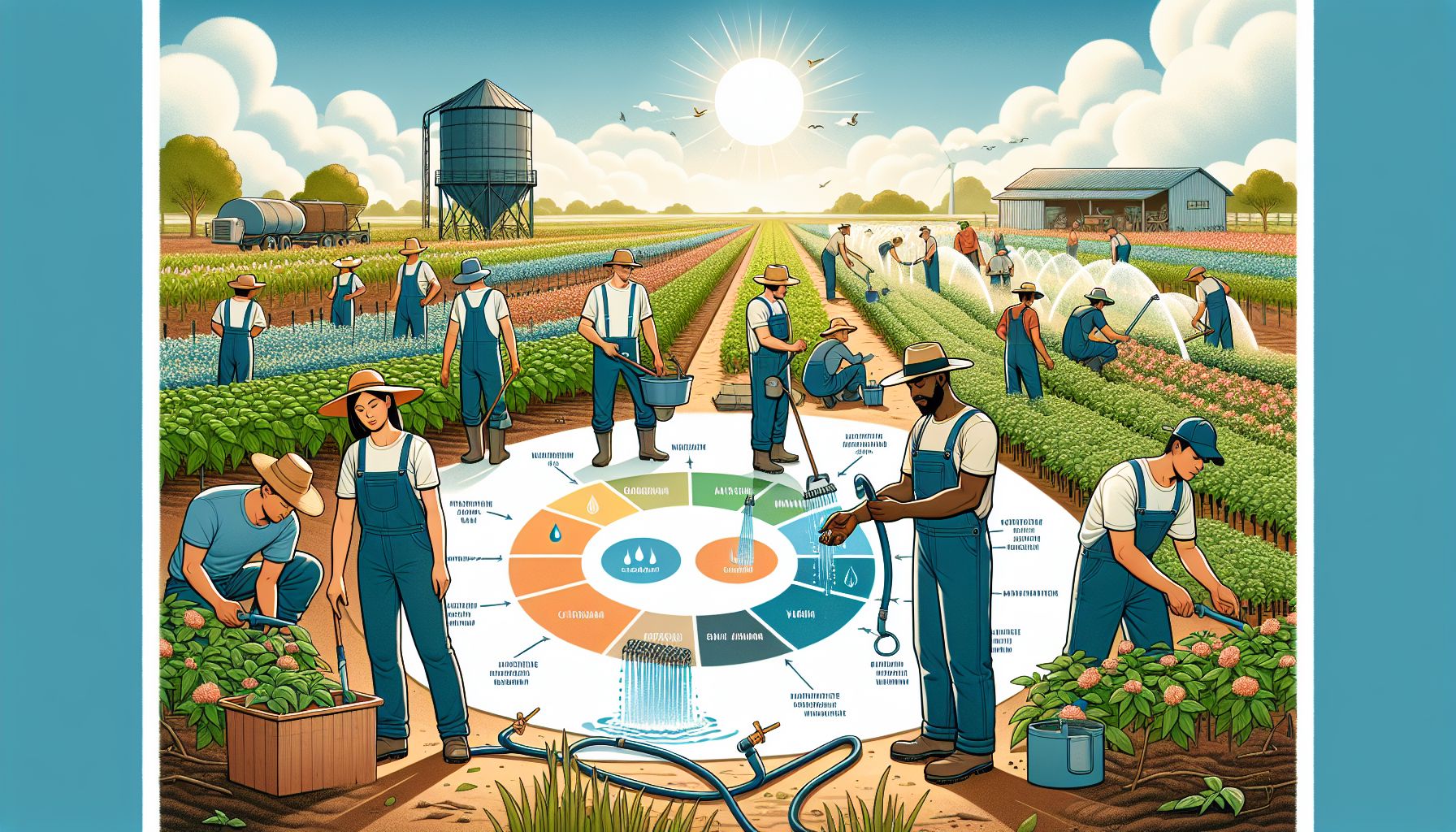
Water is a fundamental resource for agriculture, which in turn is a major consumer of global water supply. Efficient and sustainable water management in agriculture is crucial to ensure the long-term viability of our water resources, especially as the demand for food production grows and environmental challenges become more evident. This article will delve into sustainable water management practices for agriculture, which can lead to a more efficient use of water and a reduced impact on ecosystems.
Understanding Water Use in Agriculture
Before diving into sustainable practices, it is important to understand how water is used in agriculture. Agriculture accounts for approximately 70% of global freshwater withdrawals according to the Food and Agriculture Organization (FAO) [1]. This water is used for various purposes, including:
- Irrigation
- Livestock
- Aquaculture
- Processing of agricultural products
However, not all the water used in agriculture is efficient. Substantial amounts are lost due to evaporation, inefficiencies in irrigation systems and methods, and poor management practices.
Principles of Sustainable Water Management in Agriculture
Sustainable water management in agriculture is rooted in the principles of efficiency, conservation, and environmental protection. It involves strategies that enhance water conservation, improve water use efficiency, and maintain the ecological balance of water-related ecosystems.
1. Water Conservation
Conserving water in agriculture involves practices designed to use water more sparingly without compromising crop yields. It can be accomplished through a number of techniques:
- Soil Moisture Conservation: Maintaining healthy, organic-rich soil can improve its water-holding capacity. Practices such as mulching, cover cropping, and reduced tillage can help retain soil moisture.
- Rainwater Harvesting: Collection and storage of rainwater for irrigation during dry periods can significantly reduce the demand for groundwater or surface water in agriculture.
- Water Recycling: Using treated wastewater or gray water for irrigation can be a viable option for conserving freshwater resources.
- Drip Irrigation: This system delivers water directly to the root zone of plants, thereby reducing the amount of water lost through evaporation and runoff.
2. Improving Water Use Efficiency
Efficiency in water use can be improved by embracing technological innovations and smarter irrigation techniques. Efficient water use practices include:
- Precision Agriculture: Utilizing data-driven tools and technologies to apply water where and when it is needed, optimizing irrigation schedules based on real-time soil and weather data.
- Irrigation Scheduling: Aligning irrigation with the specific water needs of crops at different growth stages can save significant amounts of water.
- Irrigation System Upgrades: Switching from flood irrigation to sprinkler or drip systems can improve water application efficiency.
- Leak Detection and Repair: Regularly monitoring and repairing leaks in irrigation systems can save large quantities of water.
3. Protecting Water-Related Ecosystems
Protecting wetlands, rivers, lakes, and aquifers from agricultural pollution by managing nutrient and pesticide applications carefully can have profound impacts on the sustainability of water resources. This can be achieved by:
- Integrated Pest Management (IPM): Reducing the use of chemical pesticides and fertilizers through biological control methods.
- Buffer Zones: Establishing buffer zones of vegetation between agricultural fields and water bodies can trap pollutants and reduce runoff.
- Agroforestry: Incorporating trees into croplands can help stabilize soil, improve water infiltration, and provide habitat for beneficial species.
Case Studies of Sustainable Water Management in Agriculture
Several real-world examples demonstrate the effectiveness of adopting sustainable water management practices:
Case Study 1: Israel’s Drip Irrigation Innovation
In an arid region like Israel, the development and widespread adoption of drip irrigation has been a game-changer. Today, Israel reuses about 90% of its wastewater, mainly for agriculture, and has become a global leader in water conservation and efficiency [2].
Case Study 2: California’s Sustainable Groundwater Management Act (SGMA)
California has implemented the SGMA, which aims to regulate groundwater use and promote sustainable management. Farmers are encouraged to adopt better irrigation practices, including improved irrigation scheduling and soil moisture monitoring technology, to help maintain groundwater levels [3].
Case Study 3: The SRI Method in Rice Cultivation
The System of Rice Intensification (SRI) is a method that allows rice to be grown using less water than traditional flooded paddy systems. Implementing SRI has led to increased yields and water savings in several developing countries.
Challenges and Opportunities
While there are many practices available for sustainable water management in agriculture, challenges such as costs, education, and policy barriers can impede adoption. However, the long-term benefits of protecting water resources, including greater resiliency to droughts and climate change, improved ecosystem health, and sustained agricultural productivity, present strong arguments in favor of these practices.
In conclusion, sustainable water management practices in agriculture are vital for the future of food production and environmental conservation. By integrating conservation principles, efficient technologies, and ecosystem protection, agriculture can evolve to meet the challenges of the 21st century while safeguarding precious water resources.
This article has incorporated concepts and data from the following sources:
[1]: Food and Agriculture Organization (FAO). Water Use in Agriculture. http://www.fao.org/nr/water/aquastat/water_use/agriculture/index.stm
[2]: Israel Ministry of Environmental Protection. Water Management in Israel. http://www.sviva.gov.il/English/env_topics/Water/Pages/default.aspx
[3]: California Department of Water Resources. Sustainable Groundwater Management. https://www.water.ca.gov/Programs/Groundwater-Management/SGMA-Groundwater-Management