In a world where water scarcity affects more than 40% of the global population, every drop counts (United Nations). Greywater recycling, once an obscure concept, has now emerged as a practical solution for conserving this precious resource, particularly in residential settings. But what exactly is greywater, and how can we put it to use while ensuring safety and efficiency? This article will delve into the ins and outs of greywater recycling systems for home use, offering practical advice and cutting-edge insights into how households can play their part in water conservation.
Understanding Greywater
Greywater is defined as the gently used water from bathroom sinks, showers, tubs, and washing machines. It is distinct from blackwater, which comes from toilets and has direct contact with fecal matter, making it more complex and expensive to treat. While greywater may contain traces of dirt, food, grease, hair, and certain household cleaning products, it is nonetheless suitable for reuse in certain domestic applications (Greywater Action).
Benefits of Greywater Recycling Systems
Greywater systems hold several benefits for the environment and homeowners alike:
- Water Conservation: By recycling greywater for non-potable uses, such as irrigation and toilet flushing, a significant amount of the fresh water that would otherwise be used is conserved.
- Reduced Strain on Sewage Treatment: Diverting greywater from the sewer or septic system reduces the load on these facilities, which can lead to lower sanitation costs and a decrease in the likelihood of system overflows.
- Drought Resilience: In areas facing water scarcity, greywater systems enable households to maintain landscaping and hygiene without exhausting limited water supplies.
- Nutrient Recycling: Greywater often contains nutrients like nitrogen and phosphorus, which can be beneficial for plant growth when used in landscape irrigation.
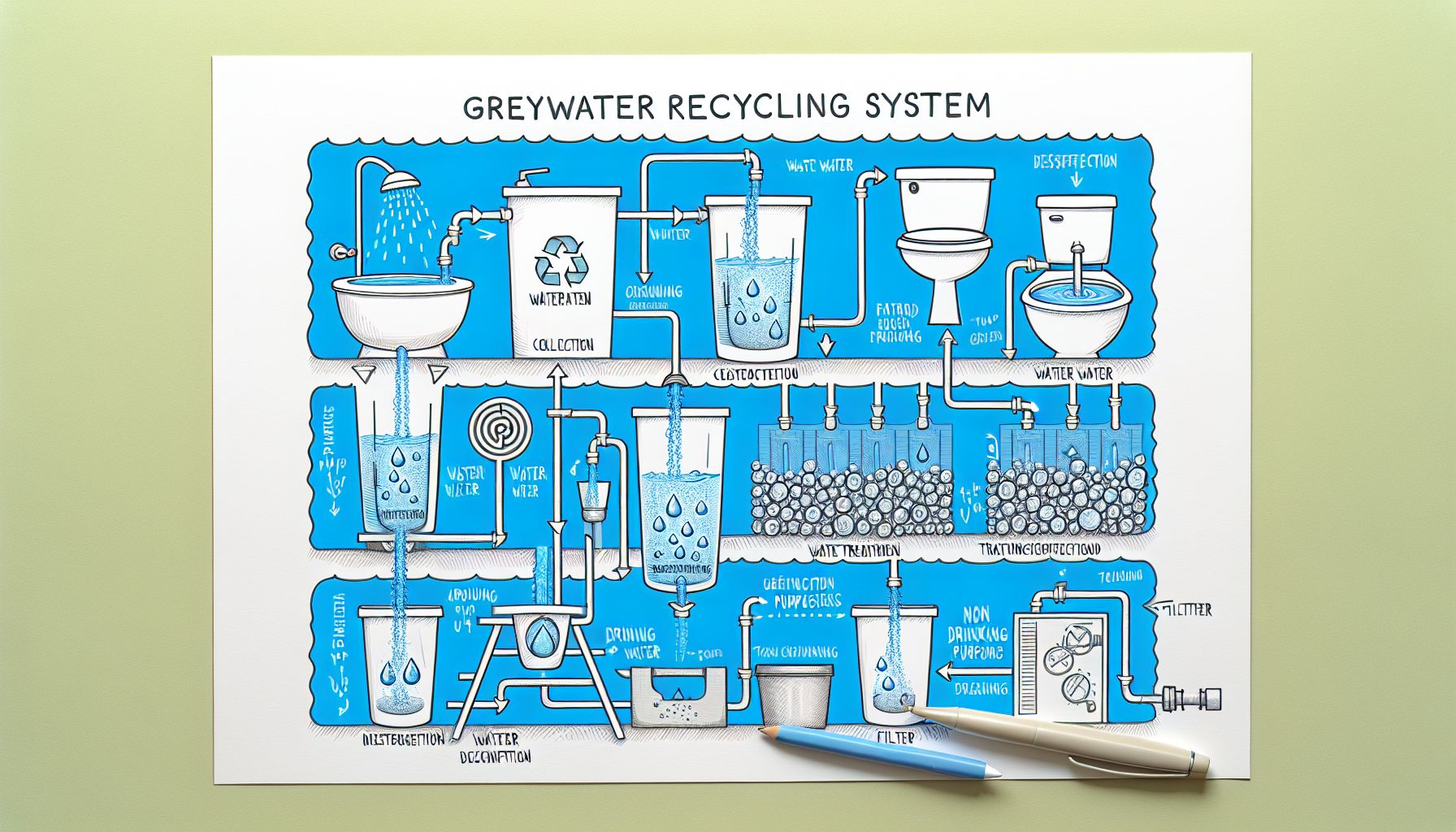
Greywater Recycling System Components
A basic greywater recycling system includes several components to ensure the water’s safe and effective use:
- Source: As mentioned, sources include showers, bathtubs, sinks, and laundry machines.
- Filters: To remove hair, lint, and other solids that could clog irrigation systems.
- Pipes and Pumps: To transport greywater from the source to the point of reuse.
- Surge Tanks: Temporary storage to balance the supply and demand of greywater.
- Treatment Systems: Additional filtration or sanitization to meet local reuse standards.
- Distribution System: For irrigation, this could be subsurface drip or mulch basins. In some systems, greywater can be treated further and used to flush toilets.
Types of Greywater Systems
Greywater systems range from simple, manual setups to complex, automated installations:
- Manual Bucketing: The most basic system — collecting greywater in a bucket and physically transporting it to where it is needed.
- Laundry-to-Landscape (L2L): Directs greywater from the washing machine to the landscape without any need for filtration or treatment.
- Branched Drain: Uses gravity to distribute greywater through a system of mulched basins that filter and absorb the water.
- Greywater Purification and Treatment Systems: Utilize more advanced biological and mechanical filters to clean greywater to a higher standard for various uses.
Best Practices for Greywater Recycling
To get the most out of a greywater system while minimizing risks, consider the following best practices:
- Use Greywater-Friendly Cleaning Products: Biodegradable, low-salt, and chlorine-free products won’t harm plants or soil life.
- Avoid Storing Greywater: Unless treated, greywater should be used within 24 hours to prevent bacteria growth.
- Keep it Subsurface: Deliver greywater directly to the root zones of plants and avoid contact with humans and pets.
- Follow Local Regulations: Ensure your system meets the requirements set out by local health and building codes.
- Professional Installation and Maintenance: To ensure efficiency and safety, professional installation and regular maintenance are advised.
Greywater Recycling Challenges and Considerations
Recycling greywater isn’t without its challenges, which may include:
- Initial Costs: Installation of a comprehensive greywater system can be costly, though simple systems can be quite affordable.
- Maintenance: Systems require regular maintenance to avoid blockages and leaks, as well as to ensure effective water treatment.
- Regulatory Hurdles: Different jurisdictions have varying regulations regarding greywater use, which can limit or dictate specific practices.
Success Stories of Greywater Recycling
Adoption of greywater systems can lead to significant water savings. For instance, a study in Jordan, published in the journal Water (MDPI), revealed that households using greywater for irrigation could reduce their freshwater usage by approximately 35%. Furthermore, in drought-prone regions like California, greywater systems have gained popularity as an essential part of sustainable water management (California Water Boards).
Conclusion
Greywater recycling stands as a powerful method for water conservation. With thoughtful consideration and adherence to best practices, homeowners can contribute to the grand effort of preserving our most valuable resource. Although challenges persist, the potential benefits in terms of water savings, reduction in wastewater, and resilience in the face of droughts and climate change are substantial.
In the grand scheme of water conservation, greywater recycling is a tangible, beneficial approach to green living. As water scarcity concerns continue to escalate, greywater systems become not only an environmentally responsible choice but a logical step towards sustainability for households worldwide. Whether through simple bucketing or sophisticated, automated infrastructure, every effort to reuse greywater bolsters our collective capacity to tread more lightly on our planet’s precious water resources.