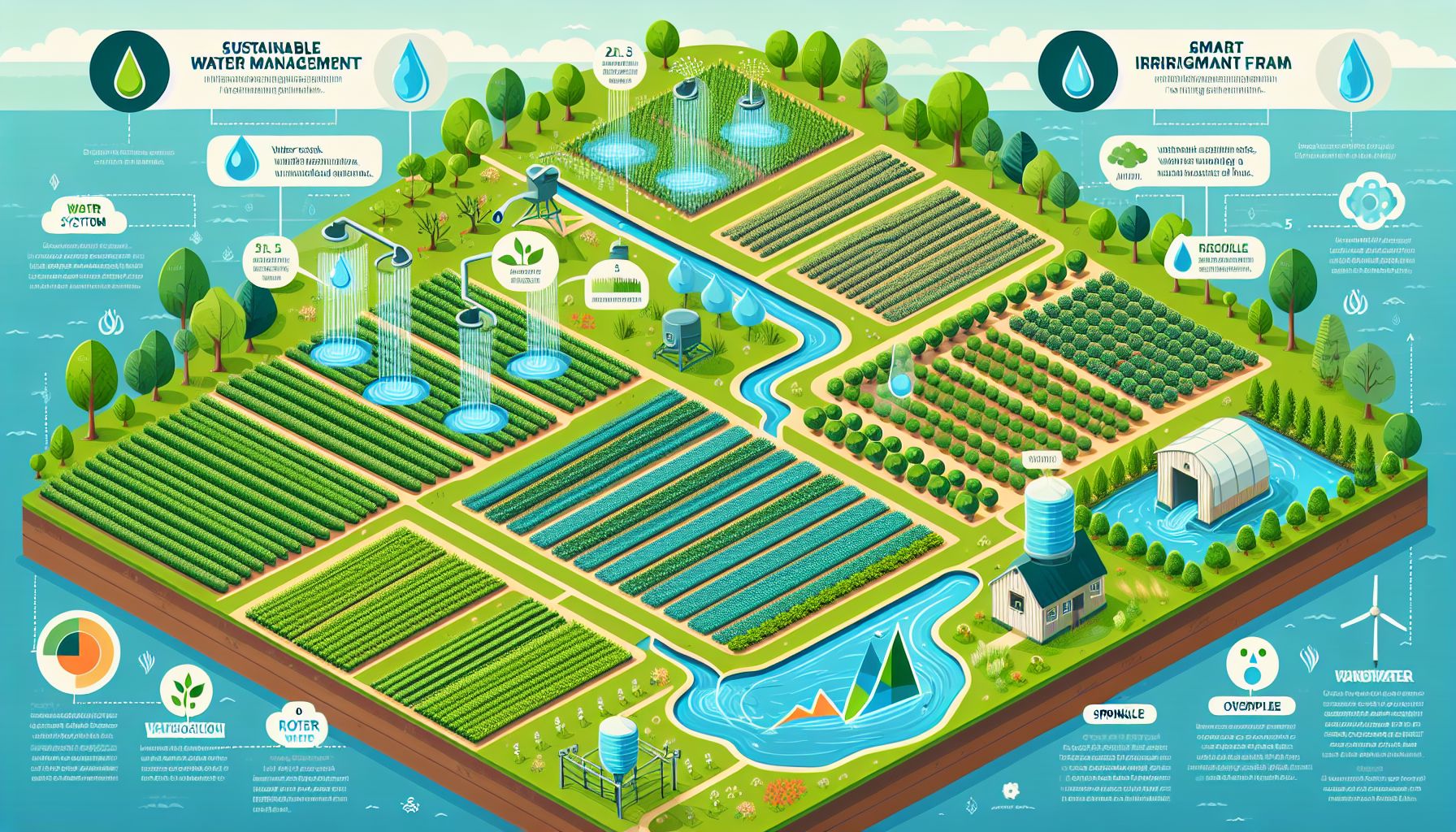
Agriculture consumes more freshwater than any other human activity, and thus efficient water management is essential for the sustainability of agriculture, especially in the context of increasing water scarcity and climate change. In this article, we will explore sustainable water management practices for agriculture, which are critical not only for the conservation of water resources but also for the future of food security.
The Importance of Water Management in Agriculture
Water is the lifeblood of agriculture. It is needed for seed germination, nutrient transport, and photosynthesis. With the global population expected to reach 9.7 billion by 2050, the demand for water to produce food will inevitably increase. Climate change compounds this problem by making water supply more erratic and less predictable. Thus, sustainable water management practices in agriculture are not just a trend; they are a necessity.
Conservation Tillage
One way to conserve water is by changing how we prepare the land for planting. Conservation tillage, which includes practices like no-till and minimum tillage, leaves the previous year’s crop residues on the field before and after planting the next crop. This layer of organic matter improves soil structure and fertility, leading to better water infiltration and retention.
Advantages of Conservation Tillage:
– Reduces runoff and erosion.
– Enhances soil organic matter.
– Increases water infiltration.
– Improves drought resistance.
Efficient Irrigation Techniques
Drip Irrigation
Drip irrigation is a precision technique that delivers water directly to the plant’s root zone. It is more efficient than traditional flood or sprinkler systems, as it minimizes evaporation and runoff.
Benefits of Drip Irrigation:
– Reduces water usage by up to 60%.
– Enables fertigation, where fertilizer is combined with irrigation.
– Helps control weeds and diseases by limiting water to non-crop areas.
Sprinkler Systems
Modern sprinkler systems, such as center pivots or linear move systems, can be equipped with low-pressure nozzles and computer controls to optimize water distribution.
Improvements with Modern Sprinklers:
– Low-pressure nozzles reduce evaporation and drift.
– Computerized controls allow for variable rate irrigation, adjusting water according to crop need.
Micro Sprinklers
Micro sprinklers are suitable for orchards and vineyards, where they provide a precise amount of water without reaching non-productive areas.
Micro Sprinkler Advantages:
– Increased efficiency over traditional overhead sprinklers.
– Reduced water usage and runoff.
Soil Moisture Monitoring
Monitoring soil moisture allows farmers to apply water only when necessary. This can be done using simple tools like tensiometers or more advanced soil moisture sensors that allow for real-time monitoring.
Effects of Soil Moisture Monitoring:
– Prevents over-irrigation.
– Reduces water waste.
– Enhances crop yield through better water stress management.
Rainwater Harvesting
It is the collection and storage of rainwater for agricultural use. This practice can complement the water supply, especially during periods of scarcity.
Components of Rainwater Harvesting:
– Catchment areas such as rooftops or land surfaces.
– Conveyance systems to transport water.
– Storage reservoirs like tanks or ponds.
Crop Selection and Rotation
Growing crops that are suited to the local climate can reduce the demand for water. Crop rotation also improves soil health and can lead to better water efficiency.
Strategic Crop Management:
– Opt for native or drought-resistant species.
– Rotate crops to reduce the risk of pest and disease buildup.
– Employ cover cropping to improve soil moisture retention.
Agroforestry
Integrating trees into agricultural landscapes helps improve water management. Trees can act as windbreaks, reducing evaporation, and their roots improve soil structure, enhancing water penetration and storage.
Agroforestry Benefits:
– Moderates microclimate through shading.
– Increases biodiversity.
– Provides additional economic products like fruits, nuts, or timber.
Water Trading
Water trading is a system where water rights can be bought or sold like a commodity. It allows water to be allocated to more productive uses during times of scarcity, promoting efficient water management.
Water Trading Pros:
– Offers flexibility to farmers.
– Encourages conservation by valuing water as an economic resource.
– Can lead to more equitable distribution of water.
Government Policies and Incentives
Government policies and incentives play a major role in promoting sustainable water management practices. Support can come in the form of subsidies for efficient irrigation technology, technical assistance, or water saving regulations.
Examples of Government Support:
– Subsidizing the cost of drip irrigation systems.
– Providing training for water conservation methods.
– Implementing water use reporting and restrictions.
Education and Extension Services
Educating farmers about sustainable water management practices is essential for widespread adoption. Extension services can provide the necessary training and support.
Educational Outreach Impact:
– Increases farmers’ knowledge about water-efficient techniques.
– Encourages the adoption of new technologies.
– Promotes collaboration and knowledge-sharing among farmers.
Conclusion
Sustainable water management in agriculture is crucial for ensuring that future generations are able to meet their food requirements. By adopting practices such as conservation tillage, efficient irrigation techniques, soil moisture monitoring, crop selection and rotation, and agroforestry, the agricultural sector can play its part in conserving precious water supplies.
Governments, industry, and farmers must work together to implement these strategies and find innovative solutions to the challenges posed by water scarcity. Through education and the right policies and incentives, the transition to more sustainable water management in agriculture can be accelerated.
Sustainable agriculture is not only about water, but it also encompasses a myriad of practices that ensure the long-term productivity and health of ecosystems. As our knowledge and technologies advance, continuous improvement of water management practices will ensure a resilient and food-secure future.
Sources
- Food and Agriculture Organization of the United Nations. http://www.fao.org/home/en/
- United States Department of Agriculture – Natural Resources Conservation Service. https://www.nrcs.usda.gov/
- World Bank Group – Water in Agriculture. https://www.worldbank.org/en/topic/water-in-agriculture