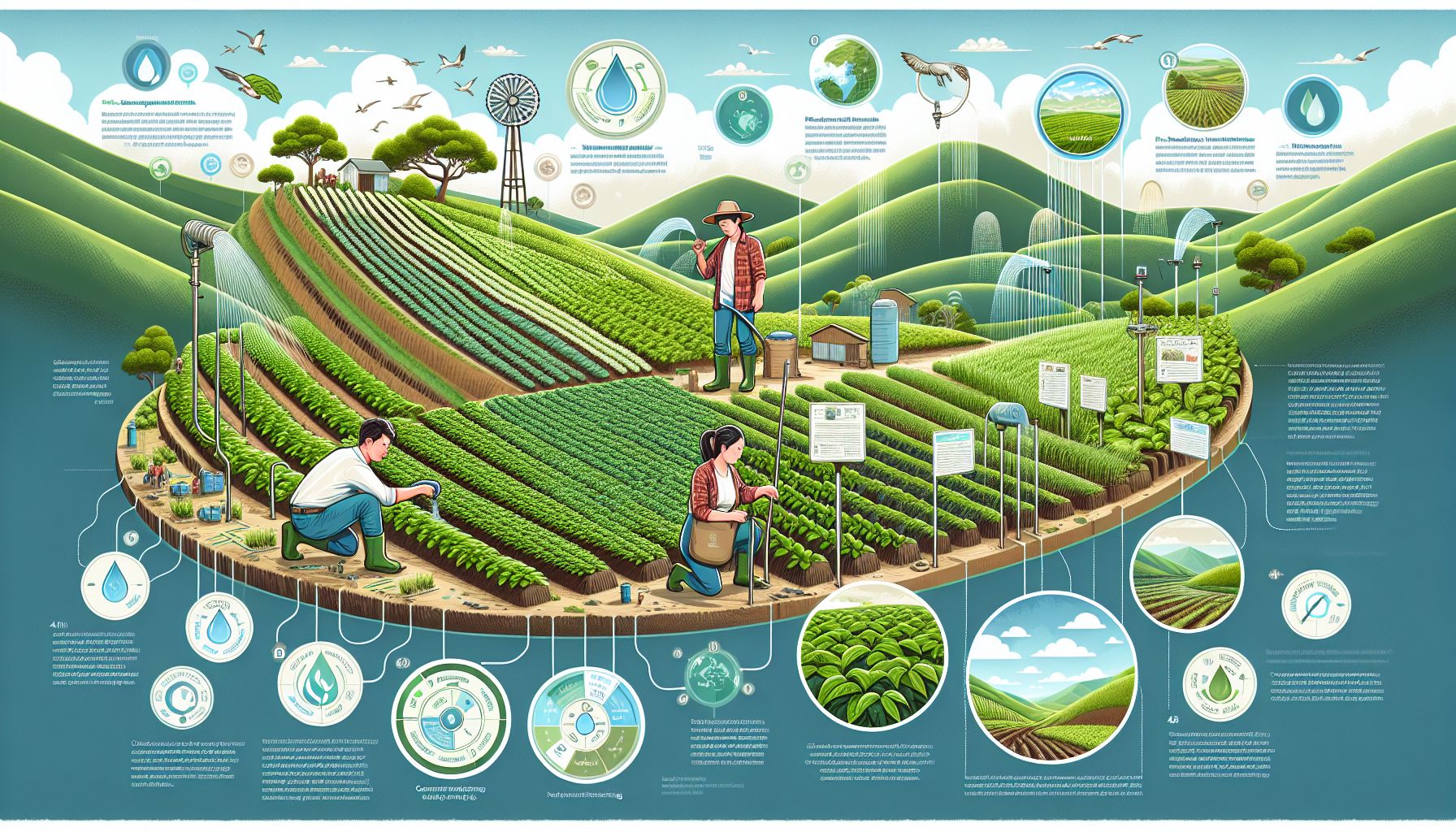
Agriculture is the backbone of many economies around the world, yet it’s also one of the largest consumers and polluters of water resources. As climate change and population growth exert increasing pressure on these resources, sustainable water management practices are not just beneficial — they are essential for future food security. In this article, we will delve into what sustainable water management entails, its benefits, and some of the most effective practices being implemented in the agricultural sector to ensure a water-resilient future.
Understanding Sustainable Water Management
Sustainable water management in agriculture is about using water in a way that meets current crop and livestock needs without compromising the ability of future generations to meet their own needs. It’s a holistic approach that considers the economic, social, and environmental impacts of water usage.
The Importance of Sustainable Water Management
- Ensures Long-Term Availability: By conserving water and protecting water quality, sustainable practices ensure that this crucial resource is available for future generations.
- Protects Ecosystems: Effective management reduces pollution and the depletion of water in sensitive ecosystems.
- Increases Agricultural Productivity: Farmers using sustainable practices can grow more food using less water, which is important for feeding a growing global population.
- Resilience to Climate Change: Sustainable practices can help in building resilience against droughts and other climate change-related weather extremes.
- Economic Efficiency: Water-efficient practices can reduce costs associated with water use, such as pumping, treatment, and distribution.
Best Practices in Sustainable Water Management for Agriculture
Implementing sustainable water management in agriculture involves an array of strategies. Here are some of the leading practices:
1. Soil Moisture Preservation Techniques
- Mulching: Applying a layer of organic material on the soil surface helps to reduce evaporation, improve soil moisture, and suppress weeds.
- Cover Crops: Planting cover crops like clover or vetch can increase soil organic matter, reduce erosion, and maintain soil moisture.
2. Water Harvesting and Storage
- Rainwater Harvesting: Systems are designed to capture rainfall, which can then be stored and used during drier periods.
- Ponds and Reservoirs: These can be constructed to collect and store rainwater or surface runoff for later use in irrigation.
3. Efficient Irrigation Methods
- Drip Irrigation: This system delivers water directly to the roots of crops, minimizing evaporation and reducing the volume of water needed.
- Sprinkler Systems: Modern sprinkler systems can be precision-engineered to apply water more uniformly and at rates suited to the crops and soils.
- Irrigation Scheduling: Using soil moisture and weather data to determine the right times and amounts for watering.
4. Crop Selection and Crop Rotation
- Drought-Resistant Varieties: Choosing crops that are naturally more drought-tolerant can significantly reduce water demand.
- Crop Rotation: Rotating crops can improve soil health, reduce pests and diseases, and can even reduce water requirements.
5. Integrated Pest and Nutrient Management
- Organic Farming Practices: These avoid or minimize synthetic inputs, reducing runoff and preserving water quality.
- Integrated Pest Management (IPM): IPM strategies promote natural pest control methods and reduce the need for chemical pesticides that can contaminate water.
6. Managed Aquifer Recharge
- Aquifer Storage: During wet periods, water can be intentionally channeled into groundwater aquifers for storage and used during dry spells.
7. Monitoring and Data Management
- Water Use Metrics: Collecting data on water use helps in making informed decisions on how to manage water more sustainably.
- Remote Sensing: Satellites and drones can be used to assess crop health, soil moisture levels, and to optimize irrigation.
Case Studies and Success Stories
Implementing sustainable water management practices can result in measurable improvements. Here are a few examples of successful implementations:
- Israel: A global leader in water management, Israel recycles nearly 90% of its wastewater for agricultural use, largely thanks to advanced drip irrigation techniques. Source: Israel Ministry of Foreign Affairs
- California: In the face of severe droughts, Californian farmers have successfully implemented soil moisture sensors and drip irrigation to conserve water. Source: California Department of Water Resources
- India: In rain-fed regions, farmers have improved water use with rainwater harvesting systems and changed planting dates to align with the monsoon season. Source: Water Resources Management Journal
The Way Forward
To address the varying needs and challenges of the global agriculture sector, it’s important to focus on:
- Raising Awareness: Farmers must be made aware of the benefits and methods of sustainable water management.
- Governmental Policy: Governments should create and enforce policies that encourage sustainable practices.
- Innovation and Research: Ongoing research into new technologies and methods is crucial.
- Incentives for Farmers: Subsidies and financial assistance can help farmers transition to more sustainable methods.
Conclusion
Sustainable water management in agriculture is not only about conservation; it’s also about adapting to an ever-changing world and ensuring the longevity of the industry upon which we all depend. As we’ve explored how sustainable practices can positively impact not only crop yields and water usage but also broader ecological and economic systems, it becomes clear that a transition towards more responsible water management practices is urgently needed. The blend of traditional knowledge and cutting-edge technology can pave the way for a future where agriculture is productive, resilient, and harmonious with our planet’s precious water resources.