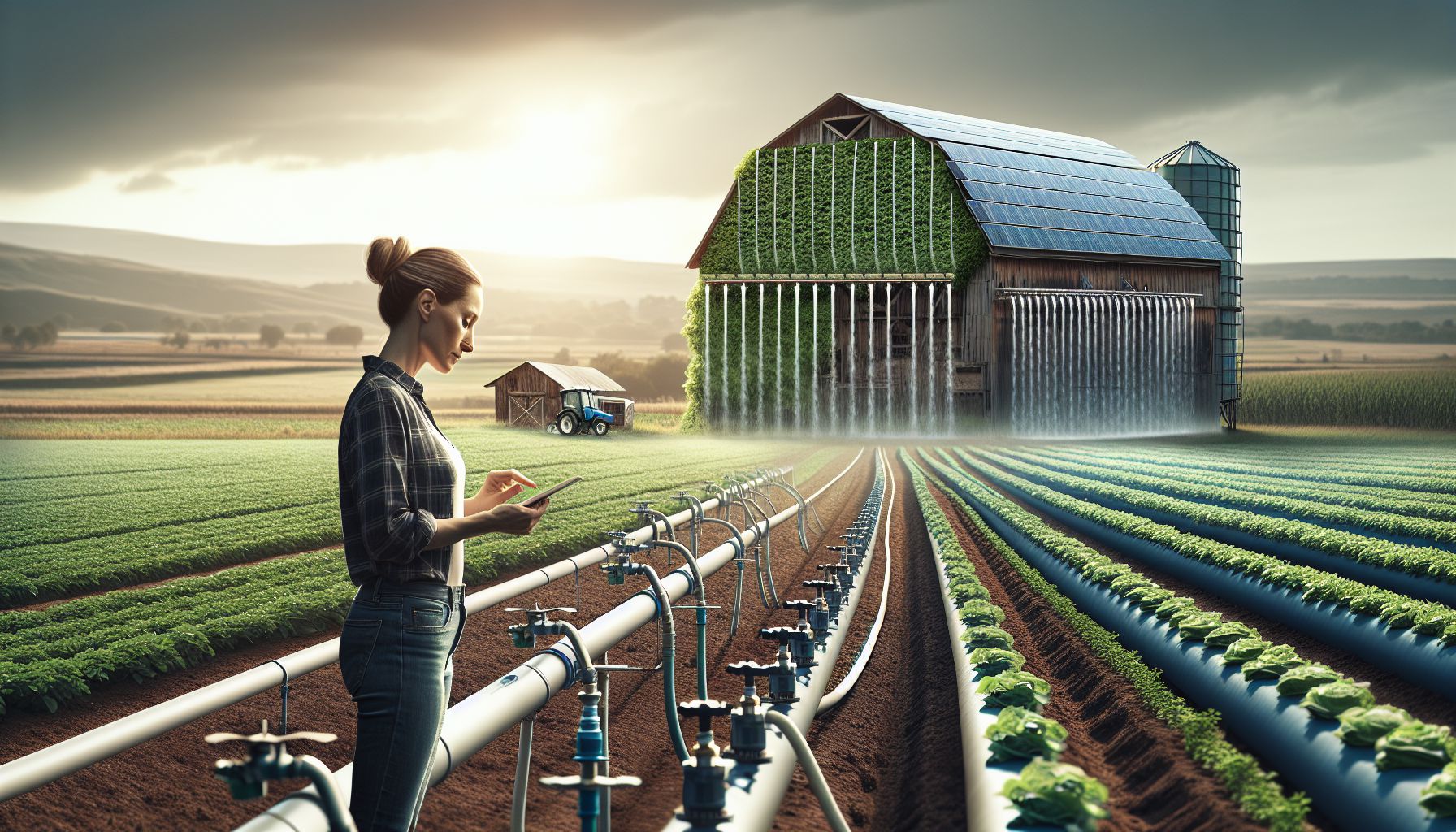
Agriculture without water is an impossibility. Water is the lifeblood of farming, essential not just for growing crops but also for the livestock that form part of the agricultural ecosystem. However, with the increasing pressure on water resources due to human consumption and climate change, there is an urgent need for sustainable water management practices in agriculture. This article discusses several strategies that can be implemented to conserve and use water more efficiently on farms.
Understanding Water Use in Agriculture
Water is used in agriculture in several ways:
- Irrigation: It is the largest consumer of freshwater globally, accounting for about 70% of total withdrawal.
- Livestock: Water is necessary for drinking, sanitation, and processing animal products.
- Aquaculture: Farming of fish, crustaceans, and plants in water also requires significant amounts of water.
- Processing: Post-harvest processing of agricultural products can be water-intensive.
The importance of agriculture makes it crucial that every drop of water is used to its utmost efficiency.
Principles of Sustainable Water Management in Agriculture
Sustainable water management in agriculture seeks to balance the needs of water users and the environment. The following principles should underlie every sustainable water management strategy:
- Efficiency: Using water in a manner that maximizes productivity per unit of water.
- Equity: Ensuring fair distribution of water resources among different users.
- Environment: Protecting and enhancing the quality and quantity of water resources and related ecosystems.
Strategies for Sustainable Water Use in Agriculture
1. Irrigation Management
- Drip Irrigation: Delivers water directly to the plant’s roots, significantly reducing evaporation losses.
- Irrigation Scheduling: Employing weather and soil moisture data to determine optimal irrigation times.
2. Crop Selection and Management
- Drought-Resistant Varieties: Using crops genetically designed to thrive with less water can reduce dependence on irrigation.
- Crop Rotation: Rotating crops can help maintain soil structure and water retention.
- Cover Crops: These can protect soil from erosion, helping it retain moisture.
3. Soil Management
- Conservation Tillage: Minimizing tillage preserves soil structure and water content.
- Mulching: Organic or inorganic mulches can help retain soil moisture.
- Organic Farming: Enhances soil organic matter, which improves water retention.
4. Water Harvesting and Storage
- On-Farm Ponds: Storing water from wet seasons for use during dry seasons.
- Rainwater Harvesting: Collecting rainfall to supplement irrigation needs.
- Aquifer Recharge: Techniques such as spreading basins can help increase groundwater levels.
5. Reuse and Recycling
- Treated Wastewater: Using secondary treatment technologies to recycle water for irrigation.
- Graywater Systems: Reusing wash water from the farm itself for irrigation or livestock.
6. Use of Technology
- Sensor Technology: Soil moisture sensors and satellite imagery can provide real-time water management data.
- Precision Agriculture: Using data analytics to optimize water usage based on various on-farm parameters.
7. Policy and Education
- Integrated Water Resource Management (IWRM): Adopting policies that consider the entire watershed.
- Farmer Education: Increasing awareness and competency in water management techniques.
Real-World Implementations and Innovations
Efforts are being made around the world to implement more sustainable practices:
1. Israel’s Use of Drip Irrigation
Israel is often cited as a world leader in drip irrigation technology. They have developed systems that are finely tuned to release water in precise amounts at the most beneficial times, hugely conserving water in a region where it is scarce.
2. Rice Intensification
The System of Rice Intensification (SRI) has been developed as an alternative to traditional flood-based irrigation practices. It uses less water and has been shown to increase yields.
3. Smart Irrigation Controllers
Technological advancements have led to the development of smart irrigation controllers that can adjust watering schedules based on weather forecasts, reducing the amount of wasted water.
Challenges
Implementing sustainable water management practices isn’t without its challenges. It requires investment in new technologies and infrastructure, which can be expensive. There is also a need for comprehensive policy frameworks and extension services to help disseminate best practices among farmers.
The Way Forward: Collaborative Efforts
To successfully transition to more sustainable water management practices, all stakeholders in the agricultural sector—farmers, governments, scientists, and businesses—must work together. New technologies and methods need to be financially and technically accessible for farmers, and policies must be in place to support their adoption.
Resources for Further Reading
- Food and Agriculture Organization (FAO): Offers extensive resources on water management in agriculture, along with detailed reports and guidelines.
- International Commission on Irrigation & Drainage (ICID): Focuses on enhancing the worldwide supply of food and fibre for all people by improving water and land management.
- Water Footprint Network: Provides tools and information for companies and individuals to assess and reduce their water footprints.
Implementing sustainable water management practices means ensuring a future where agriculture can continue to feed the world without depleting its most precious resource: water. As the pressures on global water resources grow, the agricultural sector has the opportunity—and the responsibility—to lead the way in water conservation efforts.