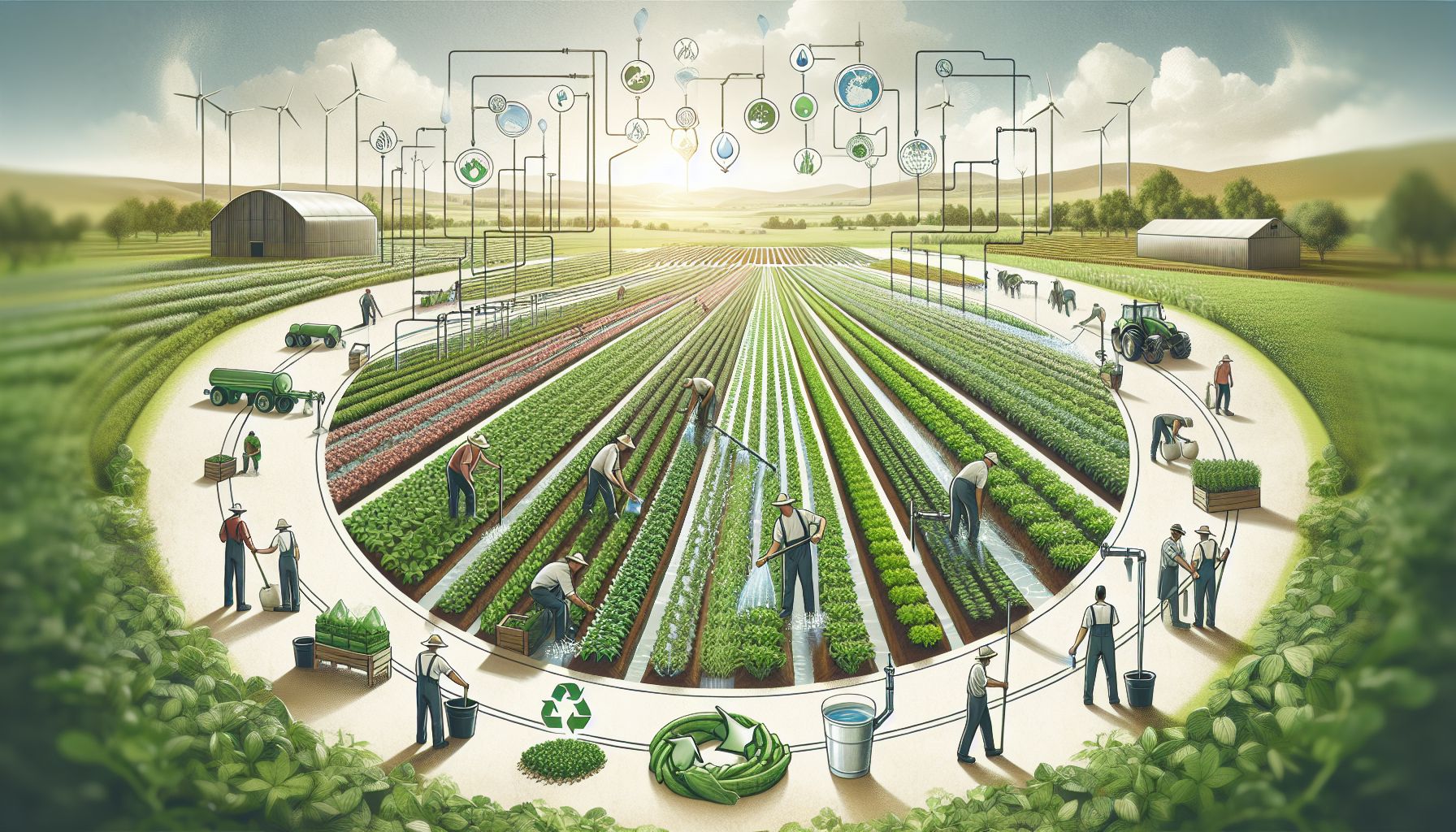
Agriculture is the backbone of many economies around the world, and it remains the largest consumer of freshwater resources. The sector faces significant challenges in managing these resources sustainably, particularly as the demand for food grows with an increasing global population. Sustainable water management in agriculture is not just beneficial for the environment but also for the farmers, as it can lead to improved crop yields, reduction in water costs, and resilience against droughts and other climatic changes. This article explores sustainable water management practices that can be adopted in agriculture to optimize water use and ensure long-term sustainability of water resources.
Understanding the Need for Sustainable Practices
Before diving into the various sustainable practices, it’s crucial to understand the urgency behind them:
-
Water Scarcity: With the growing population and increased industrial demands, fresh water, which is already a limited resource, is becoming increasingly scarce. The United Nations estimates that by 2025, 1.8 billion people will be living in regions with absolute water scarcity.
-
Climate Change: It is altering precipitation patterns and distribution, leading to extremes of drought and flooding, which directly affect agricultural productivity and water availability.
-
Agricultural Runoff: Unsustainable water practices in agriculture can lead to runoff that carries fertilizers, pesticides, and sediments into water bodies, causing pollution and ecosystem degradation.
Best Practices for Sustainable Water Management in Agriculture
Conservation Tillage
Conservation tillage is a method that leaves the previous year’s crop residue on fields before and after planting the next crop. This practice minimizes soil erosion, improves soil health, and enhances water retention. No-till or reduced-till methods help conserve water and ensure that it is available for crops when they need it the most.
Efficient Irrigation Systems
Efficient irrigation systems such as drip or trickle irrigation and sprinkler systems can substantially reduce water wastage by delivering water directly to the plant roots rather than flooding the field.
Drip Irrigation
Drip irrigation is highly effective for row crops, vineyards, and orchards, having an efficiency of up to 90%. It minimizes evaporation and runoff by applying water slowly at the plant base.
Sprinkler Systems
Sprinkler systems can also be useful, especially when they are automated and equipped with moisture sensors to irrigate only when necessary.
Water Harvesting
Capturing and storing rainwater for agricultural use can drastically reduce dependence on groundwater or surface water. Techniques such as ponds, tanks, and rain barrels can help collect and save water during wet seasons for use during dry periods.
Crop Rotation and Diverse Cropping
Rotating crops and having a diverse set of crops can improve soil structure and health, leading to better water absorption and retention. Legumes, for example, can fix nitrogen in the soil, reducing the need for water-intensive nitrogen fertilizers.
Soil Moisture Management
Keeping the soil healthy is key to water conservation. Practices like mulching and adding organic matter can increase the water-holding capacity of the soil. Moisture sensors can help farmers to understand when to water and when to hold back, using water more effectively.
Drought-Resistant Crop Varieties
Developing, cultivating, and using crop varieties that are resistant to drought can be a game-changer in regions that experience low rainfall. Such crops require less water and are more likely to survive and produce under arid conditions.
Buffer Strips and Vegetative Barriers
Planting vegetative barriers like trees, shrubs, or grasses around fields can help reduce runoff, encourage infiltration, and protect waterways from pollutants originating from agricultural fields.
Integrated Pest Management (IPM)
IPM reduces the reliance on chemical pesticides, which can contaminate water. By promoting biological and cultural practices to control pests, IPM helps in maintaining water quality.
Precision Agriculture
Modern technologies such as GPS, remote sensing, and computer models can optimize field-level management with regards to planting, fertilizing, and watering. Precision agriculture aims to ensure that crops get precisely what they need for optimal growth, without overuse or waste of water.
Education and Training
Educating farmers about the value of water conservation and sustainable practices is crucial. Workshops, training sessions, and extension services can provide farmers with the knowledge and tools they need to adopt sustainable practices.
Regulatory Policies and Incentives
Governments and institutions play a crucial role in promoting sustainable water management through policies, regulations, and incentives. Subsidies for efficient irrigation technology or support for farmers transitioning to more sustainable practices can drive a significant shift towards water conservation.
Challenges and Solutions
Adopting these sustainable practices comes with challenges such as the initial cost, the need for farmer education, and the requirement for support from institutions. Solutions include governmental and non-governmental financial support, increased research and development in water-saving technologies, and the creation of community-centered approaches where farmers can work together and learn from one another.
Conclusion
Sustainable water management in agriculture is more critical than ever in the face of challenges such as water scarcity, population growth, and climate change. By implementing practices like efficient irrigation, water harvesting, soil moisture management, and precision agriculture, farmers can play a pivotal role in conserving this precious resource. There is no one-size-fits-all solution, and each region will have to adapt these practices according to its unique climate, soil, and water availability issues. However, with the right education, support, and incentives, sustainable water management can become the norm rather than the exception in the agricultural sector.
Sources:
-
United Nations. (n.d.). Water Scarcity. United Nations. https://www.un.org/waterforlifedecade/scarcity.shtml
-
Food and Agriculture Organization of the United Nations. (n.d.). Water for Sustainable Food and Agriculture. http://www.fao.org/3/i7959e/i7959e.pdf
-
National Resources Conservation Service. (n.d.). Water Management. U.S. Department of Agriculture. https://www.nrcs.usda.gov/wps/portal/nrcs/main/national/water/manage/