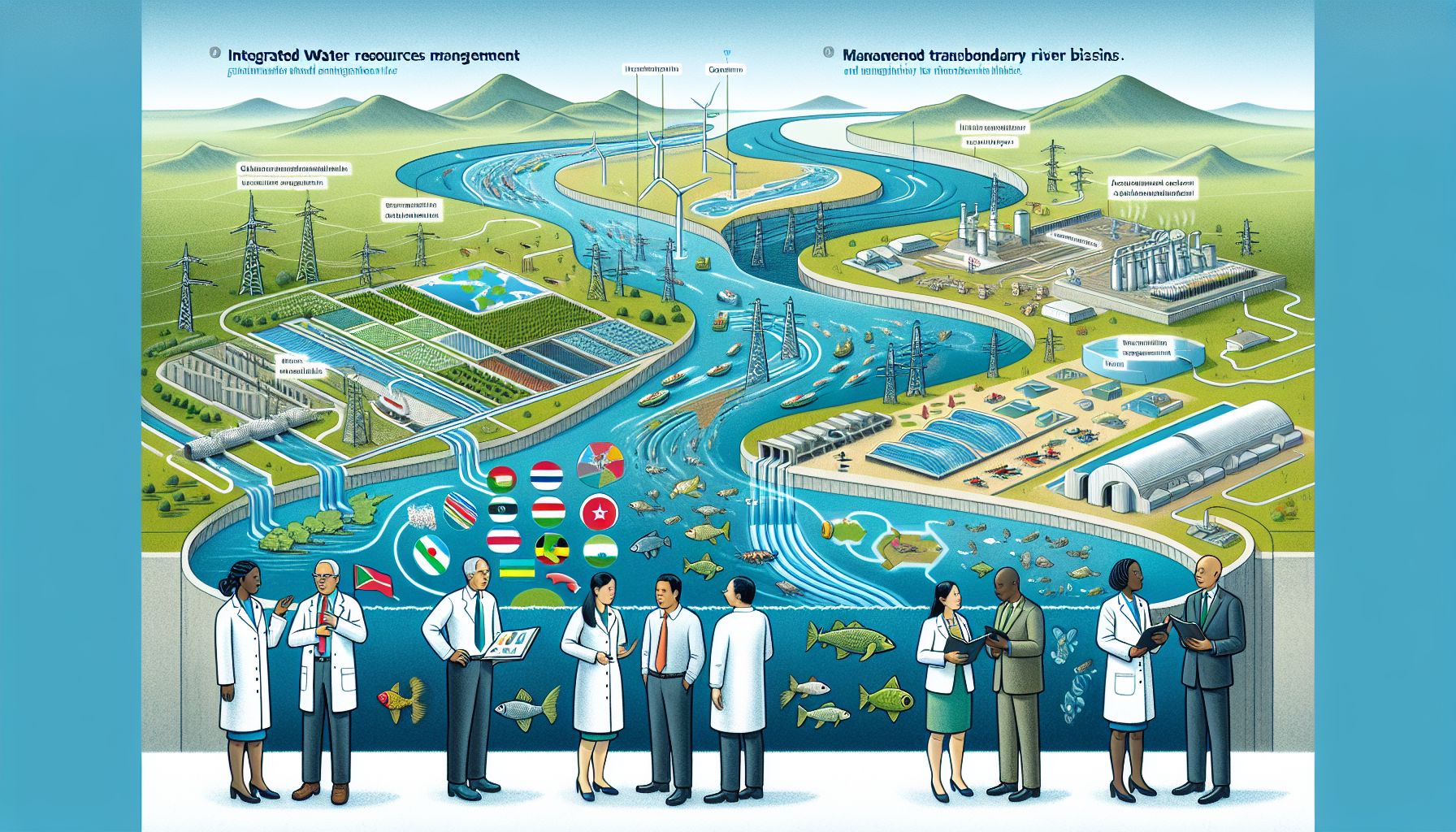
As we look around, it’s evident that water is the lifeblood of ecosystems, economies, and societies. Yet, despite its indispensability, it remains a resource that is not only finite but also unevenly distributed across the world. It is magnificently optimized through natural cycles but is equally threatened by human activities.
The challenge becomes starker when we focus on transboundary river basins, which are bodies of water that traverse political boundaries and necessitate a high degree of cooperation for sustainable management. In such complex scenarios, Integrated Water Resources Management (IWRM) emerges as a beacon of hope. IWRM takes a holistic view on water management, recognizing the multifaceted nature of water and the interdependencies of its use.
This article delves into the importance of integrated water resources management, especially for transboundary river basins, and outlines strategies for implementing it effectively.
What Is Integrated Water Resources Management (IWRM)?
IWRM is a process that promotes the coordinated development and management of water, land, and related resources to maximize economic and social welfare without compromising the sustainability of vital ecosystems. It hinges on three key pillars:
- Economic Efficiency: Using water in a way that maximizes its benefit in all its various uses.
- Social Equity: Ensuring that the distribution of water is fair and accessible to all sectors of the population.
- Environmental Sustainability: Protecting the water ecosystems to maintain their ability to deliver services in the future.
Challenges in Transboundary River Basins
Transboundary river basins cover almost half of the Earth’s land surface and are home to about 40% of the world’s population. These basins include critical waterways like the Nile, the Amazon, and the Mekong, which span multiple national boundaries. The challenges typically encountered in these regions are multi-faceted:
- Political and Legal Complexities: Different countries have their laws and regulations concerning water resources.
- Economic Disparities: Nations within a basin may have different economic powers, which can lead to imbalances in the negotiation and implementation of water management policies.
- Cultural Diversity: Varied cultural approaches to water usage and conservation can lead to misunderstandings and conflicts.
- Environmental Concerns: Pollution and ecosystem degradation do not respect borders, making unilateral attempts at conservation ineffective.
The Imperatives of IWRM in Transboundary Contexts
To manage these challenges, IWRM in transboundary river basins must navigate a path that satisfies the needs of different stakeholders while preserving the integrity of the water resource. Here are some imperatives of IWRM that need to be considered:
- Shared Vision: Developing a collaborative framework that all nations within the basin can agree upon.
- Joint Monitoring and Data Sharing: Implementing transparent systems that collect and share data between countries for informed decision-making.
- Adaptive Management: Establishing flexible management structures that can adapt to changing circumstances, like climate variation or socio-economic shifts.
- Conflict Resolution Mechanisms: Creating platforms for dialogue and dispute resolution that prevent conflicts from escalating.
- Legal and Institutional Arrangements: Developing binding agreements that clearly outline the rights, responsibilities, and roles of each nation within the basin.
Case Studies of IWRM in Action
Successful examples of IWRM in transboundary rivers illustrate potential pathways for other regions:
- The Danube River Basin, shared by 19 countries, has an established commission that ensures the river is managed sustainably and equitably.
- The Mekong River Commission is another example where countries work together to promote sustainable development and reduce poverty through joint water resources management and the sharing of data and information.
Implementing IWRM Strategies for Transboundary River Basins
The following are strategic elements crucial for effective IWRM in transboundary contexts:
- Stakeholder Engagement: Encouraging the participation of all stakeholders at every level – from the local communities to national governments.
- Infrastructure Development: Building infrastructure, such as dams and irrigation systems, that benefits multiple countries and helps manage the water more efficiently.
- Economic Tools and Incentives: Instituting economic mechanisms, like water pricing or trading, that promote efficient water use.
- Technical Cooperation: Sharing expertise and technology that enhance water productivity and conservation across boundaries.
- Capacity Building: Investing in training and education to strengthen local institutions and communities’ ability to manage water resources.
Future Directions
As climate change and population growth exert increasing pressures on water resources, the need for IWRM in transboundary river basins will only grow. Research and innovation in water technologies and policies are essential to meet these challenges.
In conclusion, Integrated Water Resources Management is not just a set of principles but a vehicle for cooperation and development that can lead transboundary river basins to a future where water is a bridge, not a border, between nations (United Nations Water, International Water Management Institute, World Bank). Whether through shared governance or local involvement, the essence of IWRM is adapting to the needs of people and the environment in a fair and just manner. As we navigate the sustainably challenging waters of the 21st century, let’s harmonize our efforts for the good of all nations and people who depend on these life-giving rivers.