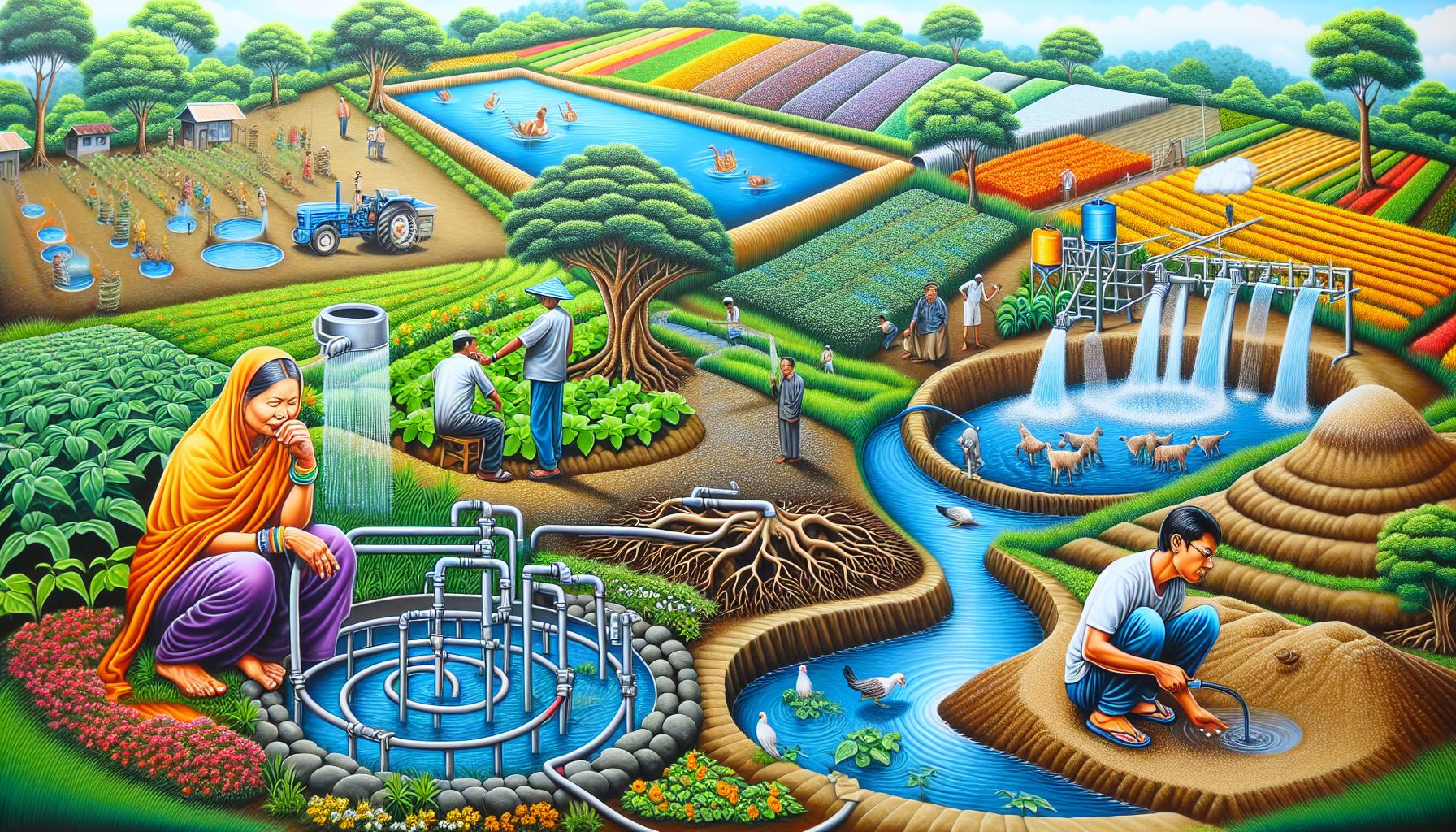
Agriculture is the backbone of the global economy, providing sustenance for billions and forming the essential foundation for human life. Yet, this critical sector is one of the largest consumers of water resources. As the world grapples with the dual challenges of feeding a growing population and conserving precious water supplies, sustainable water management practices for agriculture have become more important than ever. This article delves into the myriad of techniques that can be implemented to ensure agriculture becomes more efficient, resilient, and sustainable in its water use.
Understanding the Importance of Sustainable Water Management in Agriculture
Before we explore the various practices, it’s vital to grasp why sustainable water management is imperative. Agriculture accounts for approximately 70% of freshwater withdrawals worldwide, according to the Food and Agriculture Organization (FAO) of the United Nations[^1^]. Inefficient water use in agriculture not only depletes water resources but can also lead to salinization and pollution of water bodies, soil degradation, and ecosystem imbalances.
As climate change intensifies, the availability of freshwater is increasingly unpredictable, with droughts and floods becoming more frequent and severe. Managing water sustainably is not just about conservation; it’s about adopting a holistic approach that balances social, economic, and environmental needs.
Sustainable Water Management Practices
Below are some of the most effective sustainable water management practices for agriculture:
1. Water-Smart Crop Selection and Crop Rotation
Choosing crops that are naturally more drought-resistant and well-suited to the local climate can significantly reduce water needs. For instance, millets, sorghum, and pulses often require less water than rice and sugarcane. Moreover, rotating crops can help in soil water retention and reducing the need for irrigation.
2. Soil Management
Healthy soil has the potential to hold water more effectively, reducing runoff and the need for supplementary irrigation. Practices such as conservation tillage, mulching, and organic farming enhance soil structure, promote water infiltration, and improve water retention capacity.
3. Drip Irrigation
Drip irrigation delivers water directly to the roots of plants, minimizing evaporation and runoff. This system can save water by up to 60% compared to traditional flood irrigation methods. It also reduces the incidence of diseases that occur due to excessive moisture on plant leaves.
3. Rainwater Harvesting
Capturing and storing rainwater can provide an additional water source for agriculture. This practice can range from simple rain barrels to sophisticated systems involving catchment areas, storage tanks, and distribution systems. Rainwater harvesting can supplement irrigation needs, especially during dry spells.
4. Use of Mulches
Mulch, such as straw, leaves, or compost, helps in retaining soil moisture by reducing evaporation. It also suppresses weed growth, which competes with crops for water.
5. Contour Farming and Terracing
On sloped land, contour farming involves planting along the natural contours of the terrain to slow water runoff and encourage water infiltration. Terracing creates flat areas on a slope, trapping water for crops grown on the terraces.
6. Managed Aquifer Recharge
Managed aquifer recharge involves intentionally recharging groundwater basins with surface water, primarily during periods of high flow, to be stored and used during times of shortage.
7. Precision Agriculture
Technological advancements like precision agriculture use data-driven tools to determine the exact water needs of plants. This practice includes soil moisture sensors, weather predictions, and satellite imagery to optimize irrigation scheduling and amounts.
8. Agroforestry
Integrating trees with crops or livestock operations can protect against wind and water erosion, improve groundwater recharge, and increase soil organic matter, which improves water retention.
9. Buffer Strips and Riparian Zones
Planting vegetation strips along waterways can trap sediment, nutrients, and pesticides, preventing them from entering water bodies. These strips can also enhance water infiltration and provide habitat for beneficial species.
10. Integrated Pest Management (IPM)
IPM reduces the reliance on chemical pesticides, which can contaminate waterways. Practices such as crop rotation, biological pest control, and the use of less water-polluting pesticides can protect water quality.
11. Polyculture and Intercropping
Growing a variety of crops together can reduce the spread of pests and diseases, improve soil health, and lead to a more efficient use of water. Different plants have different water needs and root depths, which can optimize the use of available moisture.