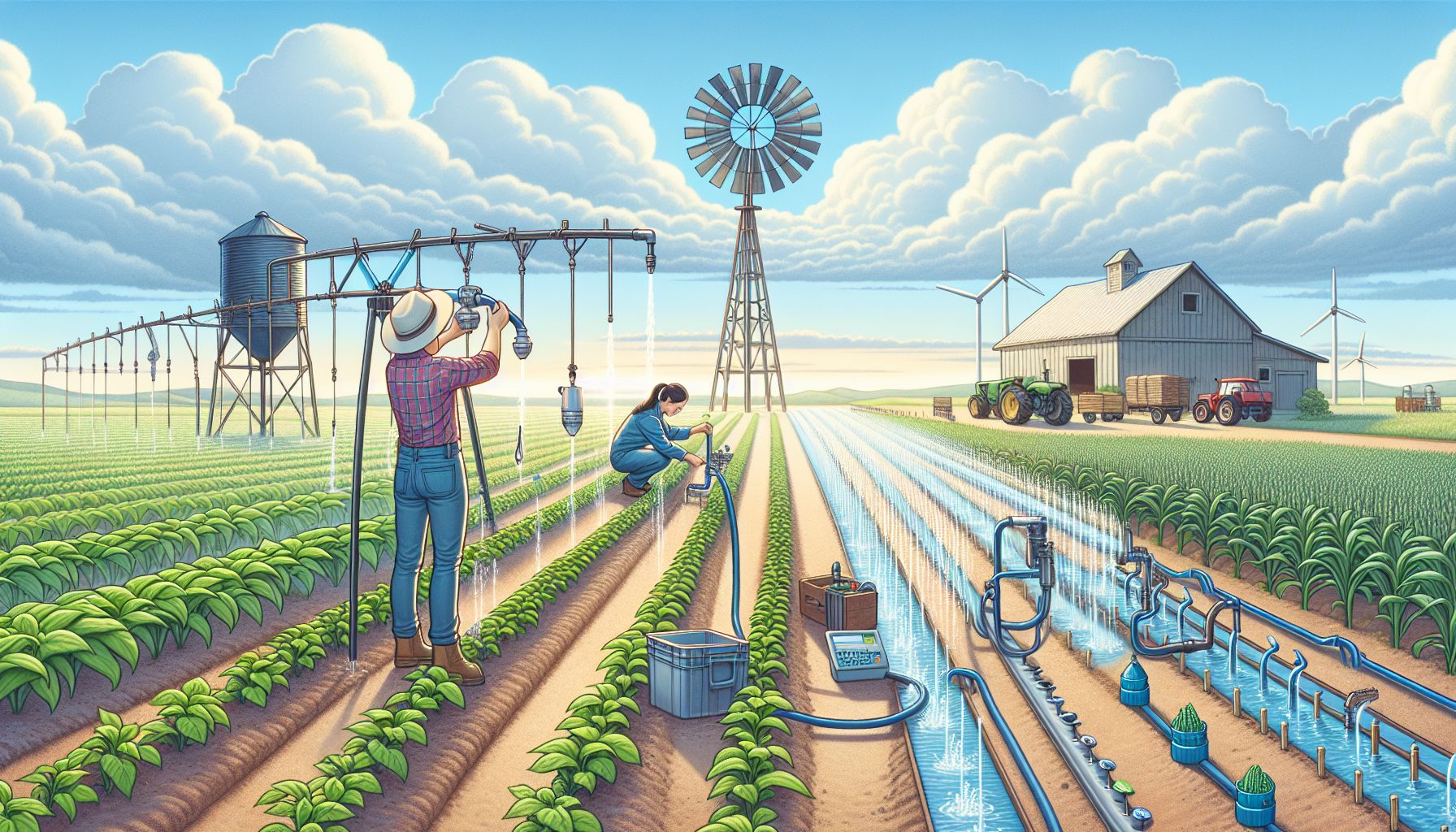
Agriculture is the backbone of many economies around the world, and it’s also one of the largest consumers of fresh water. With global populations continuing to grow and the pressures of climate change becoming ever more evident, there’s an urgent need for sustainable water management practices in the agricultural sector. This article will delve into why sustainable water management is crucial in agriculture, explore a variety of practices that can be adopted, and examine the benefits and challenges associated with implementing these strategies.
Understanding the Importance of Water in Agriculture
Water is essential for agriculture as it directly supports the growth and health of crops. According to the UN Food and Agriculture Organization, agriculture accounts for approximately 70% of all freshwater withdrawals globally, making it the largest user of water resources.
Given such high demand, any improvements in water efficiency in agriculture can have a significant impact on overall water conservation. Ensuring a sustainable and efficient use of water for agriculture also helps in maintaining food security and the livelihoods of millions of farmers worldwide.
Sustainable Water Management Practices
1. Soil Moisture Conservation
One of the primary ways of managing water sustainably involves increasing the soil’s capacity to retain moisture. This can be achieved through mulching, which involves covering the soil surface with organic materials such as straw or leaves, thereby reducing evaporation rates. Moreover, no-till farming that leaves the soil undisturbed preserves the soil structure and organic content, enhancing its moisture retention capacity.
2. Efficient Irrigation Systems
Transitioning from traditional irrigation methods to more efficient systems can reduce water wastage significantly. Techniques like drip irrigation, which delivers water directly to the plant roots, and micro-irrigation systems can substantially decrease the amount of water needed for crops.
3. Crop Rotation and Polyculture
Implementing crop rotation, where different types of crops are planted sequentially in the same field, can improve soil health and reduce the need for water-intensive crops to be planted continuously. Polyculture, or growing multiple crop species together, can also maximize the use of space and water efficiency.
4. Utilization of Treated Wastewater
Using treated wastewater for irrigation is another sustainable practice that can conserve fresh water resources. Advances in wastewater treatment technology have made it possible to safely reuse this water, especially for non-food crops.
5. Water Harvesting Techniques
Capturing and storing rainwater for agricultural use is another effective way of managing water sustainably. This can include building ponds, reservoirs, and catchments systems that can supplement irrigation needs, particularly in regions with seasonal rainfall.
6. Drought-Resistant Crops
Developing and planting crops that are resistant to drought conditions can result in significant water savings. These crops are bred or genetically modified to withstand periods of low water availability without substantial losses in yield.
7. Weather Forecasting and Remote Sensing
Using advanced weather forecasting and remote sensing technology allows farmers to optimize their irrigation schedules based on real-time climate data, leading to more precise water application and less wastage.
8. Integrated Pest Management
Integrated pest management (IPM) techniques that combine biological, cultural, mechanical, and chemical tools in a cohesive strategy can reduce water pollution and the overuse of water associated with the application of pesticides and fertilizers.
Benefits of Sustainable Water Management in Agriculture
- Conservation of Scarce Water Resources: By using water more efficiently, sustainable practices help conserve limited freshwater supplies.
- Increased Crop Yields: Efficient use of water can lead to more consistent and potentially higher crop yields.
- Reduced Soil Erosion and Degradation: Sustainable practices can enhance soil structure and fertility, which, in turn, supports better water absorption and reduces erosion.
- Energy Savings: Efficient irrigation systems often require less energy to operate, thus reducing the overall environmental footprint of agricultural operations.
- Resilience to Climate Change: By adopting such practices, agriculture can become more resilient to the erratic weather patterns and water scarcity induced by climate change.
Challenges in Implementing Sustainable Water Management
- Initial Investment Costs: The conversion to more sustainable water systems often involves substantial upfront costs.
- Knowledge and Training: Farmers need access to education on the benefits and use of these systems and practices.
- Policy and Regulation: Adequate policies and incentives may be needed to encourage farmers to adopt sustainable water management practices.
Conclusion
Sustainable water management practices in agriculture are essential for our future food security and the conservation of water resources. By adopting methods such as efficient irrigation systems, water harvesting techniques, and drought-resistant crops, agriculture can become more resilient and less reliant on finite water supplies.
While considerable challenges exist, the potential benefits to the environment, economy, and society at large are immense. Incorporating technology, policy support, financial investment, and education at the core of water management strategies can pave the way for a sustainable transformation of the agricultural sector.
Sources
- UN Food and Agriculture Organization. FAOSTAT. http://www.fao.org/faostat/en/
- USDA Natural Resources Conservation Service. Water Management. https://www.nrcs.usda.gov/wps/portal/nrcs/main/national/water/manage/
- World Bank. Water in Agriculture. https://www.worldbank.org/en/topic/water-in-agriculture