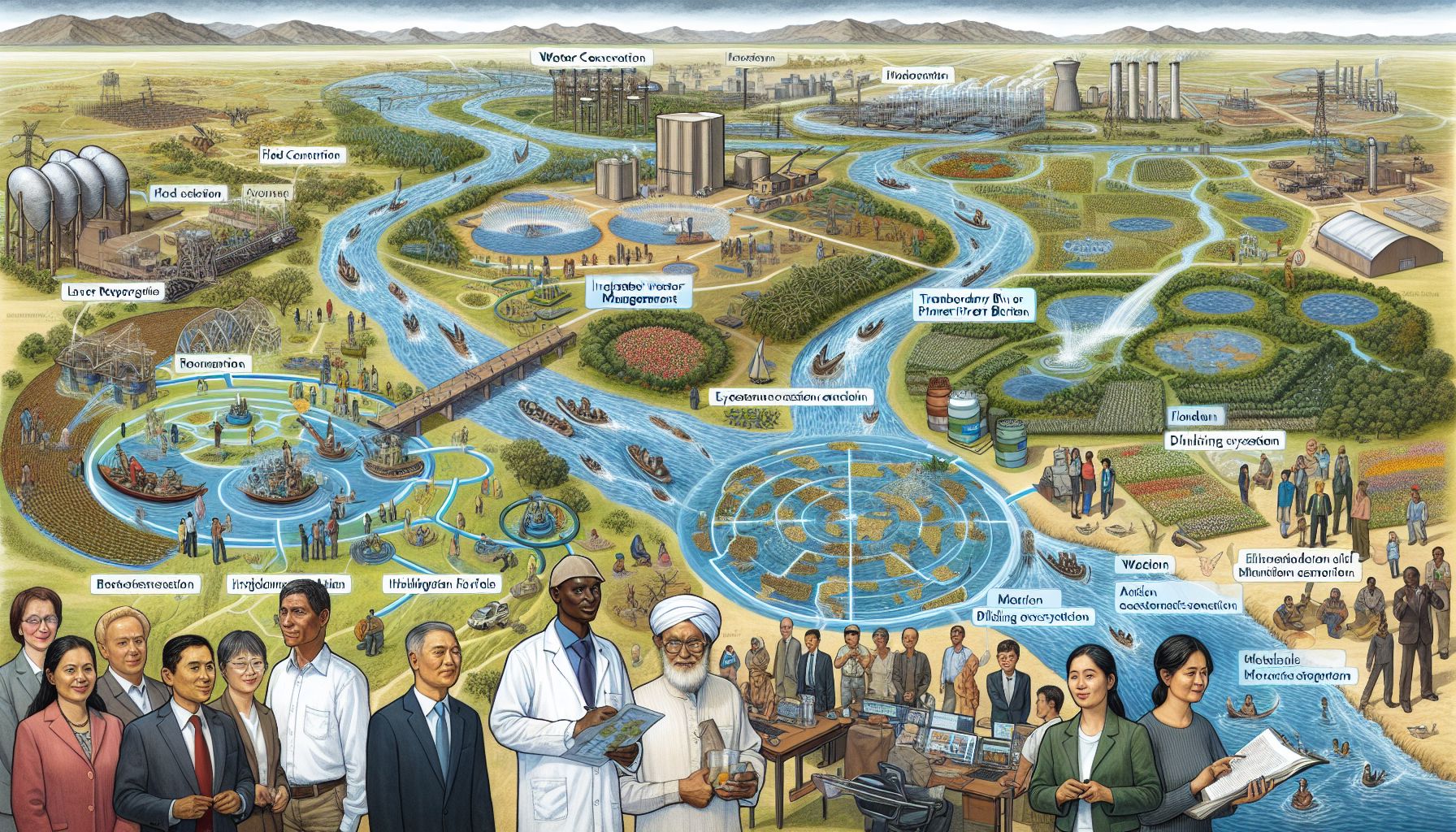
Water is the lifeblood of our planet, essential for sustaining ecosystems, economies, and societies. However, managing this critical resource becomes particularly challenging when it crosses political borders, as is the case with transboundary river basins. In these situations, integrated water resources management (IWRM) provides a framework for cooperation, joint decision-making, and sustainable management of shared water resources. This article delves into the importance of IWRM for transboundary river basins and explores strategies and success stories from around the world.
Understanding Transboundary River Basins
A transboundary river basin is an area where a river crosses at least one political border, whether it be international or within state provinces or territories. These basins cover nearly half of the earth’s land surface and are home to about 40% of the world’s population. Examples include the Nile, Amazon, Mekong, and Danube rivers. The management of these basins is inherently complex due to differing national legislation, economic development levels, and priorities of the countries involved.
The Significance of Integrated Water Resources Management (IWRM)
IWRM is a process that promotes the coordinated management and development of water, land, and related resources to maximize economic and social welfare without compromising the sustainability of vital ecosystems. In the context of transboundary river basins, IWRM aims to facilitate cooperation among countries and stakeholders, mitigate conflicts, and optimize the use of water resources.
Key principles of IWRM for transboundary river basins include:
- Equitable and reasonable utilization: Shared water resources should be used in a way that is equitable and reasonable, regarding the needs of all riparian countries.
- Participatory approach: All stakeholders, including affected communities, should have a say in the decision-making process.
- Ecosystem protection: The natural environment and its capacity to sustain life and human activity must be safeguarded.
- Integrated approach: Water resource management should consider the interconnections between water, land, and socio-economic activities.
Strategies for Effective Transboundary Water Management
1. Establishing Legal Frameworks
Creating a legal framework for cooperation, often in the form of treaties or agreements, is crucial for effective transboundary water management.
2. Joint Monitoring and Data Sharing
Countries in a transboundary basin should collaborate on data gathering and sharing for informed decision-making.
3. Institutional Cooperation
Joint bodies like river basin organizations can facilitate permanent cooperation and conflict resolution.
4. Sustainable Water Allocation
Policies should be in place to allocate water sustainably, ensuring all countries have access to their rightful share.
5. Investment in Shared Projects
Collaborative projects, such as joint water infrastructure, can achieve shared benefits and foster cooperation.
6. Stakeholder Engagement
Involving communities, NGOs, and other stakeholders ensures diverse interests are represented and addressed.
7. Ecosystem-Based Approaches
Protecting ecosystems can prevent degradation and support the health of the river basin as a whole.
Success Stories in Transboundary River Management
Several regions worldwide have made significant progress by implementing IWRM in transboundary river basins.
The Danube River Basin
Spanning across 18 countries, the Danube River Basin is managed through the International Commission for the Protection of the Danube River (ICPDR), which has successfully reduced pollution and managed floods and droughts through collective action.
The Mekong River Commission
The Mekong River Commission (MRC) is another example of successful IWRM. Comprising Cambodia, Lao PDR, Thailand, and Vietnam, the MRC works to promote sustainable development and ensure the equitable sharing of water resources.
The Senegal River Basin Development Authority
The countries of Guinea, Mali, Mauritania, and Senegal established the Senegal River Basin Development Authority (OMVS), which has been instrumental in managing shared water resources for hydropower, irrigation, and navigation.
Challenges and the Road Ahead
Despite successes, transboundary water management faces challenges, including political tensions, lack of funding, and climate change impacts. However, the growing recognition of the importance of joint management and the success of established basins offer a roadmap for future efforts.
Continued emphasis on diplomatic dialogue, funding for sustainable projects, and inclusive approaches that incorporate community needs and voices will be essential for the long-term success of IWRM in transboundary river basins.
Conclusion
Integrated water resources management for transboundary river basins presents both significant challenges and opportunities. By embracing cooperation, sustainable practices, and equitable resource sharing, countries can protect their shared water resources for future generations. As we move forward, the lessons learned from successful river basin management can guide the implementation of IWRM strategies globally, ensuring that water—a source of life and conflict—becomes a foundation for peace and sustainable development.
Sources:
- United Nations Water. “Transboundary Waters.” http://www.unwater.org/water-facts/transboundary-waters/
- International River Foundation. “Integrated Water Resource Management.” http://www.riverfoundation.org.au/water_management/iwrm.php
- Global Water Partnership. “What is IWRM?” https://www.gwp.org/en/learn/iwrm/what-is-iwrm/