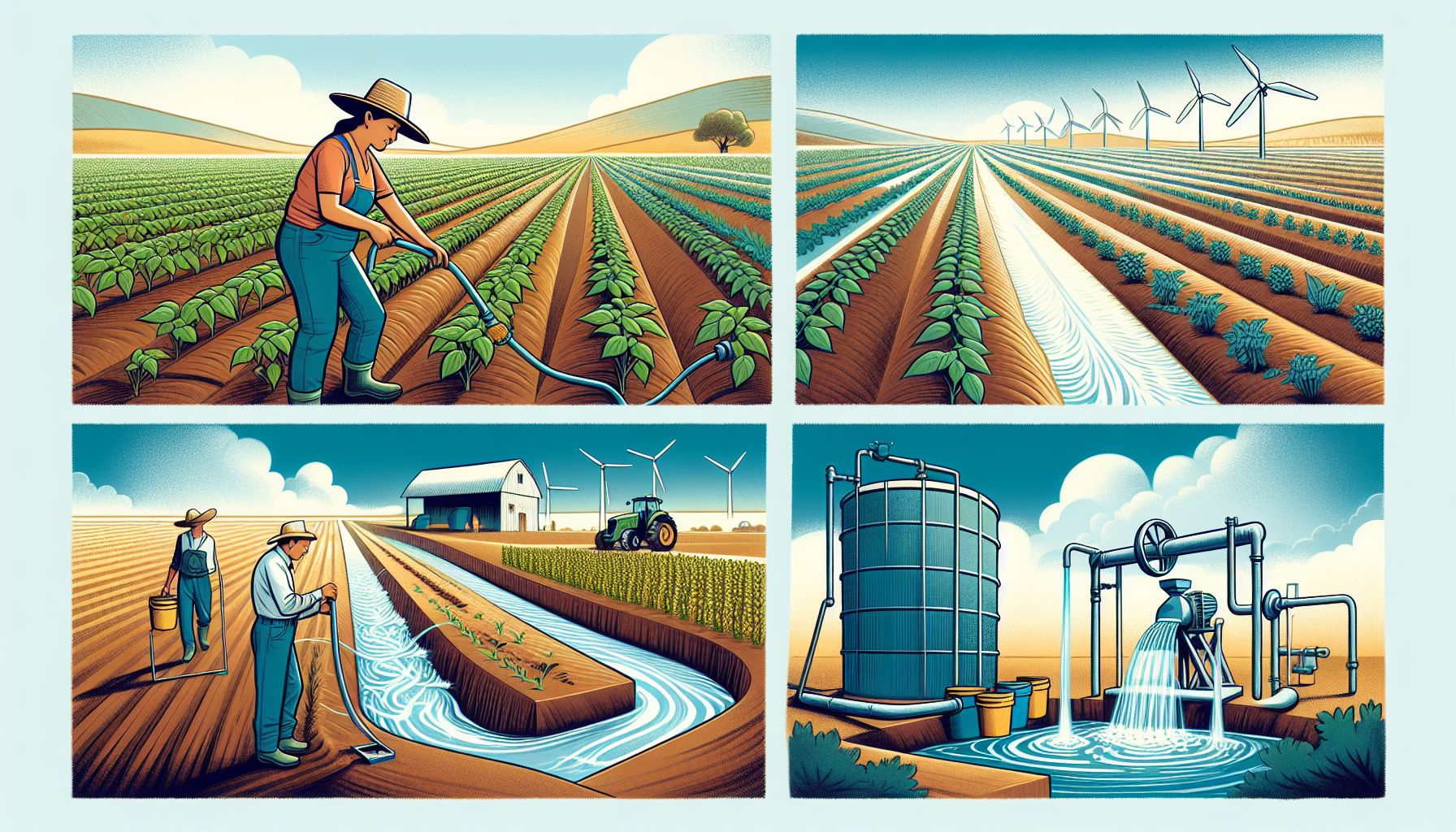
Agriculture is a vital sector that feeds the world’s population, but it is also the most significant user of water resources globally. As the demand for food production increases, the need for water continues to grow, creating an imperative need for sustainable water management practices in the agricultural sector. This article delves into the various strategies and techniques that can be employed to efficiently manage water in agriculture, ensuring that the current and future water needs can be met without compromising the health of ecosystems and the environment.
Understanding Water Use in Agriculture
Before discussing sustainable management practices, it’s important to understand the role water plays in agriculture. Water is essential for crop growth and livestock maintenance, making it the backbone of the agricultural industry. However, traditional irrigation methods and water management practices often lead to high levels of water wastage and environmental degradation.
The Challenge of Water Scarcity
Water scarcity is becoming an increasingly pressing issue due to a variety of factors, including climate change, population growth, and unsustainable water use. The Food and Agriculture Organization of the United Nations (FAO) estimates that by 2050, a 60% increase in agricultural production will be necessary to feed the growing population, further stressing available water resources [1].
Sustainable Water Management Practices
To address these challenges, a range of sustainable water management practices is being developed and implemented across the world. These practices aim to optimize water use, enhance agricultural productivity, and minimize the environmental impact.
1. Efficient Irrigation Techniques
Drip Irrigation
Drip irrigation is a system that delivers water directly to the roots of plants, minimizing evaporation and runoff. It is known for its efficiency, using up to 50% less water than traditional irrigation methods. Drip irrigation systems are particularly suitable for arid regions and can significantly improve water use efficiency in agriculture.
Sprinkler Systems
Modern sprinkler systems can be designed to match the specific needs of a crop, soil type, and topography. These systems can be adapted to provide uniform water distribution, reducing overwatering and ensuring that each plant receives the correct amount of water.
2. Water Harvesting and Storage
Capturing rainwater and storing it for use during dry periods is an effective way to manage water resources sustainably. This can be done using ponds, tanks, and reservoirs designed to store water from seasonal rains, which can then be used for irrigation during dry spells.
3. Soil Moisture Conservation
Practices such as mulching and the use of cover crops can significantly reduce evaporation from the soil, conserving water. Additionally, improving soil organic matter through the addition of compost or manure can increase the soil’s water-holding capacity.
4. Crop Selection and Rotation
Choosing crops that are naturally more drought-resistant or adapted to the local climate can reduce the need for irrigation. Furthermore, rotating crops can help in maintaining soil health, leading to better water retention abilities and reduced irrigation requirements.
5. Controlled Environment Agriculture
Technologies such as hydroponics, aquaponics, and greenhouse cultivation allow farmers to grow crops in controlled environments, maximizing water use efficiency. These systems recycle water and can significantly reduce the amount of water used in agricultural production.
6. Precision Agriculture
Precision agriculture employs technology such as sensors, GPS, and drones to monitor field conditions and apply water, fertilizers, and pesticides more precisely. This reduces waste and maximizes the efficiency of inputs.
Integrated Water Resources Management (IWRM)
IWRM is an approach that promotes the coordinated development and management of water, land, and related resources. By considering the multiple uses of water sources, IWRM can help to ensure the sustainable management of water in agriculture.
Participatory Management and Planning
Involving local stakeholders in water management decisions can lead to more efficient and sustainable outcomes. Farmers, communities, and government agencies working together can develop a shared understanding and better strategies for water management.
Policy and Regulatory Frameworks
Effective legal and policy frameworks are crucial for the implementation of sustainable water management practices. Policies that promote water rights, pricing strategies, and incentives for water conservation can drive the agricultural sector toward more sustainable practices.
The Importance of Education and Capacity Building
Educating farmers and agricultural professionals about sustainable water management practices is fundamental for successful implementation. Extension services, workshops, and training programs can help in disseminating knowledge and skills required for modern water management practices.
The Role of Technology and Innovation
Investment in research and development can lead to the innovation of new water-saving technologies and practices. From advanced irrigation systems to crop varieties that require less water, innovation plays a key role in sustainable water management.
Achieving Water Sustainability in Agriculture
Adopting sustainable water management practices is a step toward ensuring long-term water availability for agriculture. By implementing a combination of the techniques and strategies outlined above, the agricultural sector can significantly conserve water, reduce its environmental impact, and contribute to global food security.
Conclusion
Sustainable water management in agriculture is not just necessary; it is imperative for the survival of this critical sector. It’s about safeguarding a precious resource, ensuring food security, and protecting the environment for future generations. As the world moves towards an increasingly uncertain climate, it is essential that agriculture adapts through sustainable practices to remain a viable and vibrant part of the global economy.
Sustainable water management practices in agriculture can serve to mitigate the impact of water scarcity, preserve water quality, and enhance the resilience of farms around the world. The transition toward sustainability is a journey that requires commitment, innovation, and collaboration among farmers, policymakers, scientists, and communities.
Sources
-
Food and Agriculture Organization of the United Nations (FAO). (2023). Coping with water scarcity in agriculture. Retrieved from https://www.fao.org/news/story/en/item/35571/icode/
-
United States Department of Agriculture (USDA). (2023). Water Management. Retrieved from https://www.usda.gov/topics/farming/water-management
-
World Bank. (2023). Sustainability in agriculture. Retrieved from https://www.worldbank.org/en/topic/agriculture/brief/sustainability-in-agriculture