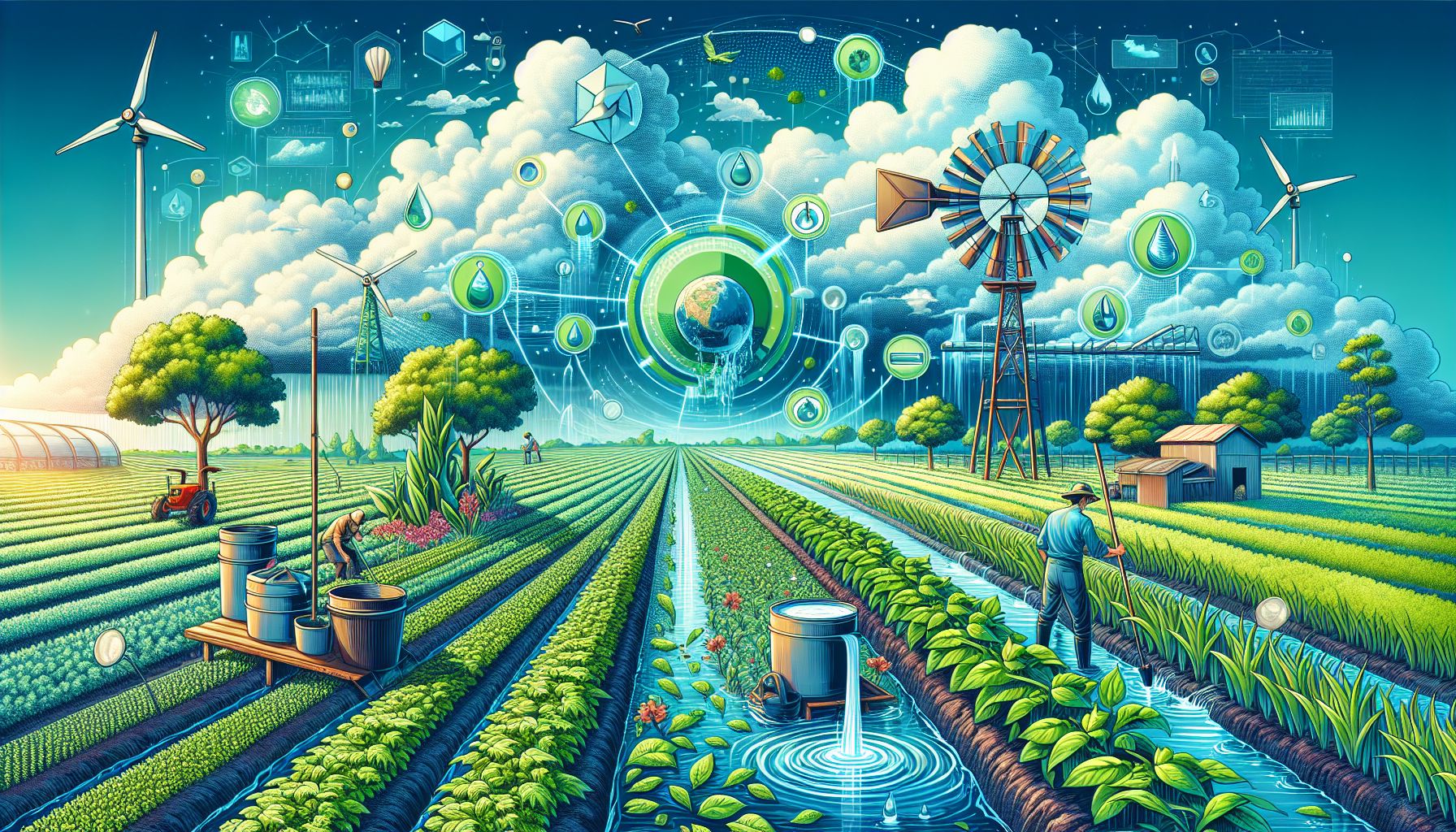
Agriculture is the lifeblood of human civilizations, providing the sustenance needed for societies to flourish. However, it’s also a major consumer of a resource that is becoming increasingly scarce in many parts of the world — water. With the global population continuing to rise and climate change exacerbating water scarcity, it’s imperative that we invest in and implement sustainable water management practices. These practices aim to optimize water use efficiency and ensure that water is allocated in a way that benefits people and the environment alike.
Understanding the Challenge
Before we delve into the solutions, it’s important to understand the scope of the challenge. The agricultural sector consumes a staggering 70% of the globe’s freshwater resources, according to the Food and Agriculture Organization of the United Nations (FAO)[^1]. Inefficient water use in agriculture not only intensifies water scarcity but also leads to environmental degradation, affecting biodiversity and undermining the long-term productivity of ecosystems.
Moreover, water scarcity is an issue that doesn’t discriminate — it affects both developed and developing countries. It’s projected that by 2025, 1.8 billion people will be living in regions with absolute water scarcity, and two-thirds of the world’s population could be under water stress conditions[^2].
Sustainable Water Management Practices
Here, we explore diverse strategies and practices that can help to manage agricultural water more sustainably.
1. Soil Moisture Conservation
Conserving soil moisture is a crucial aspect of sustainable water management. Techniques such as mulching, which involves spreading organic or inorganic materials on the soil surface, can reduce evaporation and conserve moisture. Conservation tillage practices, such as no-till or reduced tillage, also help in maintaining soil structure and moisture content.
2. Rainwater Harvesting
Rainwater harvesting involves collecting and storing rainfall to use for irrigation during dry periods. This practice helps in reducing the dependency on freshwater sources and can significantly diminish water stress.
3. Micro-Irrigation
Micro-irrigation systems, including drip and sprinkler irrigation techniques, deliver water directly to the plant roots at controlled rates. These systems increase water efficiency by minimizing evaporation, runoff, and percolation losses. Drip irrigation, for instance, can save up to 30-60% of water used by conventional flood irrigation and can increase crop yield by 20-90%[^3].
4. Crop Selection and Rotation
Choosing the right crops for the climatic conditions and implementing crop rotation can optimize water use. Planting drought-resistant crop varieties or adapting the sowing dates to match the rainfall patterns can reduce irrigation requirements.
5. Aquifer Recharge
Managed aquifer recharge is the intentional replenishment of groundwater basins through methods such as infiltration basins and recharge wells. This can help sustain groundwater levels for continued agricultural use, especially during times of drought.
6. Water Reuse and Recycling
Using treated wastewater for irrigation is an effective way to supplement freshwater resources. Recycling water within agricultural systems maximizes the utility of water and can provide nutrients that benefit the crops.
7. Implementing Precision Agriculture
Precision agriculture uses technology to collect and analyze data to guide and optimize water, nutrient, and pest management. Using tools like soil moisture sensors and satellite imagery helps farmers apply water precisely where and when it’s needed.
8. Integrated Pest and Nutrient Management
Efficiently managing pests and nutrients in agricultural systems can reduce water pollution and ensure the efficient use of water. Integrated Pest Management (IPM) strategies involve using ecological methods and chemical controls, reducing the need for excessive water that might otherwise be used to dilute or wash away pollutants.
9. Water Policy and Farmer Education
Government policies and regulations are pivotal in promoting sustainable water management. Incentives for water-saving technologies and proper water pricing can encourage water conservation practices. Education plays a crucial role in empowering farmers to adopt sustainable practices.
10. Enhancing Catchment Management
Improving the natural water catchment areas by afforestation and soil conservation can enhance groundwater recharge and reduce soil erosion. Protecting wetlands and natural water reservoirs should also be part of catchment management strategies.
11. Agroforestry
Incorporating trees into agricultural landscapes, known as agroforestry, can improve water conservation. Trees help in maintaining soil structure, reducing runoff, and increasing infiltration of water into the soil.
12. Efficient Irrigation Scheduling
Timing irrigation to match plant growth stages and weather conditions can dramatically reduce water wastage. Technological advancements like weather forecasting models and remote sensing can help farmers make more informed irrigation decisions.
Conclusion
To achieve sustainable water management in agriculture, a multi-faceted approach involving technological innovation, sound policies, and farmer education is required. An integrated effort from the international community, national governments, the farming community, and consumers will be necessary to manage this essential resource wisely.
Transitioning to these sustainable practices can help provide food security for the increasing global population while ensuring the long-term health of our water resources. While the challenges are significant, the benefits of these sustainable water management practices can ripple through the ecosystem, economies, and societies around the world.
By aiming for sustainability in agricultural water use, we invest in a future where both our environment and our food systems are resilient, robust, and capable of withstanding the uncertainties of climate change and population growth.
[^1]: Food and Agriculture Organization of the United Nations (FAO). “Coping with water scarcity – Challenge of the twenty-first century”. http://www.fao.org/3/y5104e/y5104e00.htm
[^2]: World Water Assessment Programme, United Nations World Water Development Report 4: Managing Water under Uncertainty and Risk, UNESCO, 2012. http://unesdoc.unesco.org/images/0021/002154/215492e.pdf
[^3]: The World Bank, “Drip Irrigation for Agriculture”. https://www.worldbank.org/en/topic/water/publication/drip-irrigation-for-agriculture