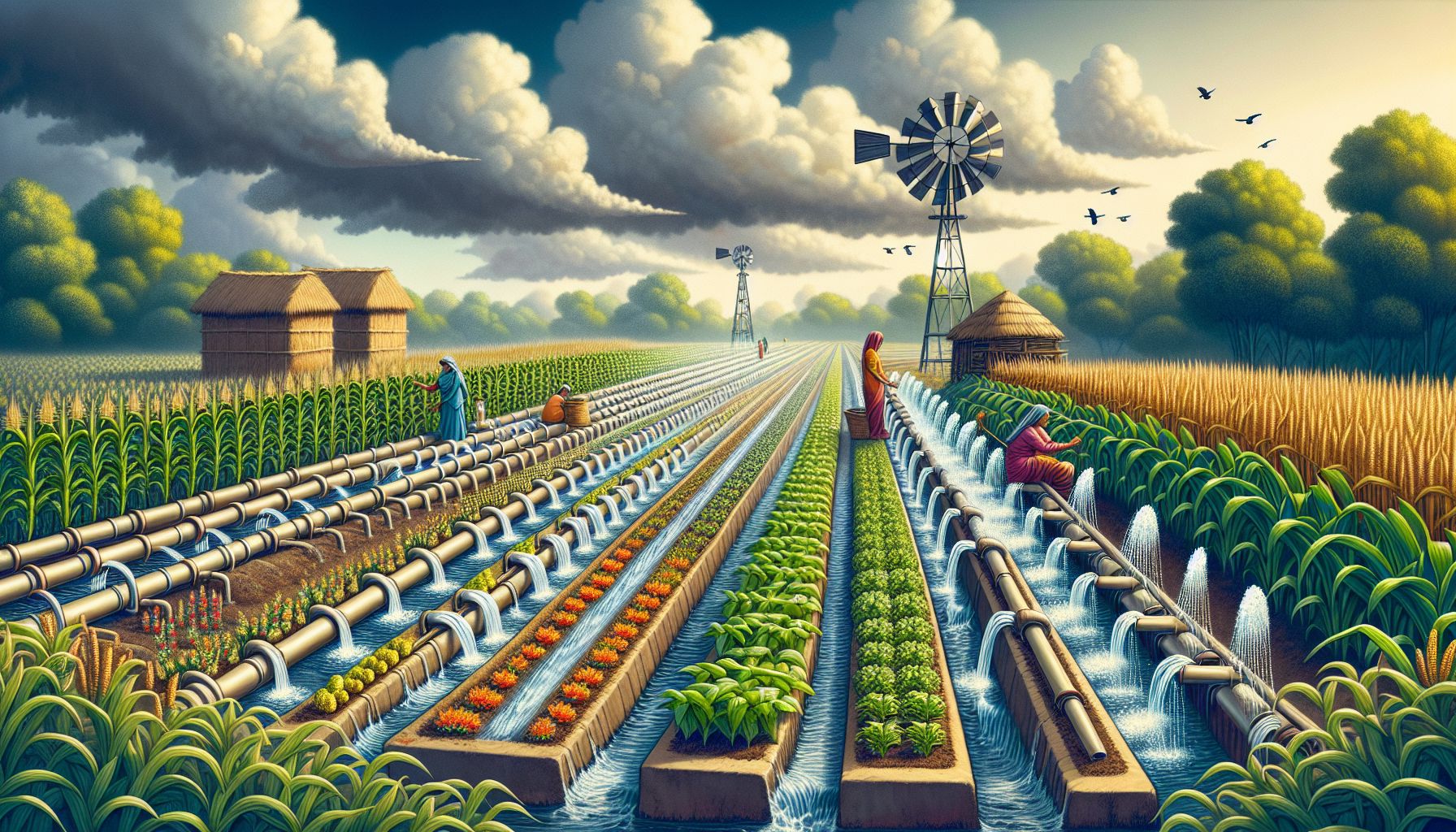
Agriculture has long been the backbone of human civilization, providing us with the food and fiber needed to survive and thrive. However, as the world’s population grows and resources become increasingly scarce, farmers and agricultural stakeholders are faced with a significant challenge: how to manage water use sustainably. With agriculture accounting for around 70% of freshwater withdrawals globally, according to the Food and Agriculture Organization (FAO), the urgency to adopt sustainable water management practices cannot be overstated.
In this comprehensive article, we will delve into the essence of sustainable water management in agriculture, why it is essential for our future, practical strategies to implement it, and the potential benefits and challenges of adopting these practices.
The Importance of Sustainable Water Management in Agriculture
Sustainable water management in agricultural practices is essential for several reasons:
- Resource Conservation: Freshwater is a finite resource. Optimizing water use in agriculture ensures the longevity of this precious resource for future generations.
- Environmental Protection: Responsible water use helps prevent the degradation of ecosystems, such as wetlands, rivers, and lakes, which are vital for biodiversity.
- Economic Efficiency: By maximizing water use efficiency, farmers can reduce costs and increase productivity, contributing to economic resilience.
- Social Responsibility: Equitable water management practices ensure that all stakeholders, including smallholder farmers and local communities, have fair access to water resources.
Strategies for Sustainable Water Management
1. Efficient Irrigation Systems
One of the most direct ways to implement sustainable water management in agriculture is through the use of efficient irrigation systems:
- Drip Irrigation: Targeting the root zones of plants, drip irrigation minimizes water loss due to evaporation and runoff, and can enhance crop yields while using less water.
- Sprinkler Systems: Advances in sprinkler technology, including low-pressure and precision sprinklers, distribute water more evenly and reduce waste.
- Irrigation Scheduling: Utilizing soil moisture sensors and weather data to schedule irrigation can prevent overwatering and conserve significant amounts of water.
2. Rainwater Harvesting
Collecting and storing rainwater for agricultural use is an ancient practice that is gaining renewed interest. By capturing water during rainy periods, farmers can create a reserve that can be used during dry spells, thereby reducing dependency on groundwater or surface water sources.
3. Soil Moisture Conservation
Improving soil health is vital for water conservation:
- Mulching: Applying organic mulches to soil surfaces helps retain moisture, reduce evaporation, and suppress weed growth.
- Cover Crops: Planting cover crops during off-season periods can improve soil structure and increase its capacity to hold water.
- Conservation Tillage: Reducing tillage preserves soil moisture and structure, prevents erosion, and maintains organic matter in the soil.
4. Water-Smart Crop Selection
Choosing the right crops for the local climate and soil conditions can significantly reduce water consumption. Drought-resistant or native crops often require less irrigation and are more adapted to prevailing conditions.
5. Integrated Pest and Disease Management
By integrating biological, cultural, and chemical control methods, farmers can maintain healthy crops with less reliance on water-intensive pest control methods.
6. Aquifer Recharge
Managed aquifer recharge (MAR) initiatives help replenish groundwater sources by allowing water to infiltrate through ponds, basins, or injection wells, thus securing water for dry periods and ensuring a sustainable water table.
7. Precision Agriculture
Technological advancements, such as big data analytics, remote sensing, and GPS technologies, enable precision agriculture, allowing farmers to apply water, fertilizers, and pesticides more efficiently and only where needed.
Benefits and Challenges
Benefits:
- Sustainability: Reduces the long-term risk of water scarcity and contributes to the overall sustainability of agricultural practices.
- Cost Savings: Efficient water use can result in lower energy and infrastructure costs.
- Increased Productivity: High-efficiency irrigation and soil moisture conservation can lead to better crop yields.
- Resilience Building: Sustainable practices build resilience against droughts and changing climatic conditions.
Challenges:
- Initial Investment: Implementing new systems and technologies may require significant initial investment, which can be a barrier for smallholders or resource-limited farmers.
- Knowledge and Training: Farmers need proper training and support to adopt new practices effectively.
- Infrastructure: Changes in infrastructure at a local or even regional level may be necessary to support the transition to sustainable methods.
Conclusion
To sustainably manage water in agriculture, a multifaceted approach is required—one that incorporates efficiency, innovation, and careful resource management. Sustainable water management practices not only help secure the future of farming but also safeguard the environment and foster economic stability for communities reliant on agriculture.
Through a combined effort of farmers, governments, agricultural scientists, and the community at large, the move towards water-smart agriculture can lead to a more secure and resilient food system for future generations.
Sources:
- Food and Agriculture Organization of the United Nations (FAO). Coping with Water Scarcity – An Action Framework for Agriculture and Food Security. http://www.fao.org/3/i3015e/i3015e.pdf
- World Bank. Managing Water in Agriculture. https://www.worldbank.org/en/topic/water-in-agriculture
- United States Department of Agriculture (USDA). Natural Resources Conservation Service. Soil Health Management. https://www.nrcs.usda.gov/wps/portal/nrcs/main/soils/health/mgnt/