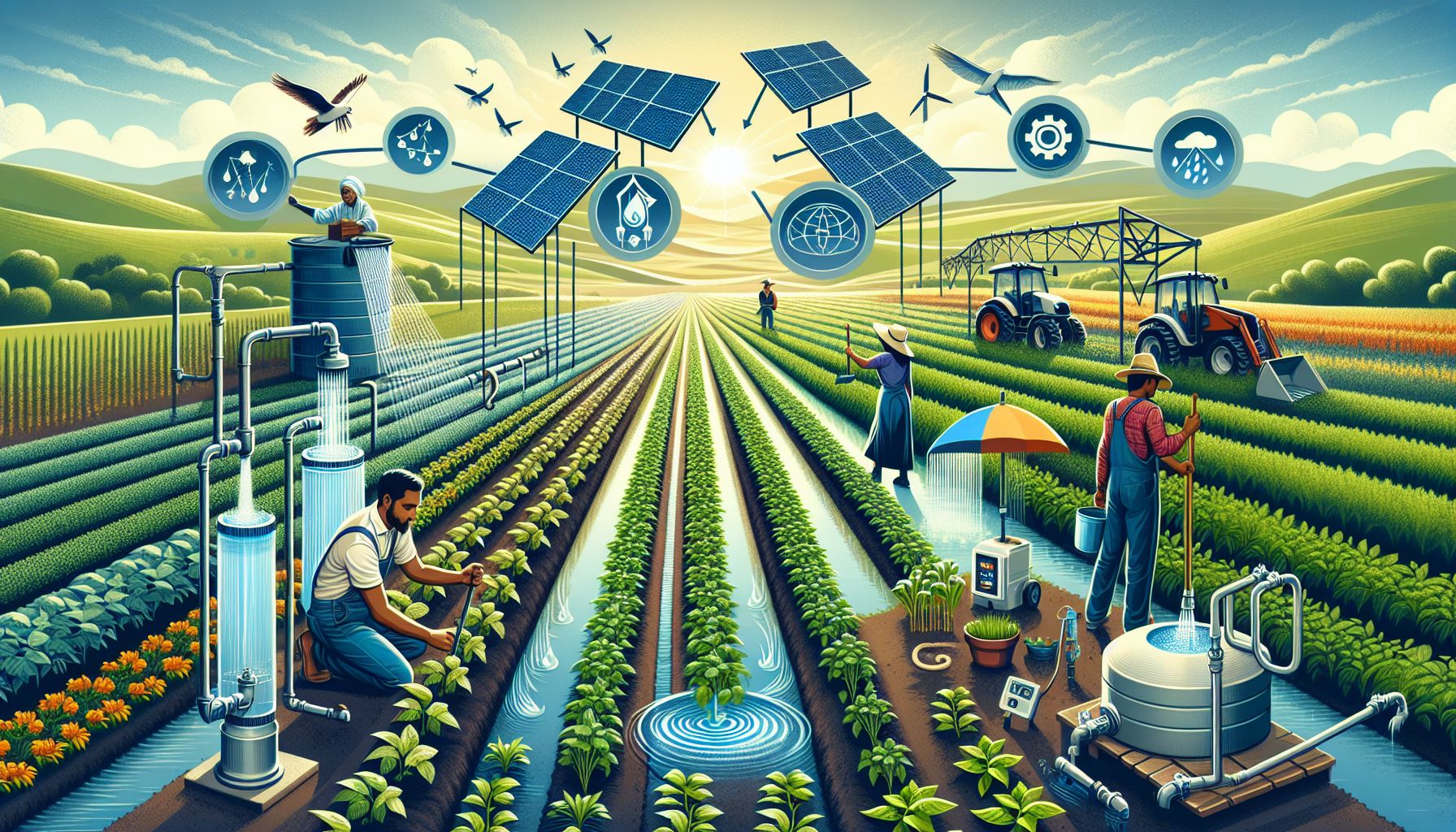
Agriculture is not just the foundation of our food supply; it’s intimately connected with our water resources. With agriculture accounting for a staggering 70% of global freshwater withdrawals, it is vital to adopt sustainable water management practices. These practices protect both our precious water resources and ensure food security, especially in the face of growing population demands and the uncertainties driven by climate change. In this comprehensive analysis, we delve into the world of sustainable agriculture water management, exploring its importance, the practices that define it, and how these techniques are shaping the future of farming.
Understanding the Demand for Sustainable Water Management in Agriculture
Before exploring the methods, it is important to understand why sustainable water management practices are necessary:
-
Water scarcity: Many regions face chronic water shortages due to increased competition between agricultural, industrial, and domestic needs.
-
Climate change: Altered precipitation patterns and extreme weather events are making water availability more unpredictable.
-
Environmental preservation: Conventional water extraction for agriculture can lead to habitat destruction, loss of biodiversity, and soil salinization.
-
Economic imperatives: Efficient water use can reduce costs and increase the resilience of farms to water-related shocks.
By implementing sustainable water management practices, agriculture not only preserves water but also ensures long-term productivity and environmental health. Here are some of the key methods:
Efficient Irrigation Techniques
Drip Irrigation
Drip irrigation is a precise watering system that delivers water directly to the roots of plants. This minimizes evaporation and runoff, making it one of the most water-efficient methods available (source).
Sprinkler Systems
Modern sprinkler systems can be automated and adjusted to match the specific water needs of crops, thus reducing water waste. Evapotranspiration (ET) based controllers can automate watering schedules based on real-time weather conditions (source).
Subsurface Irrigation
Subsurface irrigation involves burying irrigation pipes below the surface, which reduces water loss due to evaporation and is particularly effective in windy or hot climates.
Soil Management
Mulching
Mulch is a layer of material (like straw or wood chips) placed on top of the soil to retain moisture, reduce erosion, and prevent weed growth.
Organic Matter
Incorporating organic matter into the soil improves its structure, which helps in retaining moisture and nutrients.
Conservation Tillage
Conservation tillage, such as no-till or reduced-till farming, minimizes soil disturbance, preserving the soil structure and water content.
Crop Management
Crop Selection
Choosing crops that are native or adapted to local conditions, or those which have lower water requirements, can naturally reduce water usage.
Crop Rotation and Diversity
Rotating crops and growing a variety of plants can improve soil health and reduce the need for irrigation.
Precision Agriculture
Using technology to monitor and respond to field variability can optimize water use. Drones, sensors, and GPS technology can help in applying water only where it is needed (source).
Rainwater Harvesting
Storage Reservoirs
Storing rainwater for non-rainy periods is a straightforward approach to manage water sustainably.
Micro-Catchment Systems
Projects like contour bunding can help in collecting rainwater close to the crops that need it.
Alternative Water Sources
Treated Wastewater
Using treated wastewater for irrigation is an innovative approach to recycling water while also benefiting crops with nutrients found in wastewater.
Desalinated Water
While still expensive, desalination offers potential for arid and coastal regions to tap into the vast seawater resources for agricultural irrigation.
Government and Community Efforts
Water Rights and Trading
As governments refine water rights and trading policies, farmers can be incentivized to save water and sell any excess to others who need it.
Education and Extension Services
Providing education and consultation to farmers about water-efficient practices is crucial for widespread adaptation.
Subsidies and Incentives
Financial incentives encourage farmers to invest in more efficient water management technologies and practices.
Research and Development
Ongoing R&D is key to developing new, more efficient techniques suited for a variety of environments.
Challenges and Solutions
Financing and Costs
The initial outlay for installing advanced irrigation systems or altering farming practices can be prohibitive for some farmers. Solutions may include accessing governmental or non-governmental funding programs, or shared community resources.
Knowledge and Training
There is a need for improved knowledge dissemination and training for farmers to use advanced technologies and understand the benefits of sustainable water management practices.
Infrastructure
In some regions, the lack of basic infrastructure can hinder the implementation of sustainable water management practices. Community-level projects and government investment can help to bridge this gap.
Conclusion: The Way Forward
The implementation of sustainable water management practices in agriculture is not just a necessity but an opportunity to transform the sector into a more productive, environmentally friendly, and resilient system. The convergence of traditional wisdom and cutting-edge technology is enabling farmers worldwide to take significant strides towards more sustainable practices. It’s a vast and critical field that promises to shape our collective future – one where both food and water security are maintained for all.
Sources:
-
FAO (Food and Agriculture Organization of the United Nations). (n.d.). “Modernizing Irrigation” [PDF]. Retrieved from https://www.fao.org/3/ar690e/ar690e.pdf
-
USGS (United States Geological Survey). (n.d.). “Irrigation Methods: A Quick Look.” Retrieved from https://www.usgs.gov/special-topics/water-science-school/science/irrigation-methods-watering-farm?qt-science_center_objects=0#qt-science_center_objects
-
Leisner, C.P. (2019). “Review: Climate change impacts on food security- focus on perennial cropping systems and nutritional value.” Plant Science. Retrieved from https://www.nature.com/articles/s41893-019-0224-1