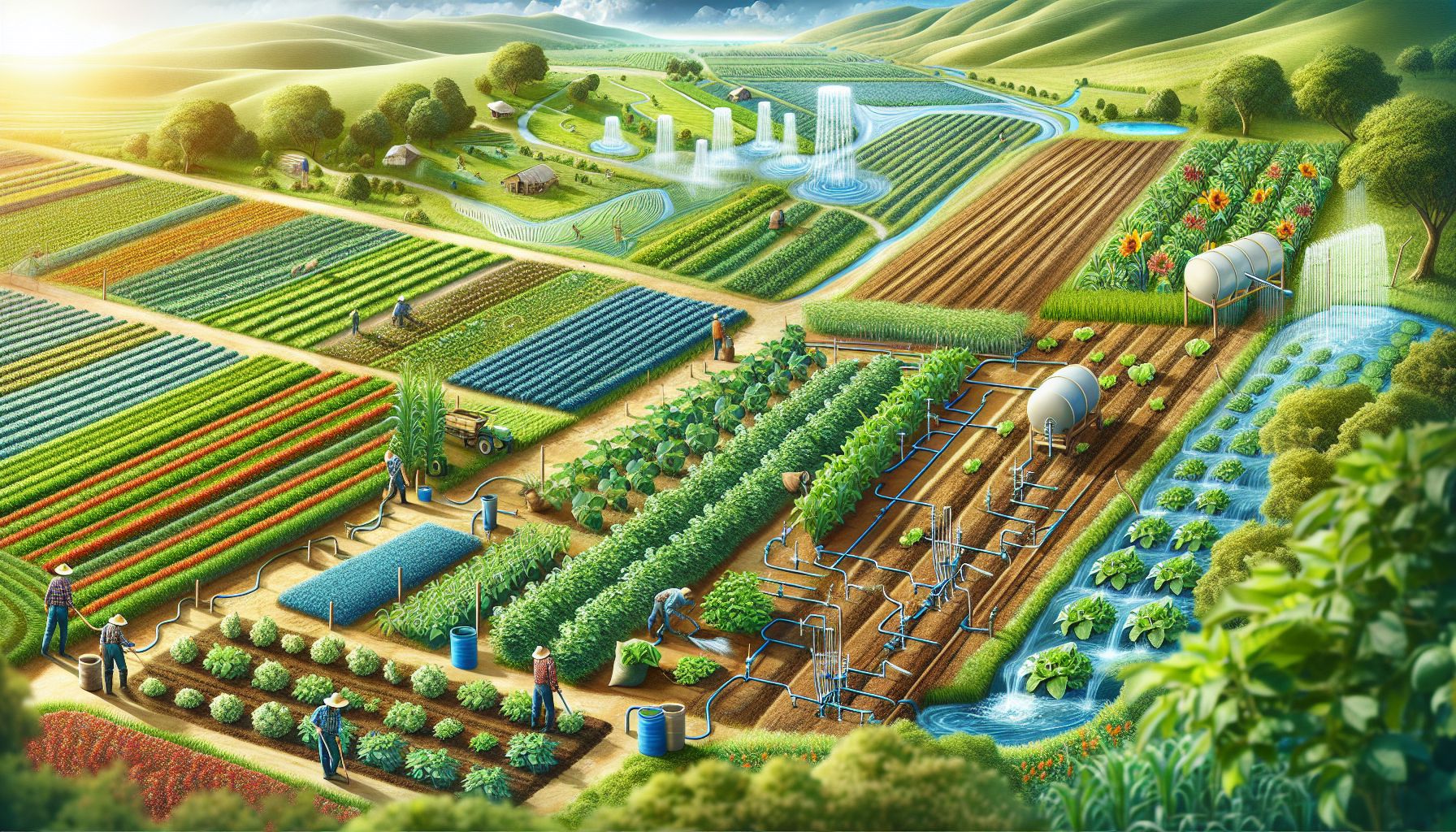
Agriculture is the backbone of many economies worldwide, but it is also one of the largest consumers of freshwater resources. With the increasing pressures of climate change, population growth, and the overarching need for environmental conservation, sustainable water management in agriculture has never been more crucial. In this comprehensive article, we will delve into sustainable water management practices that can significantly enhance water use efficiency in agriculture while ensuring productive and environmentally friendly farming.
The Significance of Water in Agriculture
Before we explore the practices, it’s essential to understand just why water is so vital in agriculture. Agriculture accounts for approximately 70% of global freshwater withdrawals, making it the most significant single user of water. Water is needed not just for irrigation but also for livestock, processing of agricultural products, and aquaculture. Ensuring water is used efficiently can lead to multiple benefits including maintaining the health of ecosystems, reducing the energy required for water extraction and distribution, and enhancing the socio-economic stability of farming communities.
Critical Sustainable Water Management Practices
1. Irrigation Efficiency
Precision Irrigation
Improving irrigation efficiency is a core aspect of sustainable water management. Precision irrigation systems, such as drip or trickle irrigation, target water distribution to the root zones of plants, reducing evaporation and runoff. By applying water directly to the plant roots, these systems maximize water usage and minimize waste.
Scheduled Irrigation
Another essential practice is scheduled irrigation, which involves watering crops only when necessary and at the optimal time of day to reduce water loss to evaporation. Utilizing soil moisture sensors and weather forecasts can help in making these scheduling decisions.
2. Soil Management
Soil Mulching
Mulching involves covering the soil with organic materials like straw or inorganic materials such as plastic sheets to reduce evaporation. This not only conserves moisture but also suppresses weeds, enhances soil quality, and reduces erosion.
Conservative Tillage
Conservation tillage, including no-till or reduced-till practices, can improve water retention in the soil. By not turning over the soil, the structure remains intact, improving its ability to hold water and reducing runoff.
3. Crop Selection and Management
Drought-Resistant Varieties
Choosing crop varieties that are drought-resistant or that have a lower water demand is a proactive way to manage water sustainably. These varieties typically have a shorter growth cycle or are naturally adapted to thrive in water-scarce conditions.
Crop Rotation
Crop rotation helps maintain the health of the soil, reduces the need for chemical inputs, and can improve water retention. By planting different crops in succession, the soil can recover, and water demand can be balanced.
4. Water Harvesting and Storage
Rainwater Harvesting
Capturing and storing rainwater can significantly supplement irrigation needs. Systems can range from simple rain barrels to more complex structures like ponds and reservoirs. This stored water can be particularly valuable during dry spells.
Aquifer Recharge
In regions where there is access to aquifers, managed aquifer recharge techniques can be used to replenish groundwater. This involves capturing excess surface water during times of high flow and infiltrating it into aquifers for later use.
5. Integrating Livestock and Aquaculture
Livestock Waste Management
Using livestock waste as fertilizer not only reduces the need for synthetic fertilizers but also improves water retention in the soil. Proper management is crucial, however, to prevent contamination of water resources.
Integrated Aquaculture
Incorporating aquaculture with crop farming, such as rice-fish farming, can enhance the sustainability of water use by creating a symbiotic environment where water and nutrients are efficiently cycled.
6. Utilization of Alternative Water Sources
Treated Wastewater
Reusing treated wastewater for agricultural irrigation can alleviate the stress on freshwater sources. Adequate treatment is necessary to remove harmful pathogens and contaminants.
Desalinated Water
In coastal regions, desalination can provide an alternative freshwater source for agriculture. However, energy costs and environmental impacts need to be considered.
7. Government Policies and Incentives
Water Rights and Allocation
Ensuring fair water rights and allocation practices can promote responsible water usage. Policies that incentivize efficient water use, such as water trading schemes, can also drive sustainable practices.
Support for Technological Advancements
Investing in research and development for new technologies that enhance water use efficiency, monitoring, and management can benefit the agriculture sector significantly.
Conclusion
Sustainable water management is a complex but vital undertaking that requires the collective efforts of farmers, communities, governments, and international bodies. By integrating a mix of practices—ranging from precise irrigation techniques to innovative policy incentives—agriculture can grow to meet the demands of the future while respecting the finite nature of water resources.
To put these practices into real-world context, organizations like the Food and Agriculture Organization (FAO), International Water Management Institute (IWMI), and the World Bank are valuable resources for case studies, research, and guidelines on sustainable water management.
By investing in knowledge transfer and infrastructure, the agricultural sector can move towards a future where water is not only used wisely but cherished as the life-sustaining resource it is.
Sources
- Food and Agriculture Organization of the United Nations (FAO) – http://www.fao.org/home/en/
- International Water Management Institute (IWMI) – http://www.iwmi.cgiar.org/
- The World Bank – Water in Agriculture – https://www.worldbank.org/en/topic/water-in-agriculture
Employing these practices can lead to a major paradigm shift in how we view and manage water in agriculture, paving the way for a future where both human and environmental needs are addressed in a balanced and sustainable manner.