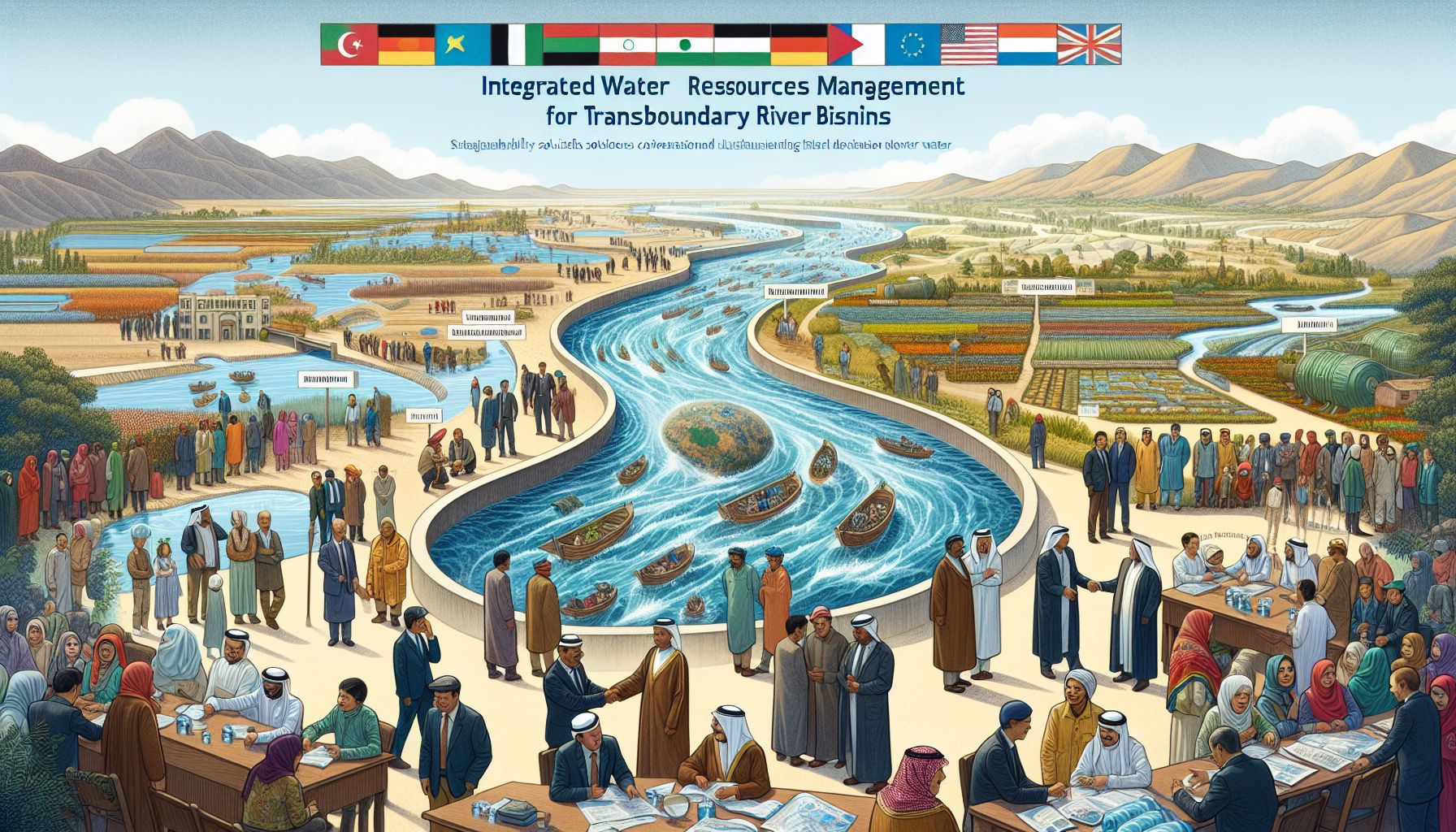
Water is the lifeblood of our planet, integral to both human civilization and natural ecosystems. However, its distribution and management are often complicated by geographic boundaries, leading to conflicts and challenges in areas shared by multiple nations or regions. Integrated Water Resources Management (IWRM) provides a comprehensive framework for addressing the sustainable management of transboundary river basins, which serve as sources of water for millions of people worldwide. In this article, we will delve into the intricacies of IWRM with a focus on transboundary river basins.
Understanding Transboundary River Basins
Before we explore IWRM principles, it is essential to understand what a transboundary river basin is. A river basin, also known as a watershed or catchment area, is the land area that drains into a common waterway, such as a river, lake, or aquifer. When this area crosses political borders, such as countries or administrative regions, it becomes a transboundary river basin. Some well-known examples include the Nile, Amazon, Danube, and Mekong river basins.
The Need for Integrated Management
Transboundary river basins face numerous challenges due to differing national priorities, water usage patterns, and legal frameworks. Issues like pollution, over-extraction, habitat degradation, and climate change impacts are magnified in these sensitive regions. To meet these challenges, a comprehensive approach is needed, one that takes into account the various dimensions of water management, including social, economic, and environmental considerations. Integrated Water Resources Management offers just that.
Principles of Integrated Water Resources Management (IWRM)
IWRM is based on a set of principles designed to guide the sustainable management of water resources. The Global Water Partnership defines IWRM as a process that promotes the coordinated development and management of water, land, and related resources to maximize economic and social welfare without compromising the sustainability of vital ecosystems. Here are the core principles:
- Ecological Balance: IWRM emphasizes the maintenance of ecosystems and their functions.
- Participatory Approach: It encourages the involvement of stakeholders, including the public, in the decision-making process.
- Integrated Approach: IWRM considers the interconnections between land and water uses across sectors.
- Economic Efficiency: Resource allocation and management decisions should maximize economic benefits.
- Equitable Access: All users should have their needs met and have access to fair dispute resolution mechanisms.
- Adaptive Management: IWRM plans must be flexible and adapt to changing circumstances, such as shifts in climate patterns.
Implementing IWRM in Transboundary Settings
Institutional Cooperation
The first step in implementing IWRM in transboundary river basins is establishing cooperative institutions that include representatives from all nations sharing the water resources. These institutions, which may take the form of international water commissions or basin organizations, can develop frameworks for collaborative water management, data sharing, and conflict resolution.
Case Study: The Mekong River Commission
The Mekong River Commission, involving Thailand, Laos, Cambodia, and Vietnam, is an example of such cooperative institutional work. It facilitates regular dialogues and cooperation in areas like flood management, sustainable development, and environmental protection (Mekong River Commission).
Legal and Policy Frameworks
Harmonizing legal frameworks and policies across regional divides is crucial in IWRM. Participating nations should work towards agreements that govern water usage, pollution control, conservation efforts, and emergency response strategies.
Example: The Helsinki Rules on the Uses of the Waters of International Rivers
The Helsinki Rules is an example of an international guideline adopted by the International Law Association to govern the use of waters in transboundary rivers, ensuring equitable use and offering conflict resolution mechanisms (International Law Association).
Data and Information Sharing
Accurate and timely data are essential for the effective management of water resources. IWRM in transboundary river basins relies on joint monitoring initiatives and the sharing of hydrological, meteorological, and socio-economic data between member nations.
Initiative: The Global Environment Facility Transboundary Waters Assessment Programme
This program aids in assessing the state of transboundary waters, providing a sound database for shared water resources management (GEF TWAP).
Sustainable Development and Economic Integration
IWRM promotes sustainable development that respects the carrying capacity of ecosystems and seeks to alleviate poverty. Transboundary river basins present an opportunity for economic integration, with joint projects harnessing water resources for energy production, irrigation, and industrial use that benefit all parties involved.
Project Example: The Grand Ethiopian Renaissance Dam on the Blue Nile
This major hydroelectric project is being managed with considerations given to downstream users in Sudan and Egypt, aiming for regional benefits (International Rivers).
Environmental Protection and Restoration
The ecological health of transboundary river basins must be prioritized. IWRM plans usually include measures for pollution reduction, habitat restoration, and the maintenance of essential ecosystem services.
Program Example: The Danube River Basin Management Plan
Implemented by the International Commission for the Protection of the Danube River, this plan outlines concrete measures for environmental protection and water quality improvement across the basin’s member states (ICPDR).
Public Participation and Stakeholder Engagement
Equitable water management requires that stakeholders, from local communities to international entities, have a voice in decision-making. Public consultations, stakeholder committees, and awareness-raising campaigns are vital components of IWRM for transboundary river basins.
Engagement Tool: Participatory Rural Appraisal
This approach is used to incorporate community knowledge and perspectives into planning processes, improving outcomes and fostering community ownership of projects.
Capacity Building and Education
Capacity-building initiatives can enhance the abilities of nations and local communities to manage their water resources effectively. Educational programs can also help individuals understand the complexities of water management, leading to more informed stakeholder engagement.
Achievement: The UNESCO-IHE Institute for Water Education
This institution has contributed significantly to the capacity-building efforts of water professionals around the world, with a focus on sustainable water management (UNESCO-IHE).
Technology and Innovation
Advancements in technology are enabling better management of water resources in transboundary river basins. Remote sensing, geographic information systems (GIS), and decision-support systems can all play critical roles in IWRM.
Technological Advancement: Remote Sensing for Water Quality Monitoring
NASA and other agencies use satellites to monitor water quality on a large scale, providing data to water managers in transboundary river basins.
Climate Change Adaptation
Transboundary river basins are highly susceptible to the impacts of climate change, which can alter precipitation patterns and increase the frequency of extreme weather events. IWRM must integrate climate change adaptation strategies to build resilience and reduce risks.
Strategy: The Nile Basin Initiative
The Nile Basin Initiative has developed a strategic plan to address the risks posed by climate change to the basin’s water resources and the economies and livelihoods that depend on them.
Challenges and the Way Forward
Despite the promising framework of IWRM, there are significant challenges in