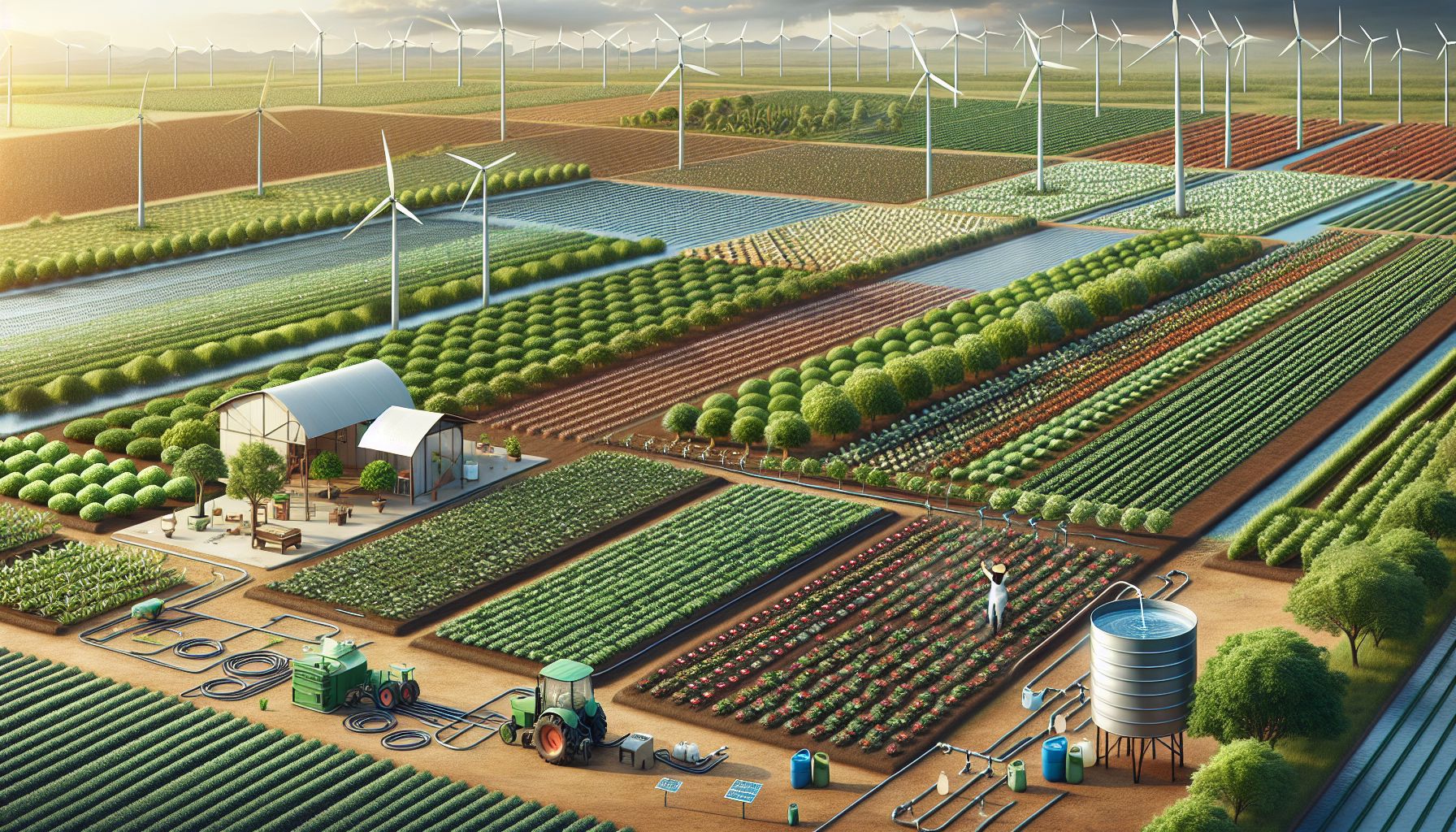
Agriculture has been the backbone of human civilization for millennia. It’s the industry that feeds the world and sustains economies, but it’s also one of the significant users and often wasters of water. As the global population grows and climate change affects weather patterns, water scarcity is increasingly becoming a critical issue. Sustainable water management practices in agriculture are no longer a choice; they’re a necessity. In this comprehensive guide, we delve into techniques and innovations that are making agriculture both productive and sustainable when it comes to water use.
Overview of Agricultural Water Use
The agricultural sector consumes around 70% of the world’s available freshwater, much of which is lost through inefficiencies and poor management practices. With agriculture spread across various climates and geographies, water use and the potential for conservation also vary widely. Sustainable water management aims to balance the water needs of agriculture with the ecosystem’s needs and that of other users.
Sources:
- “Water in Agriculture – World Bank.” https://www.worldbank.org/en/topic/water-in-agriculture
- “Water Use and Management in Agriculture – FAO.” http://www.fao.org/3/ca6646en/CA6646EN.pdf
The Pillars of Sustainable Water Management in Agriculture
1. Water-Efficient Technologies
Drip Irrigation
This technique involves slowly releasing water directly at the plant base through a system of tubes, valves, and emitters. It significantly reduces water waste and increases crop yields.
Soil Moisture Sensors
These sensors provide precise data on the moisture levels in the soil, facilitating informed irrigation that prevents under or overwatering.
Water Recycling
Collecting agricultural runoff for reuse can significantly reduce the demand for fresh water. Simple pond systems or more sophisticated recycling facilities are all part of this approach.
2. Conservation Agriculture
No-Till Farming
By not plowing the land and leaving crop residues on the surface, no-till farming significantly reduces water evaporation and soil erosion.
Mulching
Applying organic materials, like straw or leaves, on the surface of the soil helps maintain moisture and improve soil health.
Crop Rotation and Cover Cropping
Rotating crops and planting cover crops can enhance soil moisture retention and reduce the overall water need.
3. Improved Water Management Practices
Scheduled Irrigation
Irrigating crops based on careful scheduling that considers weather forecasts and soil moisture can greatly improve water use efficiency.
Water Budgeting
Defining a water budget for the farm can help manage water allocations more effectively, ensuring water use stays within sustainable limits.
Water User Associations
These local groups empower communities to manage their water sources sustainably and are instrumental in areas where water management requires collective participation.
4. Policy and Knowledge Transfer
Government Policies
Policies that incentivize water conservation can greatly enhance sustainable practices. This could include subsidies for water-efficient technologies or penalties for over-extraction of water resources.
Education and Knowledge Sharing
Farmers need to be aware of the benefits of sustainable water management and how to implement relevant practices. Knowledge transfer is vital, as is the sharing of success stories and effective techniques from around the world.
Innovations in Sustainable Water Management
Drought-Tolerant Crops
Genetic engineering and selective breeding are creating crops that can thrive with less water, opening the door to agriculture in previously marginal areas.
Digital Agriculture
Through precision farming, the use of drones, satellites, and IoT devices, farmers can manage water use much more effectively.
Rainwater Harvesting
Collecting and storing rainwater can provide an additional water source during dry seasons, making farms more resilient.
Integrated Pest and Nutrient Management
Managing pests and nutrients more efficiently ensures that water is not wasted on supporting weeds or washed away by pesticide and fertilizer runoff.
Artificial Intelligence and Machine Learning
These technologies can predict crop water needs and automate irrigation systems, taking much of the guesswork out of water management.
Towards a Future of Water-Smart Agriculture
The way forward in sustainable water management in agriculture is a combination of traditional know-how, community efforts, policy-level changes, and technological advancements. Implementing practices like efficient irrigation, soil conservation, and water harvesting should become standard global approaches. Additionally, innovation should continue to be supported and advanced while knowledge transfer ensures these practices are widespread and effectively used.
A collective effort—from individual farmers to international bodies—is needed to ensure that the agriculture of tomorrow is not only productive but also respects and preserves the precious water resources we rely on.
Conclusion
Adopting sustainable water management practices is essential for the longevity and productivity of the agricultural sector and the well-being of the planet. As water scarcity becomes a more pressing issue, it is imperative that we integrate these practices into everyday farming operations. By doing so, we can ensure a secure food supply for future generations while conserving the water resources that are vital to all life on earth.
Sources:
- “Irrigation in Agriculture – USDA.” https://www.usda.gov/topics/farming/irrigation-in-agriculture
- “Sustainable Agriculture Techniques – Union of Concerned Scientists.” https://www.ucsusa.org/resources/sustainable-agriculture-techniques
- “Water-Smart Agriculture – World Bank.” https://www.worldbank.org/en/topic/water-in-agriculture/brief/water-smart-agriculture