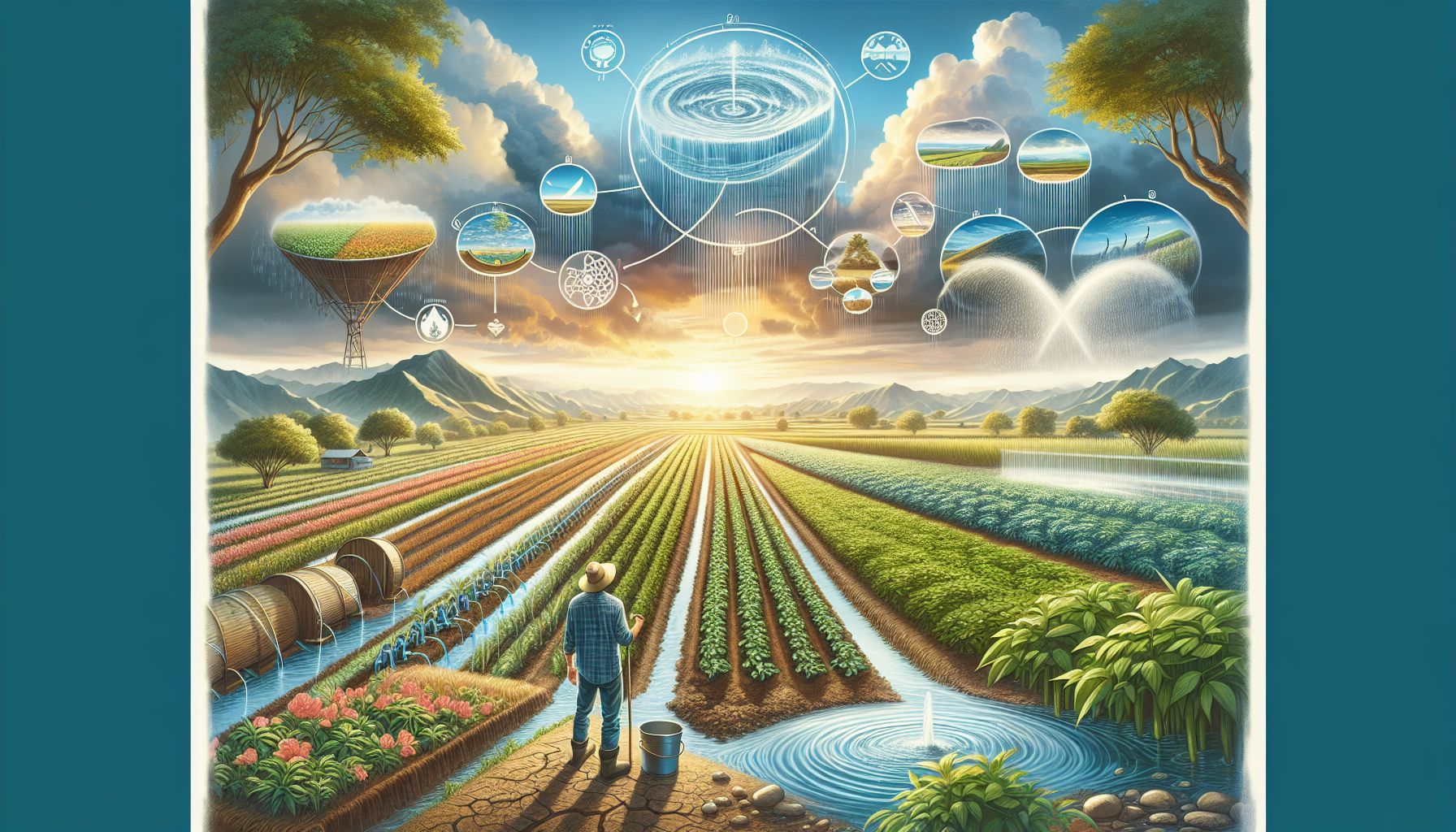
Agriculture is a cornerstone of human civilization, providing the sustenance needed to support life and societal development. However, it is also one of the largest consumers of water, with irrigation accounting for about 70% of fresh water usage globally. As the world grapples with increasing water scarcity, sustainable water management practices in agriculture become essential—not just for preserving water resources but also for ensuring food security and protecting the environment.
Understanding Water Management in Agriculture
Water management in agriculture involves numerous processes and decisions regarding water use, such as the timing, quantity, and quality of water applied to crops. Effective management is critical for providing the optimal amount of water for plant growth while minimizing waste and maintaining the ecological balance of the surrounding area.
Why Sustainable Practices Matter
Sustainable water management ensures that agricultural water needs are met without degrading the natural water systems or causing long-term negative impacts. Practices are considered sustainable when they:
- Preserve the availability of water for future generations.
- Maintain the health of aquatic ecosystems.
- Maximize economic benefits for farmers and the community.
Implementing sustainability in water management is challenging but necessary due to factors like:
- Rising global populations increasing the demand for food production.
- Climate change altering rainfall patterns, leading to droughts or flooding.
- Groundwater depletion resulting from over-extraction.
- Pollution from agricultural runoff affecting water quality.
Key Sustainable Water Management Practices
1. Efficient Irrigation Systems
Drip Irrigation
Drip irrigation delivers water directly to the root zone of plants, minimizing evaporation losses and reducing water consumption by as much as 60% compared to traditional methods like flood irrigation.
Pivot Systems
Center pivot and linear move systems can be precisely controlled and often come with sensors that assess soil moisture content to optimize water application.
Micro-sprinklers
Micro-sprinklers provide a middle ground between sprinkler and drip systems, offering precise application suitable for a variety of crops.
2. Water Conservation Techniques
Mulching
Mulching with organic or inorganic materials helps retain soil moisture, reducing the need for frequent irrigation.
Soil Management
Enhancing soil health through practices such as crop rotation and no-till farming can boost water retention and reduce runoff.
Scheduling
Watering crops based on evapotranspiration rates and weather forecasts can significantly cut water usage.
3. Rainwater Harvesting and Storage
Collecting rainwater during the wet season and storing it in reservoirs or tanks for dry periods is an ancient practice that is gaining renewed interest due to its simplicity and effectiveness.
4. Use of Sensors and Smart Technology
Advancements in technology have facilitated the development of sensors that can monitor soil moisture levels, plant water status, and local weather conditions, allowing for precise application of water.
5. Agroforestry and Buffer Strips
Integrating trees into agricultural systems and establishing buffer strips along waterways can reduce soil erosion, improve water infiltration, and filter out pollutants from runoff.
6. Water Recycling and Reuse
Treating and reusing wastewater from agricultural processes can help reduce the demand for freshwater and minimize pollution.
7. Integrated Pest and Nutrient Management
Reducing the use of chemical inputs through integrated management can help prevent water pollution and improve farm biodiversity.
Overcoming Challenges
Implementing sustainable water management practices often faces obstacles such as:
- Initial capital investment for new technologies and infrastructure.
- Inadequate government policies or support.
- Resistance to change and adoption of new methods among farmers.
- Lack of access to information, resources, and training.
Case Studies: Success Stories of Sustainable Practices
- Israel: A global leader in drip irrigation, Israel has transformed its agricultural sector by adopting advanced water-saving technologies.
- California’s Central Valley: By implementing integrated pest and water management, farmers have reduced water usage and minimized runoff pollution.
- India’s Rainwater Harvesting: Across numerous Indian states, rainwater harvesting has been re-introduced to combat water scarcity with significant success.
The Way Forward
To accelerate the adoption of sustainable water management practices, stakeholders must focus on:
- Providing incentives or subsidies for farmers adopting efficient technologies.
- Investing in research and development for new water-saving methods.
- Stengthening policies governing water rights and usage.
- Promoting education and training for farmers and agricultural practitioners.
- Encouraging collaboration between government agencies, researchers, NGOs, and farmer communities.
Concluding Thoughts
Sustainable water management in agriculture is not just a beneficial practice but an imperative one. It ensures the viability of agricultural activities while securing water resources for other uses and future generations. As global populations rise and climates shift, the importance of sustainability will only increase, making the role of every stakeholder in the agricultural sector critical to the future of water management.
Sources
- Food and Agriculture Organization of the United Nations (FAO). (n.d.). Water for Sustainable Food and Agriculture. http://www.fao.org/3/i7959en/I7959EN.pdf
- World Bank. (n.d.). Irrigation in Agriculture. https://www.worldbank.org/en/topic/water-in-agriculture
- The International Fund for Agricultural Development (IFAD). (2013). Smallholders, food security, and the environment. https://www.ifad.org/documents/38714182/39135645/Smallholders+report.pdf/4a3947a4-5ec8-4f37-8ba7-6e4bcb0ccf85