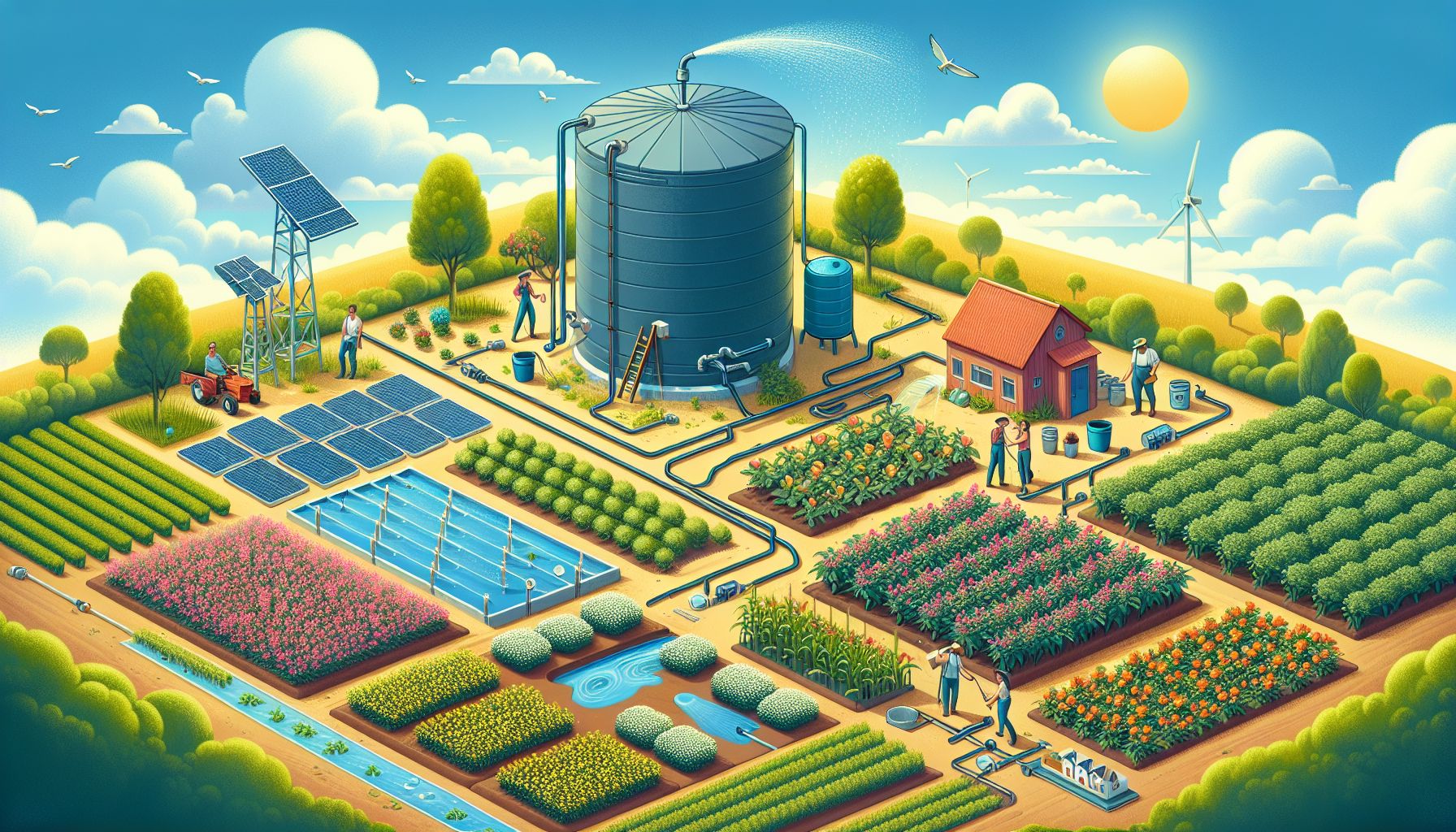
Agriculture consumes more freshwater than any other human activity; thus, its sustainability is intimately linked to efficient water management. As the global population grows, the demand for food increases, putting additional pressure on water resources that are already limited or stressed in many parts of the world.
Implementing sustainable water management practices in agriculture is not just beneficial, but necessary to ensure that the growing demands for food can be met without depleting our water resources. This article delves into the various practices that can help achieve a more sustainable approach to water management within the agricultural sector.
Understanding the Need for Sustainable Agriculture
Before tackling the specifics of water management, it’s important to understand the significance of sustainability in agriculture. Sustainable agriculture aims to meet society’s food and textile needs in the present without compromising the ability of future generations to meet their own needs. It encompasses a range of environmental, social, and economic considerations, including the responsible use of water.
According to the Food and Agriculture Organization (FAO) of the United Nations, agriculture accounts for 70% of freshwater withdrawals worldwide. Making this practice more sustainable will have a profound impact on water conservation.
Practices for Sustainable Water Management
1. Efficient Irrigation Systems
Conventional flood irrigation is highly inefficient, with a significant portion of water lost to evaporation or runoff. Technologies such as drip irrigation, pivot irrigation systems, and sprinklers can greatly reduce water waste by delivering water directly to the plant roots.
2. Soil Moisture Monitoring
Soil moisture sensors and tensiometers can provide real-time data regarding soil water status, helping farmers to apply water only when needed, and in appropriate amounts, thus avoiding over-irrigation.
3. Rainwater Harvesting
Collecting and storing rainwater for agricultural use is a simple yet effective method for reducing groundwater withdrawals. Rainwater harvesting systems can range from small barrels to large-scale reservoirs.
4. Crop Rotation and Diverse Cropping
Rotating crops and cultivating a diverse range of species can improve soil health, reduce pests, and lead to better water retention in the soil, thus decreasing the irrigation demands.
5. Mulching and Cover Crops
Applying mulch or growing cover crops can reduce soil erosion, help maintain soil moisture, and limit weed growth. This, in turn, reduces the need for frequent watering.
6. Managing Water Flows
Building terraces on slopes, implementing contour plowing, and constructing retention ponds or swales can help manage how water flows across the land, increasing infiltration and reducing water loss through runoff.
7. Drought-Resistant Varieties
Breeding and using crop varieties that are tolerant of drought and low-water conditions can significantly reduce the agricultural water footprint.
8. Water Recycling and Reuse
Reusing water within the farm, such as the recycling of irrigation runoff or processing water, is a way to maximize the efficiency of the water used.
9. Tailored Fertilization and Pest Management
Minimizing chemical use through integrated pest management and precise fertilization can reduce water pollution. Healthy soils absorb water better and are less prone to erosion.
10. Education and Training
Educating farmers about the principles of water conservation, and providing technical training on new water-saving technologies and methods, are critical for the adoption of sustainable practices.
The Impact of Climate Change on Water for Agriculture
Climate change exacerbates the challenges in water management for agriculture. Variable rainfall patterns, extreme weather events, prolonged droughts, and shifts in temperatures can disrupt the stability of water supply. Farmers must adapt to these changes, often by implementing more resilient water management strategies, such as those listed above.
Economic and Social Considerations
Sustainable water management is not only an environmental imperative but a socio-economic one as well. Water shortages can lead to crop failures, which in turn can lead to food insecurity and economic instability, particularly in rural communities. Therefore, sustainable practices also have the potential to contribute to poverty alleviation and social stability.
Challenges and Barriers to Implementation
Despite the known benefits of sustainable water management, there are several challenges. These include the cost of new technologies, resistance to change from traditional practices, lack of awareness and education, and inadequate government policies and incentives to encourage the transition.
The Role of Policy and Governance
Successful integration of sustainable water management practices in agriculture requires supportive policies, effective governance, and partnership among stakeholders. Policies that incentivize water conservation, along with programs that facilitate knowledge sharing and technical assistance, can encourage widespread adoption of sustainable practices.
Towards A Sustainable Future
The shift towards sustainable water management in agriculture is a complex but imperative journey. It’s about safeguarding our most precious resource for future generations while also ensuring that we can meet our present needs.
Sources
For further reading and a deeper understanding of sustainable water management in agriculture, consider the following sources:
- The Food and Agriculture Organization (FAO) of the United Nations: Provides extensive resources on sustainable water use and management in agriculture.
- The World Bank – Water in Agriculture: Offers insights into the bank’s work in promoting water efficiency in the agricultural sector.
- The Nature Conservancy – Water: Shares stories and strategies for using water wisely, including agricultural focus.
By embracing a more water-wise approach to farming and implementing the strategies discussed above, farmers all over the world can contribute to the resilience, sustainability, and productivity of their agricultural systems in the face of growing demand and potentially scarce water supplies.