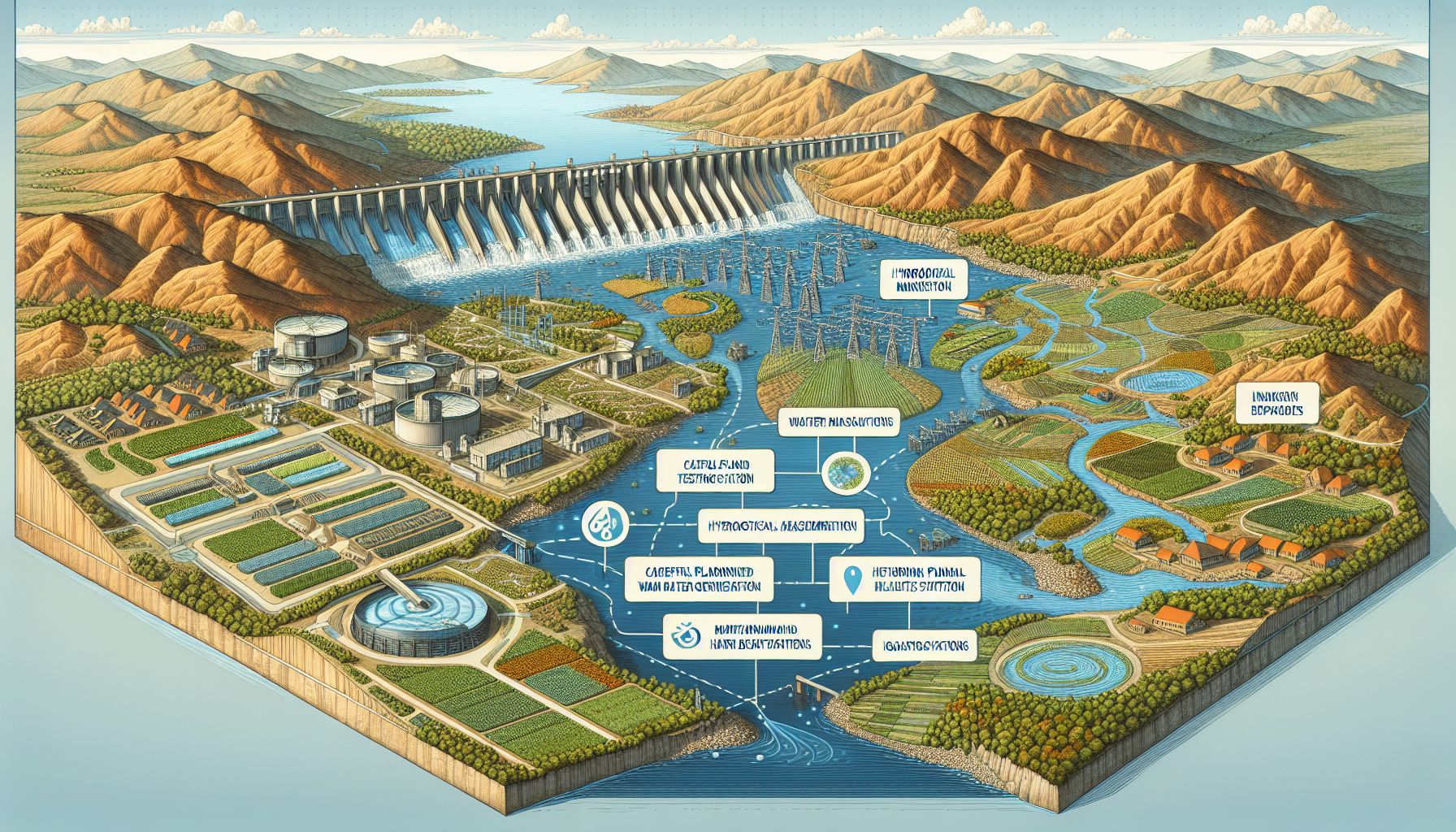
The vital importance of fresh water to all facets of human society cannot be overstated—it is fundamental for health, agriculture, industry, and the environment. In an era defined by increasing water demand and the growing impacts of climate change, managing this precious resource effectively is more crucial than ever. This challenge is compounded when water resources cross political boundaries, necessitating the cooperation of different nations. Integrated Water Resources Management (IWRM) in transboundary river basins embodies policies and practices designed to coordinate the stewardship of shared water resources to ensure equitable and sustainable usage for all involved parties.
Understanding Transboundary River Basins
A transboundary river basin is a geographical area determined by the watershed of a river that flows through two or more countries. These areas are common; there are over 260 transboundary river basins worldwide, according to the United Nations [1]. Well-known examples include the Nile, the Amazon, and the Mekong. The water in these basins is crucial for the livelihoods, economies, and ecosystems of the countries they traverse.
Managing these shared resources is inherently challenging due to differing national policies, economic demands, and environmental concerns. Disagreements over water usage can lead to conflicts but also offer opportunities for cooperation and shared benefits. This is where IWRM comes into play.
The Principles of IWRM
IWRM is a process that promotes the coordinated development and management of water, land, and related resources to maximize economic and social welfare in an equitable manner without compromising the sustainability of vital ecosystems [2].
Three main pillars underpin IWRM:
- Economic Efficiency in water use: The water should be used in a way that maximizes the benefit to society while minimizing wastage.
- Social Equity: All individuals should have access to water and its benefits. This includes recognizing the needs of vulnerable and marginalized groups.
- Environmental Sustainability: Water use should not degrade the integrity of the ecosystem and should be managed to withstand environmental challenges such as those posed by climate change.
Challenges for Transboundary River Basins
Effective IWRM in transboundary river basins faces numerous challenges:
Political and Legal Hurdles
Different legal and political frameworks, lack of binding international laws, and weak enforcement mechanisms can hinder cooperation. The concept of sovereignty adds complexity as countries prioritize their national interests.
Socio-economic Disparities
Uneven levels of development among basin countries can lead to asymmetrical power dynamics and imbalanced benefits from shared water resources.
Environmental Considerations
Variations in environmental priorities and policies can create conflict, especially when upstream/downstream impacts and ecosystem considerations are involved.
Data Sharing and Transparency
Frequently, there is a lack of shared hydrological data and transparency in decision-making processes, which is essential for informed management strategies.
Successful Strategies for Integrated Management
Establishing Cooperative Frameworks
Creating cooperative agreements or commissions is crucial for the success of IWRM. These frameworks often establish regular dialogue, data sharing protocols, and joint-management structures [3]. The Danube River Commission and the Mekong River Commission are prominent examples of successful transboundary cooperation.
Engaging Stakeholders
Involving all stakeholders, including governments, civil societies, indigenous communities, and the private sector, is necessary for the equitable and efficient management of water resources.
Harmonizing Policies and Laws
Countries within a transboundary basin should strive to harmonize their water policies and laws to minimize conflicts, ensure fair distribution, and achieve common environmental goals.
Building Institutional Capacity
Investing in the institutional capacity can improve the ability to implement IWRM effectively. This includes training personnel, improving infrastructure, and adopting modern water management practices.
Utilizing Technology and Innovation
Technological solutions like remote sensing for data collection, hydro-informatics, and decision support systems facilitate better planning and management. Shared technological platforms can also reinforce trust and cooperation between countries.
Fostering Resilience to Climate Change
Adapting to climate change impacts by incorporating climate resilience into water management plans and investing in sustainable infrastructure is critical.
Implementing Integrated Water Resources Management
The process of implementing IWRM in a transboundary context follows several steps:
- Assessment: Involves understanding the status of water resources and the existing institutional and legal frameworks.
- Planning: Development of a strategic plan that incorporates objectives, management strategies, and intervention points.
- Implementation: Application of the plan through policies, investments, and programs, with a robust monitoring and evaluation framework.
- Monitoring and Adaptation: Continuous assessment is needed to refine and adapt the management strategies to changing conditions and new information.
Case Studies and Success Stories
The Rhine and Danube Rivers in Europe present classic examples where IWRM has been used effectively. After decades of pollution and disputes, countries along these rivers have formed commissions that foster cooperation, leading to significant improvements in water quality and sustainable management.
Conclusion
In the quest for sustainable development and peace, the importance of IWRM in transboundary river basins cannot be overstated. While the challenges are considerable, the combination of international cooperation, stakeholder engagement, and innovative approaches to water management are key to ensuring that future generations inherit a world with secure and clean water resources.
Sources
- United Nations. (n.d.). Transboundary Waters. http://www.unwater.org/water-facts/transboundary-waters/
- Global Water Partnership. (2000). Integrated Water Resources Management. TAC Background Papers No. 4. https://www.gwp.org/en/gwp-in-action/publications/publication/?tx_mmforum_pi1[action]=list_post&tx_mmforum_pi1[tid]=795
- International Commission for the Protection of the Danube River. (n.d.). The Danube River Basin. http://www.icpdr.org/main/
Implementing IWRM for transboundary river basins is a journey that requires long-term commitment, collaboration, and a willingness to embrace new ideas and technologies. With the stakes being as high as they are, the efforts put into such integrated approaches are not just beneficial—they are imperative for our collective future.