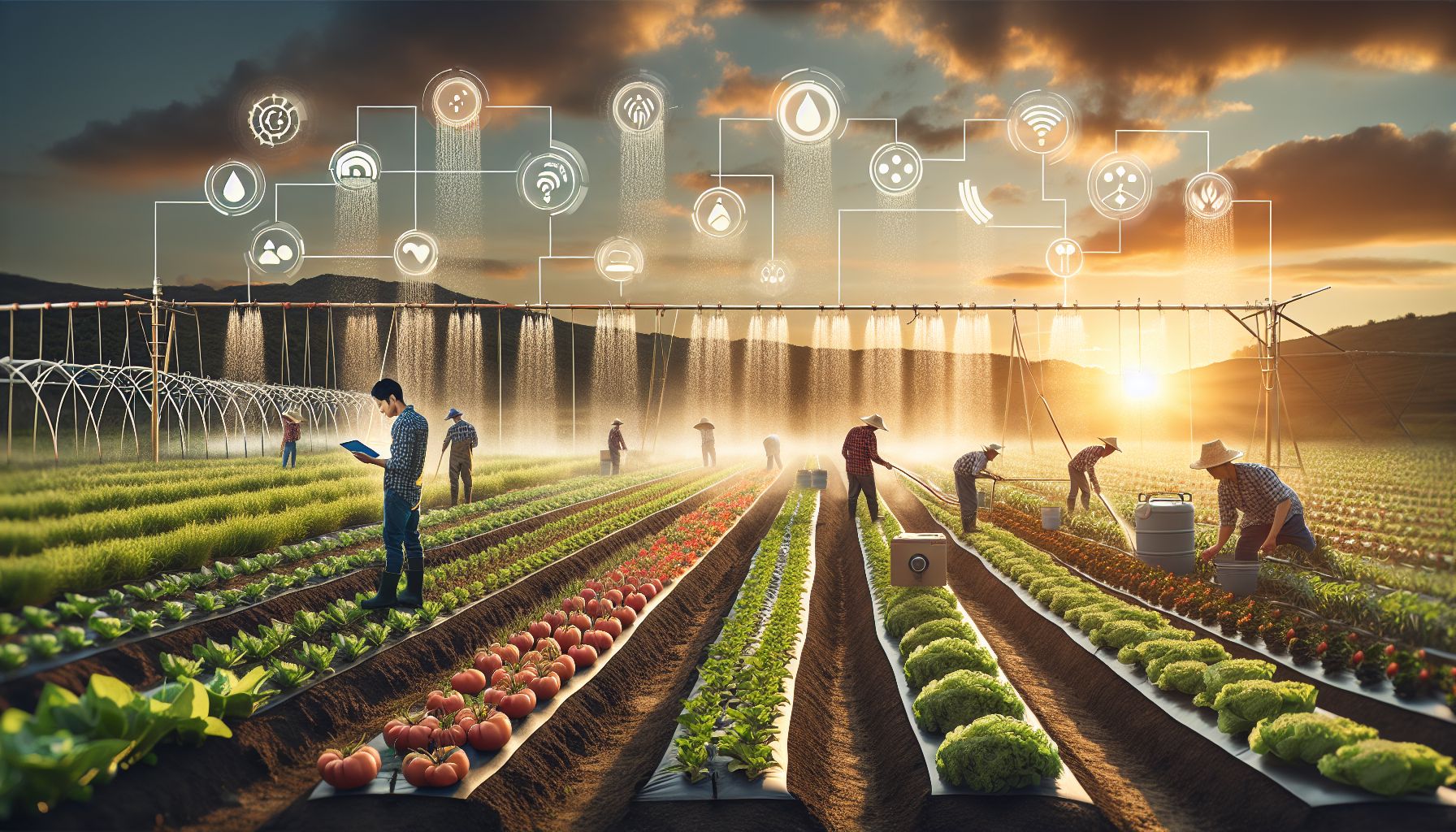
Agriculture consumes more freshwater than any other human activity, accounting for roughly 70% of global water withdrawals. With the growing concern over water scarcity and climate change, it has become essential for farming practices to evolve towards efficient water use. Smart irrigation systems represent one of the most promising innovations in modern agriculture, offering a teched-up solution to reduce water consumption while maintaining or improving agricultural productivity. This article delves into the necessity, working principles, benefits, and challenges of these systems, as well as how they can contribute to the global pursuit of sustainable water management.
The Necessity for Smart Irrigation in Modern Agriculture
Water is the lifeblood of agriculture, but in many regions around the world, it has become a scarce resource due to factors such as over-extraction, pollution, and climate change-induced droughts. The traditional methods of irrigation, such as flood or furrow irrigation, can lead to significant water loss due to evaporation, run-off, and inefficient water distribution. Smart irrigation systems come as an answer to these challenges, providing precise water application tailored to the crop’s actual needs considering the soil moisture and local weather conditions.
How Smart Irrigation Systems Work
Smart irrigation technology harnesses the power of sensors, real-time data, and automated controls to optimize water use. Here’s how they typically function:
- Sensors: These are installed in the field to measure variables like soil moisture, temperature, and humidity. They can also detect plant stress or nutrient levels in the soil.
- Data Processing: The collected data is sent to a central control system, often cloud-based, where it is processed using advanced algorithms. This is where the ‘smart’ aspect comes into play, as the system can make informed decisions about the water needs of the crop.
- Control Units: Automated valves, sprinklers, or drip systems are then engaged or disengaged based on the data analysis. This ensures that the right amount of water is delivered to the plants at the right time.
- User Interface: Farmers can monitor and manage the irrigation system via smartphones, tablets, or computers. This grants them remote access and control over their irrigation practices.
Benefits of Smart Irrigation Systems in Agriculture
Increased Water Efficiency
The central benefit of smart irrigation systems is the reduction in water consumption. By applying the exact amount of water needed for plant growth, these systems can eliminate wastage due to over-irrigation.
Enhanced Crop Yields
Proper irrigation can lead to healthier plants, which can translate into increased yields. The precision offered by smart systems leads to optimal plant growth conditions, which, in turn, can maximize productivity.
Cost Savings
Reducing water usage not only helps conserve precious freshwater resources but also translates into financial savings for farmers. This includes lower water bills and potential savings on energy costs if the water needs to be pumped from a source.
Environmental Impact
By minimizing run-off, smart irrigation can reduce the amount of water that carries fertilizers and pesticides into adjacent water bodies, thus lowering the risk of water pollution.
Adaptability to Climatic Variabilities
These systems can be programmed or calibrated to adapt to changing climatic conditions, providing a more resilient agriculture practice under the threat of climate change.
Challenges and Considerations in Implementing Smart Irrigation Systems
Initial Costs and Investment
Installation of a full-scale smart irrigation system can be costly, and for small-scale farmers, this could be a significant barrier. The situation calls for financial incentives, subsidies, or affordable technology solutions to encourage widespread adoption.
Technology Training and Support
Farmers must be well-versed in the technology to make the most of it. This implies that training and ongoing support are vital components of a successful implementation.
Maintenance and Durability
Like any technology, smart irrigation systems may require maintenance, updates, and eventual replacement of parts or sensors, which could incur additional costs and effort.
Data Privacy and Security
With the reliance on data, issues surrounding the privacy and security of collected agricultural data are critical. There must be mechanisms in place to protect farmers’ data from misuse or breach.
Integration with Existing Farming Practices
The technology must be compatible with existing farming practices and equipment, or the transition to smart irrigation must be managed efficiently.
Conclusion
Smart irrigation systems present a powerful opportunity to move the needle on water conservation in agriculture. By merging modern technology with traditional farming techniques, these systems offer a clear pathway to more sustainable and efficient water use. However, the path to widespread adoption is paved with challenges that need to be addressed through collaborative efforts from policymakers, technology developers, and the farming community.
As we advance towards a future where water could become an even more precious commodity, the role of such technology in improving water use efficiencies could be a crucial determinant of food security, environmental conservation, and the overall sustainability of our agricultural landscapes.
Despite the hurdles, the merits of smart irrigation systems shine through their capacity to turn every drop of water into a well-calculated step towards sustainable agriculture. Their expansion and refinement will no doubt be pivotal in shaping a resilient agricultural sector ready to face the global environmental challenges of the 21st century.
Sources
-
Food and Agriculture Organization of the United Nations (FAO). (n.d.). Irrigation in agriculture. http://www.fao.org/land-water/water/irrigation/en/
-
United States Environmental Protection Agency (EPA). (2018). Water-Smart Landscapes Start With WaterSense. https://www.epa.gov/watersense/water-smart-landscapes-start-watersense
-
World Bank. (2020). Smart Irrigation Systems Are Ramping Up in Brazil. https://www.worldbank.org/en/news/feature/2020/03/19/smart-irrigation-systems-are-ramping-up-in-brazil