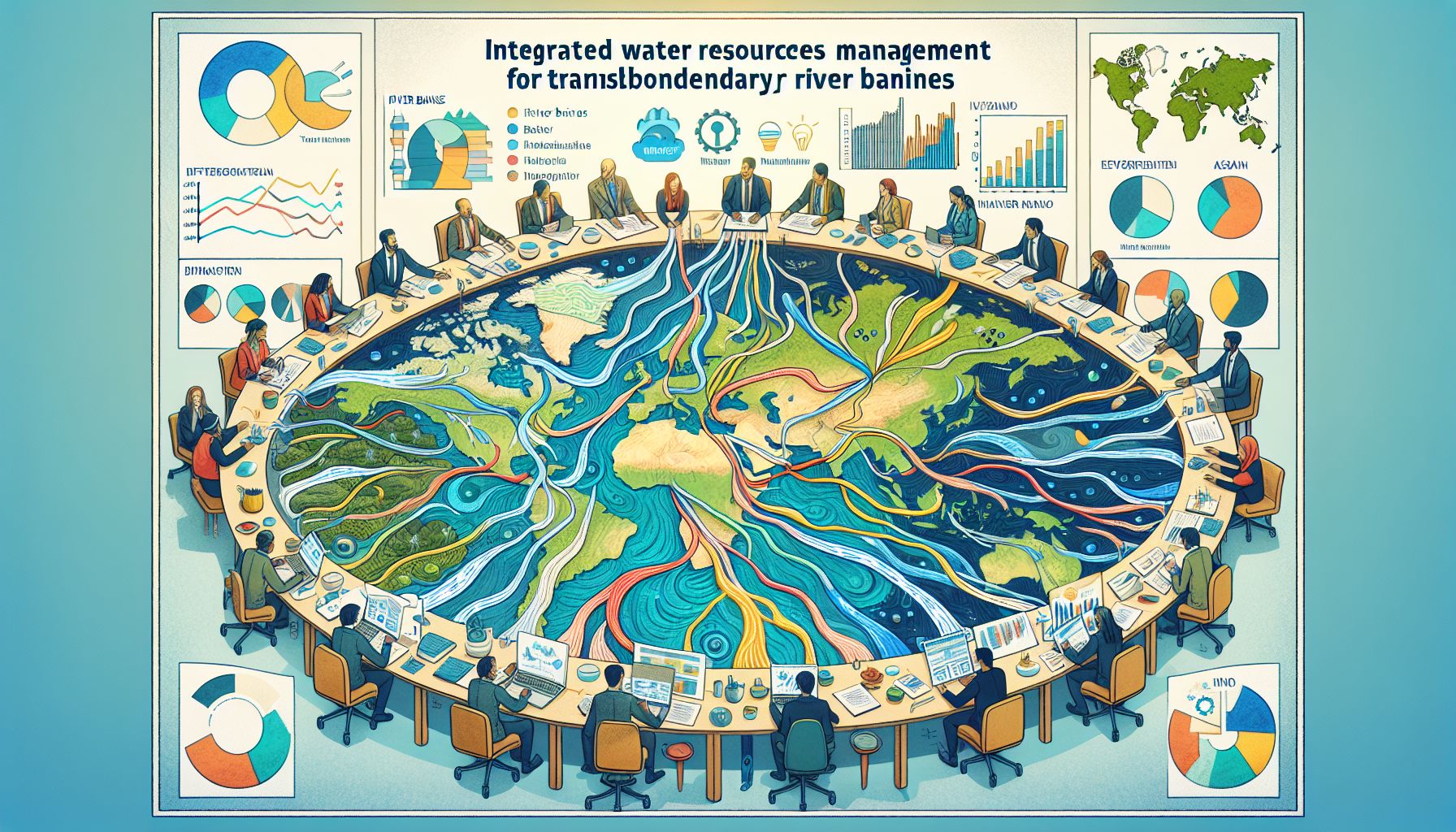
Water is the lifeblood of our planet. It crosses borders and boundaries with no regard for political or cultural divisions, shaping ecosystems, economies, and societies in its flow. It’s no wonder that effectively managing this vital resource presents a complex challenge, especially when it comes to transboundary river basins, which are shared by two or more countries. Integrated Water Resources Management (IWRM) offers a comprehensive approach to manage water resources across these boundaries collaboratively and sustainably.
Understanding Integrated Water Resources Management (IWRM)
What is IWRM?
IWRM is a process that promotes the coordinated development and management of water, land, and related resources to maximize economic and social welfare without compromising the sustainability of vital ecosystems. The approach is founded on three pillars: economic efficiency in water use, equity in access, and environmental and ecological sustainability.
The Objectives of IWRM:
- Ensure the availability and sustainable management of water and sanitation for all.
- Promote peaceful cooperation and resolve conflicts among transboundary water basin nations.
- Protect ecosystems and manage water resources adaptively to cope with climate change and other foreseeable challenges.
The Importance of IWRM in Transboundary River Basins
Transboundary river basins are particularly challenging because decisions by one nation often impact the availability and quality of water in another. IWRM is crucial in such contexts as it fosters collaboration and conflict resolution. It recognizes the interdependence of nations and the need to manage the river basin as one hydrological unit.
Challenges in Transboundary River Basin Management
The management of transboundary river basins comes with its fair share of obstacles. Some of these challenges include:
- Political and Cultural Differences: Different laws, governance structures, and cultural practices can complicate negotiations and joint management strategies.
- Economic Disparities: Variations in economic development levels can lead to inequitable use of resources and investments in water management.
- Environmental Concerns: Pollution, overuse, and climate change can lead to degradation of water quality and quantity, affecting all countries along the river.
- Legal and Institutional Frameworks: Inconsistent or non-existent legal frameworks make it difficult to enforce agreements or collective action plans.
Case Studies and Global Examples
To better understand how IWRM works in practice, let’s examine a few case studies:
The Rhine River: A European Success Story
The Rhine River Basin is shared by nine countries. After facing severe pollution in the mid-20th century, these nations came together to create the International Commission for the Protection of the Rhine (ICPR). This partnership led to significant improvements in water quality, riverine ecology, and flood prevention through joint investments and information sharing.
The Nile River: Complexity and Cooperation
The Nile River passes through 11 African countries, making it one of the most complex transboundary water management cases. With historical tensions over water rights and usage, the nations have established the Nile Basin Initiative (NBI) to foster cooperation and develop a shared vision for sustainable management.
The Ganges-Brahmaputra-Meghna Basin: Addressing Shared Challenges
Spanning across India, China, Nepal, and Bangladesh, this is one of the largest and most populated river basins in the world. While tensions exist, especially between India and Bangladesh, joint commissions have been formed to address shared concerns, such as flood management and water sharing. However, there is still a need for a more cohesive IWRM framework.
Principles and Best Practices of IWRM for Transboundary River Basins
Participation and Inclusive Decision Making
Including all stakeholders—governments, civil society, private sectors, and indigenous communities—is critical. It ensures diverse perspectives and needs are represented in developing and implementing management plans.
Shared Information and Knowledge
Data on water quantity, quality, and use must be transparently shared among the nations. Joint monitoring and assessment are essential for evidence-based decision-making.
Equitable and Reasonable Utilization
All nations should have equitable access to the water resources of a transboundary river. Agreements must consider the needs of all riparian countries to prevent conflicts and promote sustainability.
Ecosystem Protection
The health of the river basin’s ecosystem is paramount. Measures should be taken to protect habitats, biodiversity, and ecosystem services, ensuring the river’s vitality for future generations.
Legal and Institutional Frameworks
Effective management requires a strong legal basis and institutional arrangements. This can take the form of international treaties, river basin organizations, and other cooperative frameworks that guide joint action.
Adaptive Management and Conflict Resolution
As conditions change, management strategies need to adapt. Mechanisms for conflict resolution, such as arbitration and dialogue, must be established to address emerging disputes swiftly.
Moving Forward: The Role of International Organizations and Agreements
International organizations such as the United Nations and the World Bank play a significant role in promoting IWRM in transboundary river basins. Through initiatives like the UNECE Water Convention and the UN Watercourses Convention, frameworks and guidelines are established to aid countries in collaborative management efforts.
Future Challenges and Opportunities
With growing populations, increased demand for water, and the impacts of climate change, the future will undoubtedly bring new challenges to transboundary water management. However, with continued commitment to IWRM principles and enhanced cooperation, there is a clear pathway to sustainable and peaceful water resource management across borders.
Conclusion
Integrated Water Resources Management offers a beacon of hope for managing transboundary river basins effectively. Through collaboration, shared responsibility, and adaptive governance, nations can secure water for all, preserve vital ecosystems, and forge a path of peace and cooperation over our most precious shared resource.
Sources
- Global Water Partnership. “What is IWRM?” https://www.gwp.org/en/GWP-CEE/about/why/what_is_iwrm/
- United Nations. “Transboundary Waters.” https://www.unwater.org/water-facts/transboundary-waters/
- The World Bank. “Transboundary Water Cooperation.” https://www.worldbank.org/en/topic/waterresourcesmanagement/brief/transboundary-water-cooperation
This approach to water management, especially for transboundary river basins, is an ongoing global endeavor. The outlined case studies and best practices provide valuable insights into the potential for success, while highlighting the need for continued innovation and international cooperation.