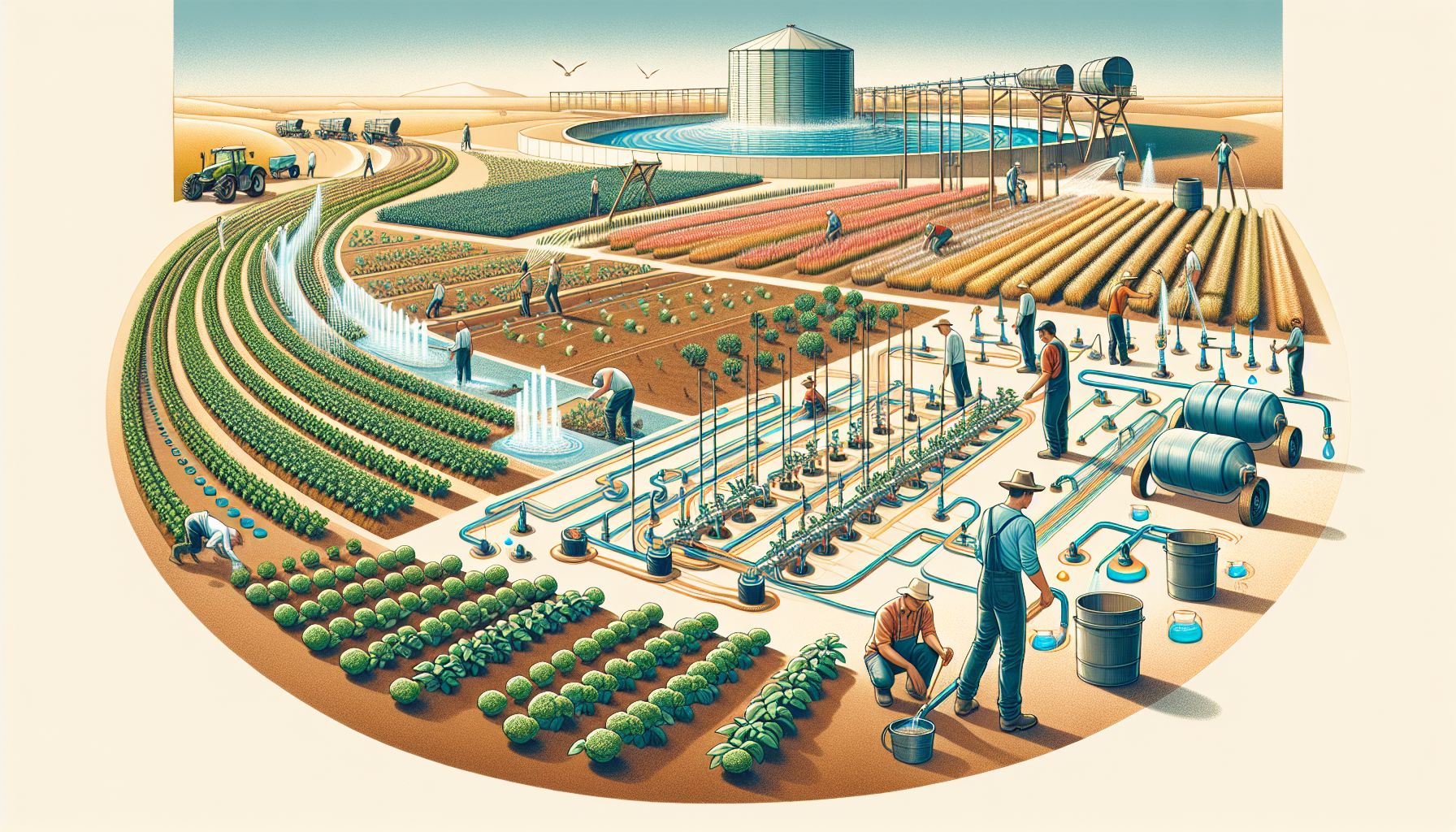
Water is the lifeblood of agriculture, vital for everything from irrigating crops to watering livestock. Yet, with the planet facing increasing water scarcity issues, sustainable water management in agriculture has never been so critical.
Why Sustainable Water Management Matters
Globally, agriculture accounts for approximately 70% of freshwater withdrawals, while in many parts of the world, these levels are unsustainable, leading to depleted aquifers and reduced water quality. The challenge of managing water sustainably in agriculture is amplified by the expected growth in global population and the impacts of climate change which are expected to shift and intensify water stresses.
Core Principles of Sustainable Water Management in Agriculture
1. Efficiency in Water Use
One of the first strategies in managing water sustainably is increasing the efficiency with which it’s used. Drip irrigation systems, which deliver water directly to the plants’ roots, are significantly more efficient than traditional flood or furrow irrigation methods.
2. Soil Health Promotion
Healthy soils play a crucial role in water management. They can retain water effectively and release it slowly over time. Incorporating organic matter into the soil and practicing conservation tillage are ways to improve soil health.
3. Water Reuse and Recycling
Reusing and recycling water for agricultural purposes, such as the use of treated wastewater for irrigation, can reduce the pressure on fresh water resources.
4. Rainwater Harvesting
Capturing rainwater to use for irrigation is an old practice that’s gaining new momentum. This can involve simple setups like barrels connected to downspouts or more elaborate systems with catchment areas and storage tanks.
5. Controlled Grazing
Livestock can have a significant impact on water resources. Controlled grazing techniques can help to reduce erosion and surface water runoff, thereby maintaining water quality.
Water-Smart Innovations for Agriculture
Farmers around the world are adopting innovative techniques to manage water sustainably:
Drip Irrigation Systems
Drip irrigation is a method where water drips slowly to the roots of plants, either onto the soil surface or directly onto the root zone, through a network of valves, pipes, and emitters. This is particularly useful in dry regions, and it can reduce water use by 30 to 50% compared to traditional irrigation methods.
Subsurface Drip Irrigation
A variation of drip irrigation where the water delivery system is buried below the soil surface. This minimizes evaporation losses and reduces weed growth.
Smart Irrigation Controllers
Advanced irrigation systems use weather and soil moisture data to automatically adjust the watering schedules accordingly.
Aquaponics and Hydroponics
These innovative agricultural methods tend to use significantly less water than traditional soil-based growing techniques. They combine fish farming (aquaponics) or use nutrient-rich solutions (hydroponics) to grow plants without soil.
Cover Crops
Planting cover crops like clover or hairy vetch helps prevent soil erosion, retain moisture in the soil, and even fix nitrogen levels in the soil, reducing the need for fertilizers and irrigation.
Challenges and Considerations
While all these practices hold promise, there are challenges, too. Implementation costs can be high, which may discourage smallholder farmers. Training and ongoing support are necessary to ensure that farmers can use these technologies effectively. Additionally, shifting towards sustainable practices often requires a change in mindset and long-term commitment from various stakeholders across the agricultural sector.
Case Studies of Success
Successful case studies of sustainable water management in agriculture serve as inspiration and blueprints for replication. For example:
Israel’s Advanced Irrigation
Israel, a country with limited freshwater resources, is a global leader in drip irrigation technology. Farmers in Israel have used drip irrigation to optimize water use and increase crop yields for decades.
California’s Sustainable Groundwater Management Act
In response to significant droughts and falling water tables, California has implemented the Sustainable Groundwater Management Act (SGMA), which requires the creation of groundwater sustainability agencies and plans.
Policies and Support
To encourage the adoption of sustainable water management practices, governments can offer incentives, subsidies, and technical support. For instance, the U.S. Department of Agriculture’s Environmental Quality Incentives Program provides financial and technical assistance to farmers who adopt conservation practices.
Conclusion
Sustainable water management in agriculture is a multifaceted strategy that, when implemented correctly, can secure long-term water supplies for future generations. Efficient water use, soil health, water reuse, rainwater harvesting, and controlled grazing are all strategies that can contribute to more sustainable water management. Innovations like drip irrigation and smart irrigation systems show much promise. Policymakers, together with the farming community and wider society, must prioritize sustainable water management to ensure food security and protect the environment.
Sources
- FAO – The State of the World’s Land and Water Resources for Food and Agriculture (SOLAW) – Managing Systems at Risk. FAO
- USDA – Environmental Quality Incentives Program. USDA
- Israel Ministry of Foreign Affairs – Water Technology and the Fertile Desert. Israel’s MFA
By leveraging these sustainable practices and technologies, we can cultivate an agricultural sector that not only produces the food we need but also stewards our precious water resources for future generations.