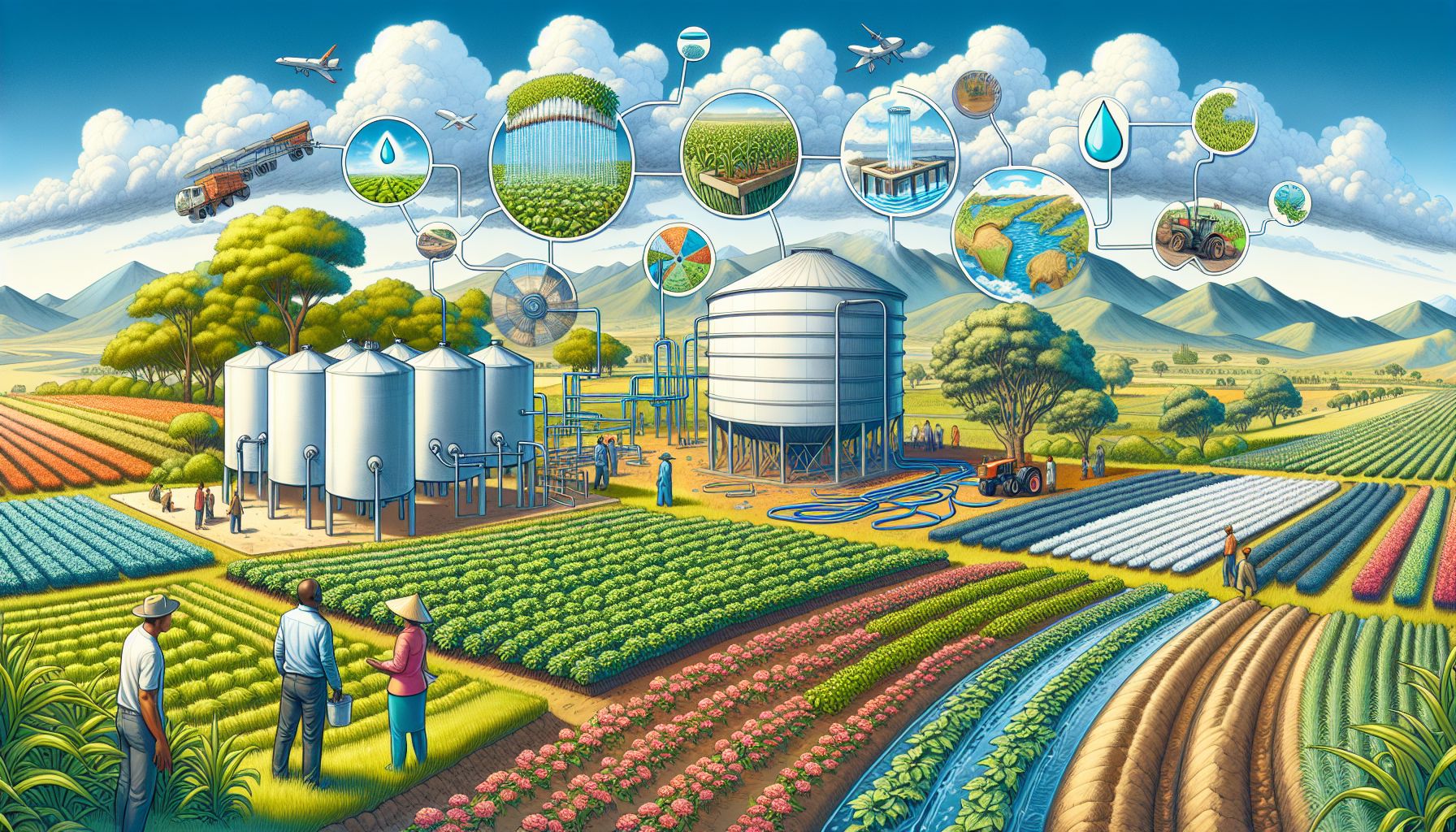
Agriculture has been the backbone of human civilization since time immemorial, providing food, fiber, and various raw materials for our everyday needs. However, the sector is also the largest consumer of freshwater resources. Implementing sustainable water management practices in agriculture is crucial to ensure that future generations inherit a world where the balance between water use and food security is maintained. This article will delve into the importance of sustainable water management in agriculture, outline effective practices that can be adopted, and explore the potential benefits for both farmers and the environment.
Understanding Water Use in Agriculture
Before we discuss sustainable water management practices, it’s important to have a clear understanding of why agriculture consumes so much water. According to the Food and Agriculture Organization (FAO) of the United Nations, irrigation accounts for around 70% of freshwater withdrawals globally. The intensive water use is primarily due to traditional farming methods, which rely heavily on a constant supply of water to ensure crop growth and productivity.
Why Sustainable Water Management Matters
The concept of sustainable water management in agriculture refers to practices that enable farmers to use water in a way that meets the current and future agricultural demands while ensuring the health of ecosystem services, such as wetlands, rivers, and aquifers. Unsustainable water management can lead to several severe consequences, including soil degradation, diminished groundwater reserves, pollution, and loss of biodiversity.
Best Practices for Sustainable Water Management in Agriculture
1. Efficient Irrigation Techniques
Drip Irrigation
Drip irrigation involves delivering water directly to the plant roots, minimizing evaporation and runoff. It can result in water savings of up to 30-60% compared to traditional flood irrigation methods.
Sprinkler Systems
Modern sprinkler systems can be adjusted to deliver precise amounts of water, and when combined with timers and moisture sensors, they can significantly reduce water wastage.
2. Rainwater Harvesting
Collecting rainwater for agricultural use is an excellent way to supplement water needs. This can reduce dependency on groundwater and help in maintaining aquifer levels.
3. Crop Selection and Rotation
Choosing to grow drought-resistant crops or those with shorter growing periods can reduce water requirements. Additionally, rotating crops can improve soil structure and health, which can increase its water retention capacity.
4. Mulching
Applying a layer of mulch on the soil surface helps to maintain soil moisture by reducing evaporation. Mulching also suppresses weed growth, which can otherwise compete with crops for water.
5. Conservation Tillage
Conservation tillage methods, such as no-till or minimal tillage, can help in retaining soil moisture and structure, leading to a reduction in the need for irrigation.
6. Controlled Traffic Farming
Controlled traffic farming involves limiting heavy machinery movement to specific parts of the field to avoid soil compaction. Compacted soils have reduced pore space, leading to poor water infiltration and increased runoff.
7. Managing Waterways and Wetlands
Creating or preserving natural waterways and wetlands within agricultural landscapes can enhance water filtration, provide habitats for beneficial species, and act as natural irrigation sources.
Benefits of Implementing Sustainable Water Management Practices
Enhanced Farm Productivity
Efficient water management can lead to improved crop yields as water stress is minimized, and plants receive an optimal amount of water.
Soil Health
Sustainable practices help in maintaining soil health by preventing erosion, maintaining nutrient levels, and supporting beneficial microorganism populations.
Economic Savings
Reduced water usage translates into lower energy costs for pumping and lower water bills or fees associated with water rights. Long-term, this can lead to significant economic savings for farmers.
Environmental Protection
Sustainable water management helps in reducing pollution, conserving biodiversity, and tackling the effects of climate change by preserving water sources.
Community and Global Impact
On a larger scale, efficient water use in agriculture can positively impact water availability for communities and contribute to global water security.
Challenges and Solutions
Implementing these practices is not without its challenges. Initial setup costs for systems like drip irrigation can be considerable. Funding opportunities, however, such as grants and subsidies, are often available to support farmers in making the transition. Additionally, knowledge transfer and training on sustainable practices are crucial to ensure farmers understand the benefits and know how to maintain and operate new systems correctly.
Conclusion
Sustainable water management in agriculture is a necessary step towards safeguarding future water resources and ensuring food security. Through a combination of efficient irrigation techniques, wise crop choices, soil conservation methods, and other innovative practices, agriculture can become more aligned with the principles of sustainability.
Sources
- FAO – The state of the world’s land and water resources for food and agriculture [Link: http://www.fao.org/3/i1688e/i1688e.pdf]
- World Bank – Improving Water Management in Agriculture [Link: https://www.worldbank.org/en/topic/water-in-agriculture]
- US EPA – WaterSense for Agriculture [Link: https://www.epa.gov/watersense/agriculture]
Readers are encouraged to consult these sources for more in-depth information. Remember, every drop of water saved in agriculture is a step towards a more sustainable and secure future for everyone.