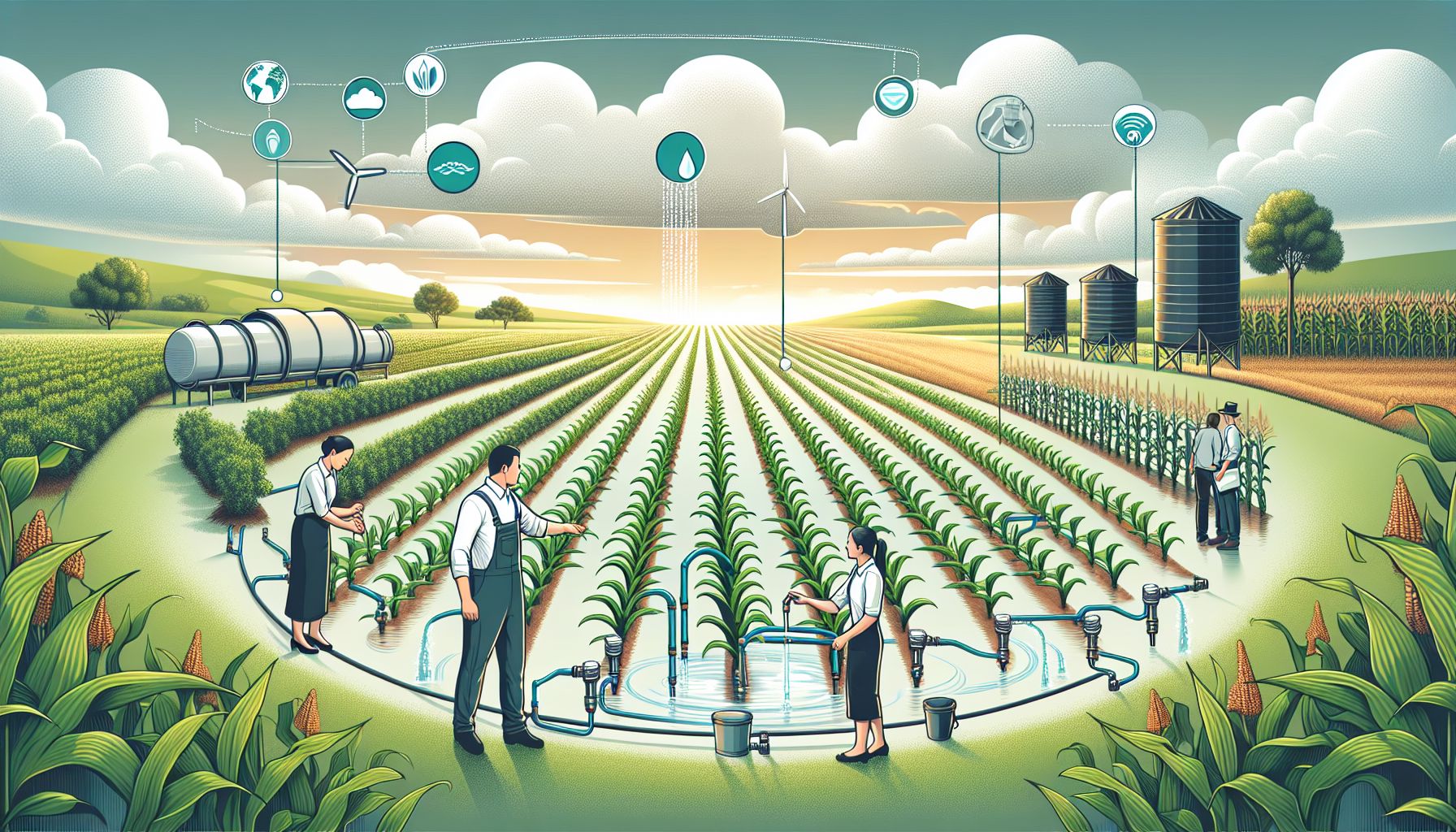
Agriculture is the largest consumer of freshwater globally, and with the increasing pressures from a growing population and shifting climate patterns, the need for sustainable water management in the agricultural sector has never been more pertinent. Implementing sustainable water management practices is crucial for ensuring the longevity of water resources and the ecosystems that depend upon them.
Understanding the Importance of Water in Agriculture
Before delving into sustainable practices, it’s essential to recognize that water is the core element for plant growth. It serves numerous functions from transporting nutrients to regulating plant temperature. Therefore, managing this critical resource is not just about conservation; it’s about sustaining life.
Strategies for Sustainable Water Management in Agriculture
Sustainable water management encompasses methods and practices designed to make the most efficient and beneficial use of existing water resources without causing harm to the environment. Here are several strategies and practices that have shown promise in achieving sustainability in agricultural water use.
1. Soil Health Improvement
Healthy soil retains water more effectively and reduces the need for external irrigation. Practices such as:
- Reducing tillage: No-till or reduced-till farming preserves soil structure, which helps retain moisture.
- Cover cropping: Using cover crops prevents soil erosion and helps maintain soil moisture levels.
- Organic matter addition: Composting and the use of green manure increase the soil’s capacity to hold water.
2. Crop Selection and Diversification
One of the more straightforward ways to manage water more sustainably in agriculture is by choosing crops that are naturally more drought-resistant or suitable for the specific climate of the region. Crop diversification can also improve resilience against pests and diseases, reducing the need for water-intensive pest control methods.
3. Efficient Irrigation Techniques
Transitioning to more efficient irrigation methods can dramatically cut water waste.
- Drip irrigation: Delivers water directly to plant roots, greatly reducing evaporation.
- Micro-sprinklers: Provide water to the root zone, while minimizing the amount that is lost to wind and evaporation.
- Irrigation scheduling: Using weather and soil moisture data to schedule watering can reduce water usage by ensuring crops only receive water when they need it.
4. Rainwater Harvesting
Agriculture can benefit significantly from capturing and storing rainwater. This can be as simple as collecting rainwater from greenhouse roofs or as advanced as constructing large-scale ponds or reservoirs.
5. Water Recycling and Reuse
On-farm water recycling can involve:
- Constructing wetlands: Engineered or natural wetlands can treat agricultural wastewater, which can then be reused.
- Filtering runoff: Filter strips and buffer zones can help clean water that runs off fields before it’s reused or enters the water cycle.
6. Remote Sensing and Monitoring
Modern technology offers tools for better water management through:
- Remote sensing: Drones and satellites can assess crop health, soil moisture levels, and water needs.
- Soil moisture sensors: These devices provide real-time data, allowing for precise irrigation scheduling.
7. Integrated Pest Management (IPM)
IPM reduces the necessity for frequent applications of water-based pesticide solutions. It combines biological, cultural, physical, and chemical tools in a way that minimizes economic, health, and environmental risks.
8. Policy and Economic Instruments
Policy tools like water pricing, subsidies for water-saving technologies, and regulations can incent farmers to use water more efficiently.
The Role of Technology in Sustainable Water Management
Technological advancements have a significant part to play in sustainable water management. Innovations in:
- Membrane technology: Can treat saline or contaminated water for use in irrigation.
- Smart metering: Can help both farmers and water authorities monitor and manage water use more effectively.
Global Examples of Sustainable Water Management
Several regions around the world provide case studies of effective water management in agriculture:
- Israel: A pioneer in drip irrigation and water recycling practices.
- California, USA: The implementation of the Sustainable Groundwater Management Act (SGMA) to regulate groundwater use.
- India: The success of micro-irrigation projects in arid regions.
Overcoming Challenges
The path to sustainable water management is fraught with challenges such as funding for technological solutions, farmer education, policy enforcement, and dealing with the impacts of climate change. A multi-pronged approach that involves stakeholders at all levels is essential to overcome these barriers.
Conclusion
Agriculture’s water use will always be substantial, but through sustainable water management practices, it can become efficient and less wasteful, ensuring that this critical resource is preserved for future generations. Implementing technology, refining farming methods, and enforcing supportive policies are keys to building a more water-conscious agricultural sector.
References
- Postel, S. L., Daily, G. C., & Ehrlich, P. R. (1996). Human Appropriation of Renewable Fresh Water. Science, 271(5250), 785–788. doi:10.1126/science.271.5250.785
- Perry, C., Steduto, P., Allen, R. G., & Burt, C. M. (2009). Increasing productivity in irrigated agriculture: Agronomic constraints and hydrological realities. Agricultural Water Management, 96(11), 1517–1524. doi:10.1016/j.agwat.2009.05.022
- Food and Agriculture Organization of the United Nations (FAO). (2020). The State of the World’s Land and Water Resources for Food and Agriculture – Systems at breaking point (SOLAW 2021). Retrieved from http://www.fao.org/solaw/solaw-home/en/
By implementing the strategies discussed above and continuously innovating to improve water-use efficiency, the agricultural sector can sustainably manage this vital resource, ensuring both food security and the health of our planet’s water systems.