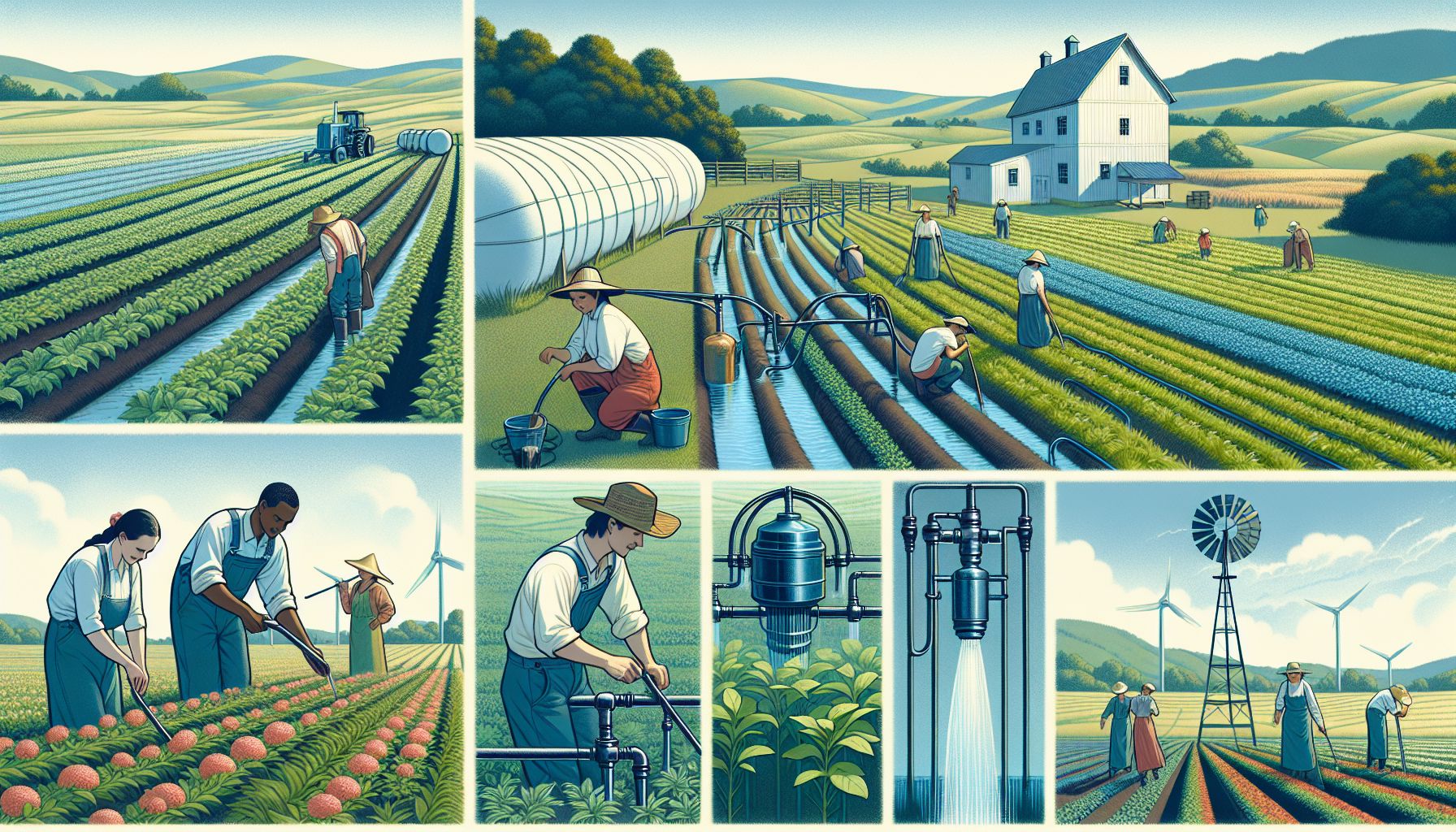
Agriculture is the largest consumer of freshwater resources, accounting for approximately 70% of the global freshwater withdrawals. Water management in agricultural practices is not just crucial for securing food production but also for maintaining the health of ecosystems and the environment. In this article, we will delve into sustainable water management practices that are enhancing the efficiency of water use in agriculture, fostering productivity, and supporting the long-term sustainability of water resources.
Understanding Sustainable Water Management
Sustainable water management in agriculture involves practices that optimize water use efficiency and minimize negative environmental impacts. It considers the economic, social, and environmental aspects of water usage, ensuring that it meets the current needs without compromising the ability of future generations to meet theirs.
Importance of Water Sustainability in Agriculture
The importance of sustainable water management in agriculture is underscored by a number of factors:
- Growing Demand for Food: The world population is continuously growing, which increases the demand for food and, consequently, the water needed for agricultural production.
- Climate Change: Changing precipitation patterns, extreme weather events, and global warming affect water availability and necessitate more prudent water use.
- Water Scarcity: Many regions around the world are experiencing water scarcity due to overuse, pollution, and management challenges.
- Environmental Protection: Sustainable practices help to protect ecosystems by reducing pollution and preserving water quality.
Sustainable Practices in Water Management for Agriculture
There are various practices that farmers and agricultural businesses can adopt to ensure the sustainable management of water. Here are some of the most effective methods:
1. Soil Moisture Conservation
- Mulching: Covering the soil surface with organic materials like straw can help retain soil moisture and reduce the need for irrigation.
- Cover Crops: Planting cover crops during off-season times can improve soil structure and increase its ability to hold water.
2. Rainwater Harvesting
Collecting and storing rainwater for agricultural purposes can reduce the dependency on surface water bodies and groundwater resources. Techniques include storage ponds, rain barrels, and catchments systems.
3. Drip Irrigation
Drip irrigation ensures water drops right to the roots of plants, leading to significant water savings. This method can minimize evaporation and reduce the amount of water that is wasted or not used by crops.
4. Scheduled Irrigation
Implementing an irrigation schedule based on the actual water needs of crops can result in better water use efficiency. Technology, such as soil moisture sensors and weather-based irrigation controllers, can assist in creating effective irrigation schedules.
5. Integrated Pest and Nutrient Management
Reducing the amount of pollutants and chemicals that enter water bodies through runoff can improve water sustainability. Integrated pest management and precise nutrient application can help in this regard.
6. Agroforestry
Incorporating trees into farming systems helps control the water flow, improves the recharge of groundwater, and increases biodiversity, creating a more resilient and water-efficient system.
7. Water Reuse and Recycling
Treating and reusing wastewater for irrigation can sustainably manage water resources. Constructed wetlands and bioreactors are examples of systems that can treat agricultural runoff for reuse.
8. Improved Crop Selection
Growing crops that are suited to the local climate and require less water can significantly reduce water usage in agriculture. Crop rotation with less water-intensive crops is another strategy.
9. Aquifer Recharge
Using techniques to allow water to infiltrate the ground, such as porous pavements or recharge basins, can help to replenish groundwater resources.
Challenges in Implementing Sustainable Practices
Despite the known benefits, adopting these practices comes with its set of challenges:
- Cost: Initial investments for setting up new systems, like drip irrigation, can be high.
- Knowledge Gaps: Farmers need to be aware of these practices and trained on how to implement them effectively.
- Policy Support: Government policies and subsidies can be instrumental in driving the adoption of sustainable practices.
Case Studies and Success Stories
Several regions and countries have successfully implemented sustainable water management practices, leading to improved water efficiency and productivity.
-
Israel: Known for its advancements in drip irrigation, Israel is a world leader in water reuse, recycling about 86% of its wastewater for agricultural use (source).
-
California, USA: With its Sustainable Groundwater Management Act (SGMA), California has embarked on a statewide journey to ensure responsible groundwater management and usage (source).
-
India: The state of Andhra Pradesh has seen success with community-managed water systems and micro-irrigation projects that have increased water-use efficiency (source).
Future Directions
Innovation and technology play a critical role in advancing sustainable water management practices. Examples include the use of data analytics and IoT devices to monitor water usage and develop more precision-based irrigation systems. Additionally, advancements in breeding and biotechnology could lead to the development of more drought-resistant and water-efficient crops.
Conclusion
Sustainable water management in agriculture is essential for preserving this finite resource, ensuring food security, and protecting the environment. By embracing innovative methods and practices, the sector can contribute significantly to water sustainability. While challenges exist, the experiences of various regions and nations highlight that with the right investment, training, and policy support, such practices can be widely adopted for the benefit of current and future generations.
For more in-depth information on this topic, readers can explore resources provided by the United Nations’ Food and Agriculture Organization (FAO), the World Bank (World Bank Water), and the International Water Management Institute (IWMI), which offer valuable insights into sustainable water management practices worldwide.