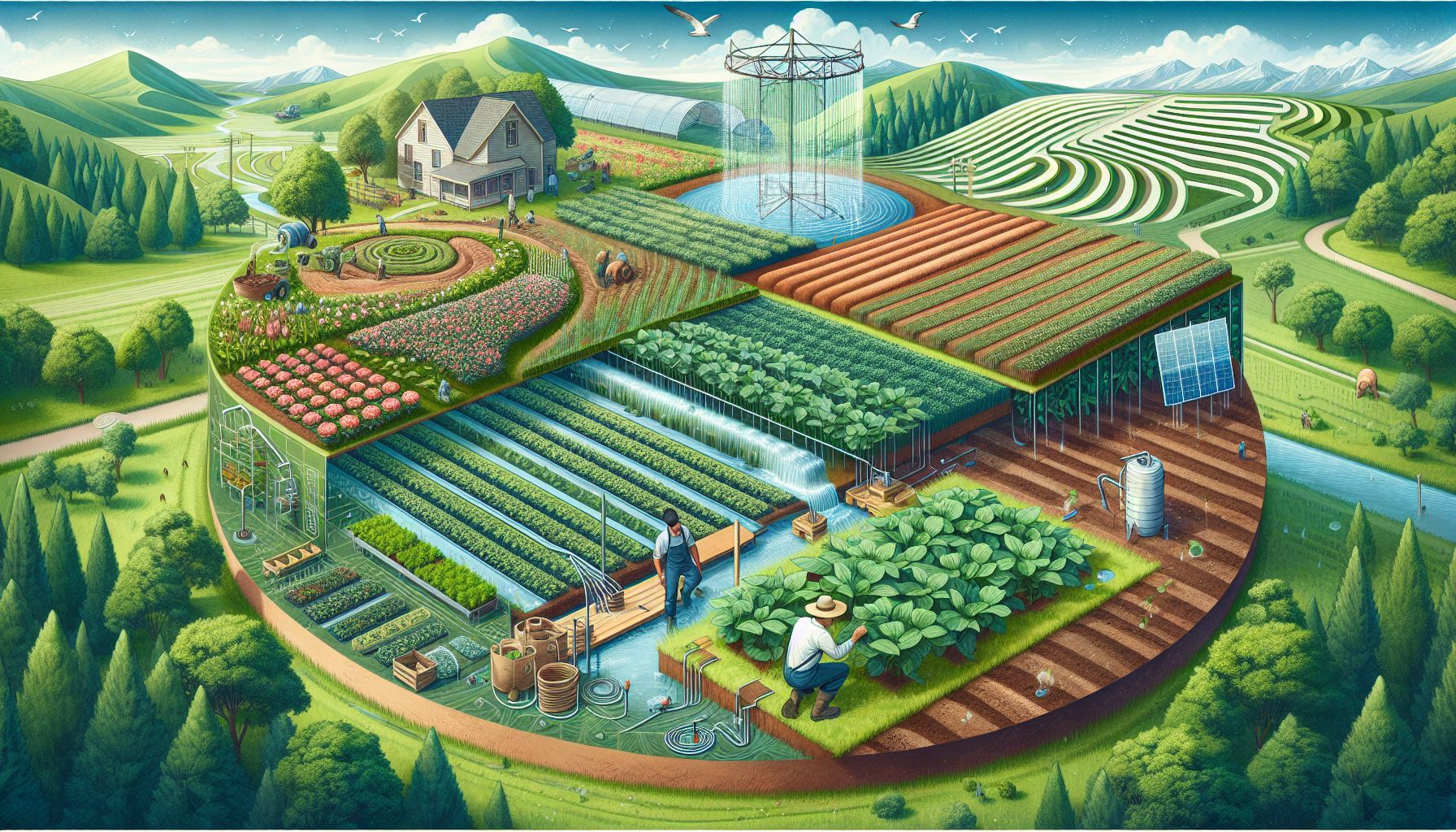
As population growth continues to surge, the need for more food increases. Consequently, this places intense pressure on our agriculture sector, which is a leading consumer of the world’s freshwater supplies. Agriculture accounts for approximately 70% of the global freshwater withdrawals, which is a staggering figure considering that only 2.5% of the earth’s water is freshwater. With climate change, significant demographic deviations, and declining water availability, there is an urgent need to focus on sustainable water management practices in agriculture to secure our future food and water needs. This article will explore the current challenges and strategic solutions to foster sustainable water usage in the agriculture sector.
Water Scarcity and the Agriculture Sector
Water scarcity is looming as a significant global crisis, marked by an imbalance between the availability and demand for water. According to the UN, it’s estimated that by 2025, two-thirds of the world’s population could be under water stress conditions, with 1.8 billion people living in areas with absolute water scarcity (UNWater, 2021). Among all sectors, agriculture is the largest consumer of water, and with the projected increase in food demand necessitated by population growth, this consumption figure is expected to rise considerably in the future.
Poor irrigation systems, increasing droughts, water pollution, and inefficient use are all contributing to water stress in agriculture. This calls for an urgent need to rethink and redirect our water management strategies to address the imminent water crisis.
Sustainable Water Management Practices in Agriculture
Sustainable water management in agriculture involves the application of techniques and practices aimed at increasing water use efficiency, reducing overreliance on freshwater resources, and installing farming methods that prioritize water conservation without compromising crop yield.
1. Improved Irrigation Systems
Traditional irrigation methods often result in significant water loss due to evaporation, deep percolation, or runoff. Advancements in technology like drip irrigation and sprinkler systems can drastically increase the efficiency of water use in the agricultural sector. Drip irrigation, for instance, entails providing water directly to the root zone of crops, minimizing waste. Studies show that these high-efficiency irrigation systems reduce water use by 20%-50% (USGS, 2020).
2. Weather Forecasting and Crop Planning
Today, digital technology is profoundly transforming the agricultural landscape. Real-time weather forecasting technology can help farmers plan their irrigation schedules, reducing water waste. Additionally, they can strategize crop rotation to grow crops that require less water during periods of low rainfall.
3. Water Harvesting and Storage
Investing in water harvesting and storage systems like ponds, tanks, and dams can greatly assist farmers during dry seasons. Moreover, using rainwater or greywater for irrigation can reduce the demand for freshwater resources.
4. Soil Management
Soil management refers to the practices aimed at improving the condition or health of soil to enhance its water holding capacity. Techniques like mulching, terracing, and intercropping can help maintain soil moisture levels, reducing irrigation needs.
5. On-farm Water Recycling
On-farm water recycling systems can help to reuse water within the farm, reducing dependency on external water supplies. For instance, wastewater from washing crops can be treated and used for irrigating fields.
Conclusion
Water is an indispensable resource in agriculture. Given the current rate of consumption and the projected increase in demand caused by global population growth, there’s a pressing need to adopt sustainable water management practices. Innovation and technological development can play a crucial role in this paradigm shift, but it also requires political commitment and public awareness to achieve these goals.
While the challenge is monumental, it’s critical to remember that water is a finite resource. The need for sustainable practices is urgent, and while technology and strategies will aid in this endeavor, perhaps, the most significant shift necessary is in our attitudes towards water. Water must not just be seen as a means to an end, but as a precious resource that must be valiantly defended and conserved FAO, 2021.
In implementing sustainable water management practices in agriculture, we not only secure our water resources but also take a significant step in safeguarding our planet for future generations.