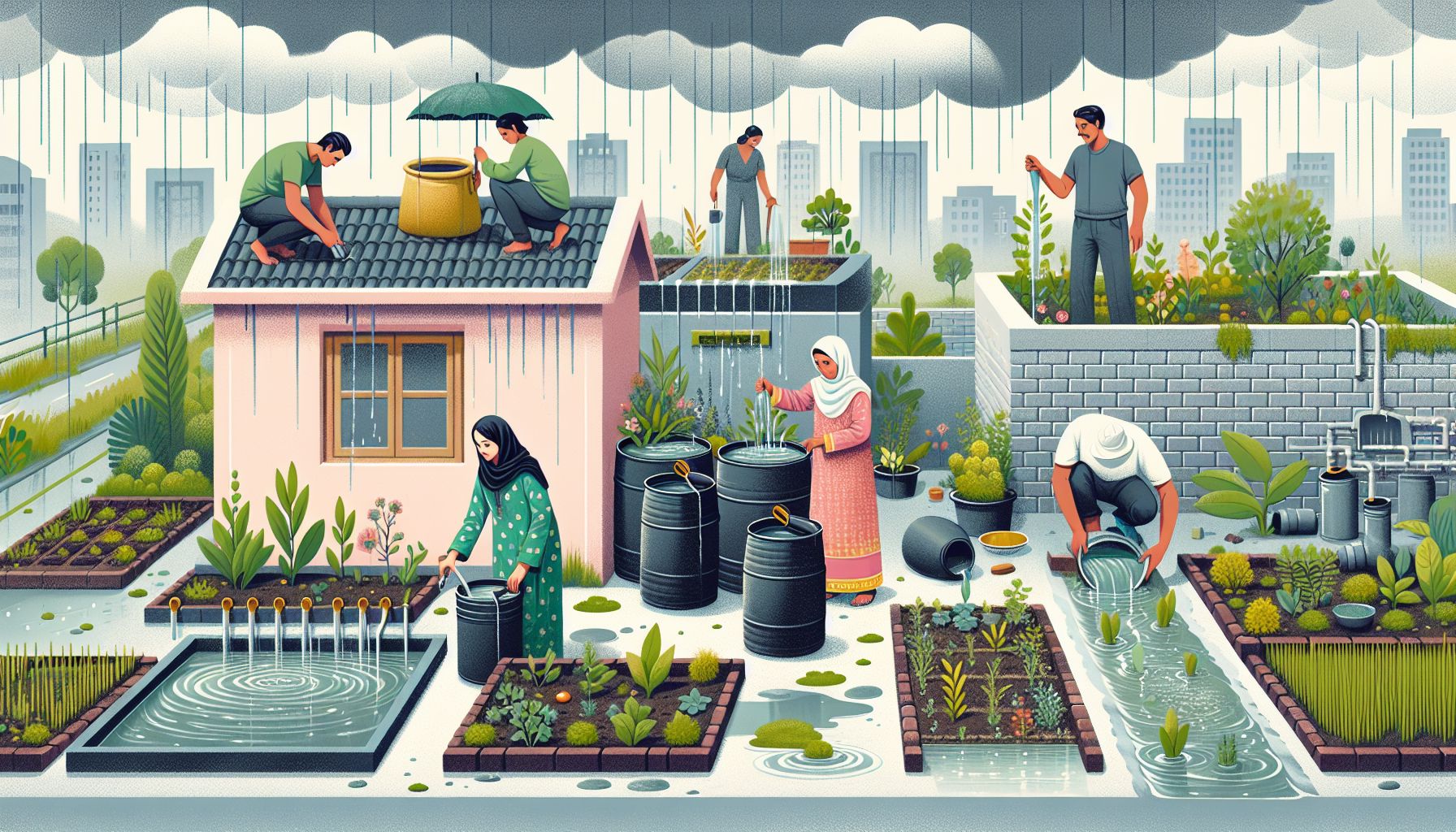
With the increasing rates of urbanization, issues surrounding water scarcity have also significantly escalated. Traditional fresh water sources are steadily depleting, resulting in a surge for new techniques that increase our water supply sustainability. One such alternative that’s been gaining momentum is rainwater harvesting. Adapting this water conservation method to an urban environment and its household communities is the forefront of this discussion.
What is Rainwater Harvesting?
Rainwater harvesting is a technique of collection, filtration, storage and utilization of rainwater¹. Essentially, we’re capturing and utilising a natural resource that would otherwise be lost as surface run-off.
Urban Applications
Urban households present unique challenges for rainwater harvesting due to the hardened surfaces and limited space. However, to quench the growing demand for water, there are several effective strategies and innovative systems urban dwellers can implement.
1. Roof Catchment Systems
The principle of a roof catchment system is straightforward: rainwater is collected where it falls. The roof of our house becomes the ‘catchment’ and the gutters and downspouts are the ‘distribution’ component. The water is then filtered and diverted into a storage device such as a rainfall barrel or cistern ².
2. Rainwater Gardens
Rainwater gardens exploit the natural ecological synergies of plants and soils to provide an eco-friendly method of reusing and draining rainwater. These gardens can be used in combination with roof catchment systems to make full use of rainwater and create a beautiful, water-efficient urban landscape.
3. Green Roofs
A green roof is a vegetated rooftop, which can provide multiple benefits besides rainwater harvesting. It absorbs rainwater, reducing run-off and consequently urban flooding.
Benefits of Rainwater Harvesting
Implementing rainwater harvesting in urban households enables an autonomous water supply that is not prone to water restrictions during periods of drought and reduces residential dependence on main water supplies. Harvesting rainwater also reduces the damaging environmental impacts related to water supply, decreasing the energy consumption, carbon emissions, and damaging by-products of water purification processes ³.
Legal and Regulatory Concerns
It is important to note that while many places encourage rainwater harvesting by providing incentives, some areas have laws restricting its use due to water rights issues. Always check the local regulations before implementing a system.
Conclusion
With the pressing issue of water scarcity, rainwater harvesting stands out as a sustainable and efficient solution. Rainwater harvesting techniques designed for urban households have the potential to not only alleviate the pressure on city water supplies, but also play a substantial role in stormwater management, reducing urban flooding and enhancing the urban microclimate. Rainwater harvesting for urban households is a practical step toward a more sustainable and water-secure future.
References:
- “What is Rainwater Harvesting.” Water – Use It Wisely, https://wateruseitwisely.com/what-is-rainwater-harvesting/
- “The Texas Manual on Rainwater Harvesting.” Texas Water Development Board, https://www.twdb.texas.gov/publications/brochures/conservation/doc/RainwaterHarvestingManual_3rdedition.pdf
- “The Evaluation of Benefits and Costs of Rainwater Runoff Reduction.” Journal of Cleaner Production, Elsevier, https://www.sciencedirect.com/science/article/pii/S0921344916302722.