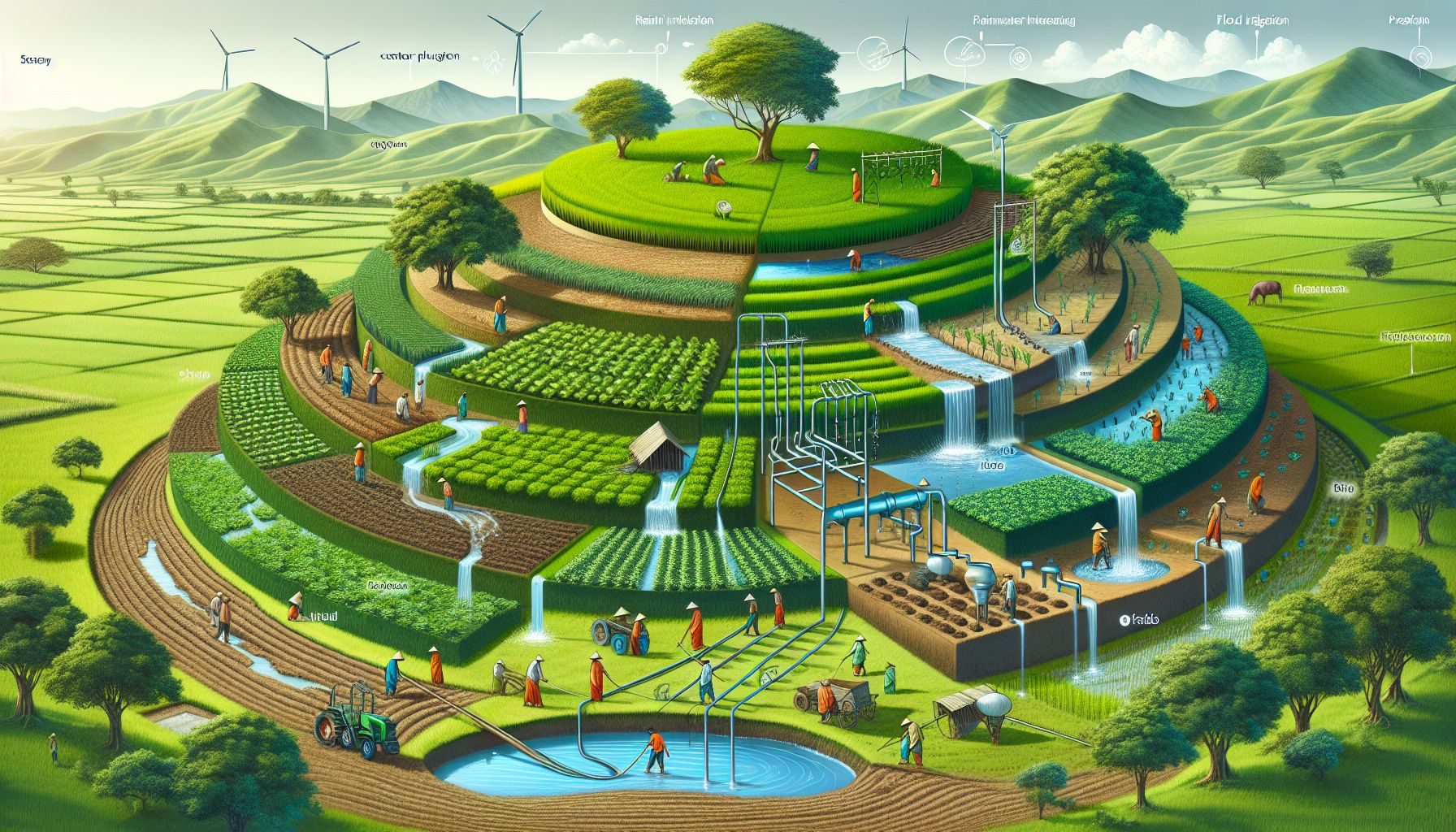
As the world’s population exponentially grows, so does the demand for food and inevitably water. The agriculture sector is by far the largest consumer of the earth’s available freshwater resources, using around 70 percent ^1^. Thus, it becomes crucial to discuss sustainable water management in agriculture.
Overview of Water Management in Agriculture
Before delving into the best practices for water management, it’s important to note what exactly water management in agriculture entails. Essentially, it covers all stages of water handling, from sourcing, distribution, use to discharging it back to the environment. The role of water management is to ensure efficiency, sustainability, and economic viability of these processes.
Challenges In Agricultural Water Management
There are several challenges in the way of sustainable water management in agriculture. One such barrier is climate change, which disrupts precipitation patterns and causes more intense droughts and floods. Furthermore, the age-old practices of water management are often inefficient and lead to the overexploitation of water resources.
Another challenge is the lack of access to technology. In developing countries, farmers still rely on traditional methods for irrigation that are laborious and water-consuming. The inability to invest in modern infrastructure due to financial constraints exacerbates the issue.
Principles of Sustainable Water Management for Agriculture
The following principles should guide sustainable water management in agriculture:
- Efficient use of water: Implementing practices like precision agriculture can significantly help reduce water waste in the field.
- Protection of water quality: By restricting the use of harmful chemicals and pollutants, we can protect the quality of water.
- Community involvement in water management: Active participation from the local community ensures sustainable water management that benefits everyone.
Best Practices for Sustainable Water Management
Crop Selection
Selecting appropriate crops for the local climate and soil composition is the first step towards sustainable water usage. Drought-resistant and low-water-requiring crops should be prioritized in dry and arid regions.
Irrigation Techniques
The type of irrigation technique used significantly affects water efficiency. Traditional methods like flood irrigation should be discouraged. Newer methods like drip irrigation and sprinkler systems are efficient and minimize water use.
Use of Technology
Modern technologies can help farmers monitor soil moisture levels, climate forecasts, and manage irrigation schedules efficiently. Smart irrigation systems can adapt watering schedules based on real-time weather data.
Rainwater Harvesting
Farmers can build small ponds or check dams to catch and store the rainwater. This water can later be used for irrigation and can be especially useful in areas with erratic rainfall.
Crop Rotation and Cover Crops
Crop rotation helps conserve soil moisture, prevents soil erosion, and improves soil health. Similarly, cover crops can help maintain soil moisture during non-growing seasons.
The Role of Policy and Regulation
Implementing policies and regulations is crucial for promoting sustainable water management practices in agriculture. Governments can incentivize farmers to adopt efficient irrigation methods, crop rotation, etc.
Conclusion
The future of our planet relies on how responsibly we manage natural resources today. As stewards of the earth, adopting sustainable water management practices is not just beneficial; it’s essential. By doing so, we can ensure food security, safeguard our planet, and create a sustainable future.