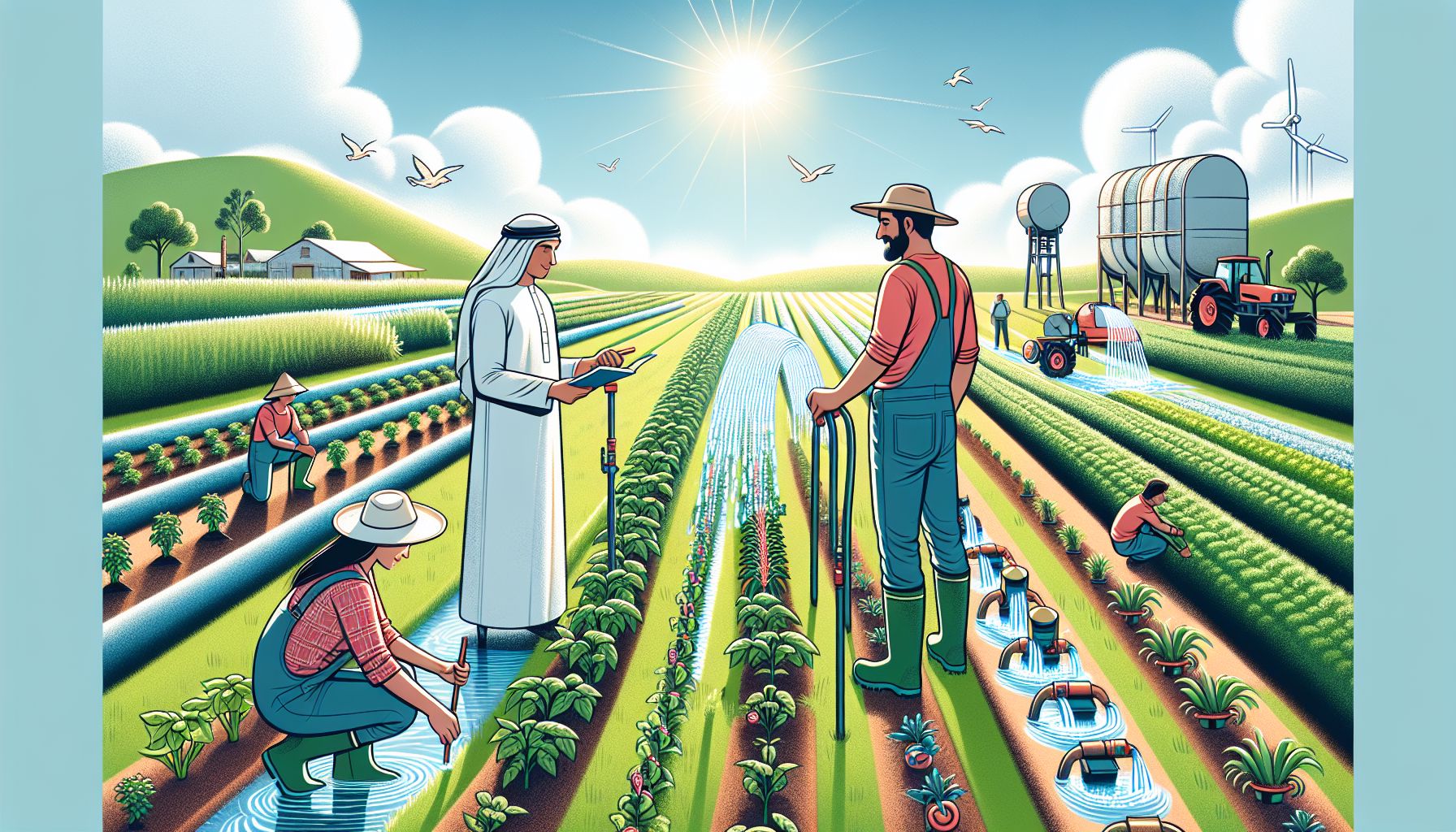
With the global population predicted to reach 9.7 billion by 2050, the demand for food crops and livestock products will inevitably increase. Hence, agriculture, which already consumes about 70% of all water globally, is likely to increase its water demand. Given this growing exigency and our planet’s finite water resources, adopting sustainable water management in agriculture is not just crucial but indispensable. This article discusses sustainable water management practices in agriculture, their benefits, and implementation strategies.
Understanding the Importance of Sustainable Water Management
Sustainable water management refers to practices that aim to protect, recycle and efficiently use freshwater resources in agriculture. With climate change leading to erratic rain patterns, long dry spells, and extreme weather events, sustainable water management seeks to reconcile the increasing demand for water in agriculture with the need to conserve scarce water resources for generations to come[^1^].
Sustainable Water Management Practices
Precision Irrigation Systems
Precision irrigation techniques like drip and sprinkler irrigation help deliver water directly to where it’s needed, minimizing wastage. Drip irrigation, for instance, slowly delivers water to the plant roots, enhancing water utilization efficiency, and reducing evaporation losses[^2^].
Crop Rotation and Inter-Cropping
Crop rotation and inter-cropping can improve the soil’s ability to retain moisture while increasing crop yield. In this practice, different plant species with diverse water needs are planted simultaneously or sequentially.
Contour Farming
Contour farming involves planting along the natural contours of the land, which slows water runoff and allows more water to infiltrate the soil.
Agroforestry
Agroforestry, the integration of trees into farming systems, can improve water conservation due to trees’ deep root systems, which draw upward water from deep within the soil, potentially reducing groundwater depletion.
The Role of Technology in Implementing Water Sustainable Practices
Modern Solutions like satellite imagery, sensors, and artificial intelligence allow farmers to monitor their fields continuously and understand how much water each plant needs. This information can be used to adjust irrigation practices, thereby saving substantial amounts of water and boosting agricultural productivity[^3^].
Potential Challenges and Solutions
Transforming traditional agricultural practices towards sustainable water use can be challenging due to reasons like lack of knowledge, resistance to change, and policy gaps. However, solutions like farmer education and training, supportive government policies, provision of financial incentives, and strengthening rural institutions can help overcome these hurdles.
Conclusion
Sustainable water management practices are a crucial component of 21st-century agriculture. They not only help conserve water and maintain freshwater ecosystems but also enhance agricultural productivity and increase farmers’ resilience to climate change. By adopting and promoting these practices, we can ensure that the agricultural sector continues to provide for our needs while preserving the earth’s invaluable water resources.
[^1^]: Water Scarcity | Threats | WWF
[^2^]: What is Drip Irrigation? | Netafim
[^3^]: Digitising Agriculture: How Digital Solutions are Driving a Revolution in Farming | FoodChain ID