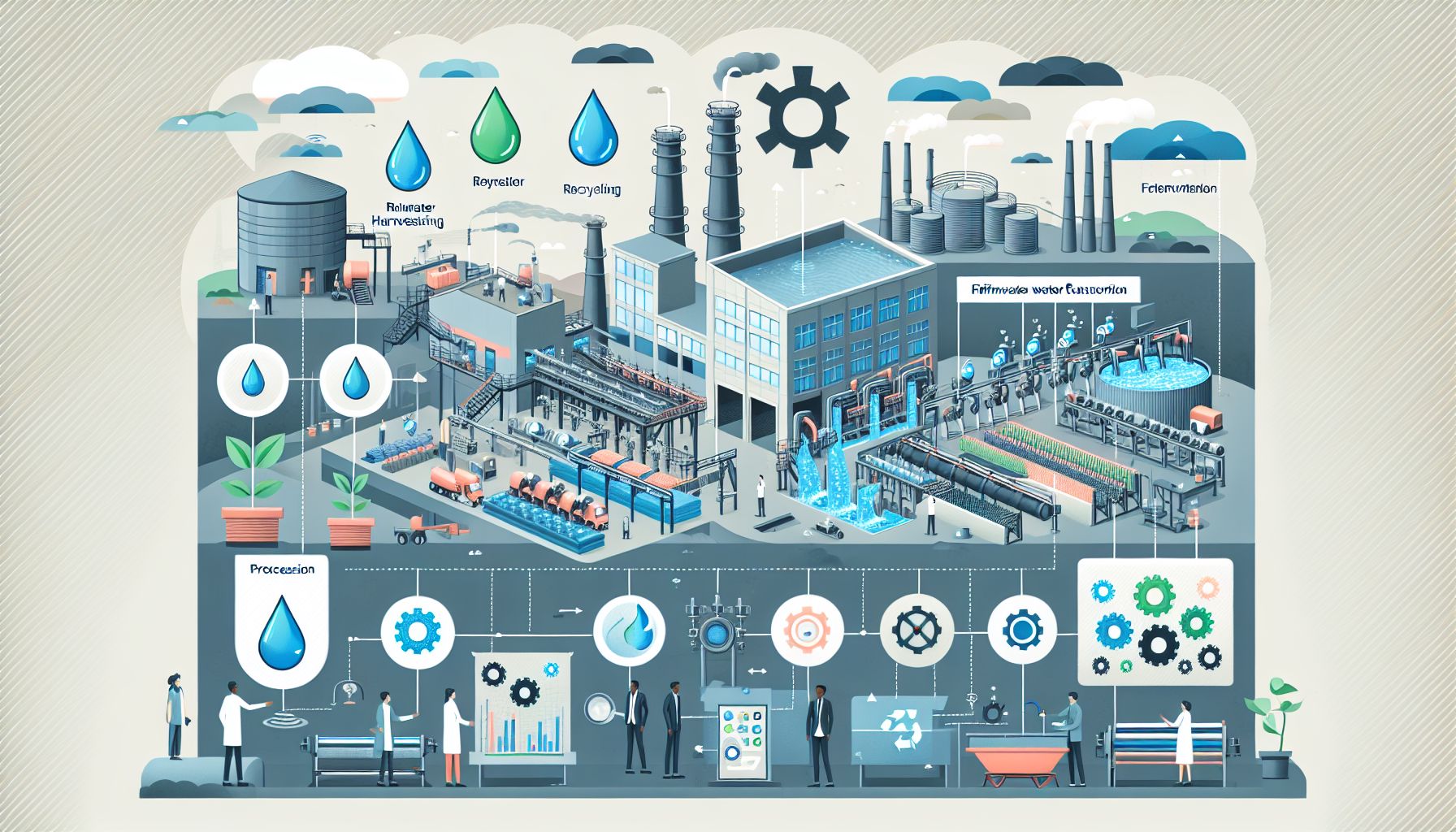
The textile industry forms a significant portion of the global economy, but it is also considered among the most polluting industries. Aside from greenhouse gas emissions and the use of harmful chemicals, it uses a massive quantity of water. This article aims to discuss various strategies for reducing the textile industry’s water footprint.
Defining Water Footprint
Before exploring possible strategies, it is essential to comprehend the concept of “water footprint.” According to the Water Footprint Network (1), the water footprint of a product is “the total volume of freshwater used to produce the product, summed over the various steps of the production chain.”
Current Scenario of Water Usage in Textile Industry
Water is a key factor throughout the entire textile production process. From fabric dyeing and finishing to the manufacturing of garments, everything requires substantial amounts of water. For example, producing one kilogram of cotton––used to make a pair of jeans or a t-shirt–– requires up to 10,000-20,000 liters of water (2)!
The Need for Change
The vast water usage in the textile industry contributes to water scarcity, especially in areas where water is already in short supply. It also harms aquatic ecosystems due to the release of effluents. Therefore, minimizing the water footprint is not just a corporate social responsibility action but a necessary change.
Strategies for Reducing Water Footprint
Implementing innovative technologies and best practices can significantly reduce the industry’s water footprint. Here are some key strategies
1. Water-Efficient Technologies
Adopting new technologies can create more water-efficient processes, such as:
- Closed-Loop Water Systems: These systems treat and recycle water for re-use in the production process. It cuts down on water consumption significantly.
- Waterless dyeing technology: Techniques like ‘DryDye’ use supercritical CO² instead of water for fabric dyeing, virtually eliminating the need for water and harmful chemicals.
2. Better Waste Water Management
Even as companies work to decrease water usage, dealing with wastewater is equally important. Methods like reverse osmosis and nanofiltration can help purify water, making it reusable for manufacturing or safe enough for release into the environment.
3. Going Organic
Synthetic fibres like polyester require less water to produce compared to natural fibres like cotton. However, its production requires petrochemicals. Organic materials like bamboo or hemp require less water and are more environmentally friendly.
4. Supplier Sourcing
Brands can ensure they source from suppliers that adhere to water-conserving practices. The Better Cotton Initiative (BCI) promotes water-efficient farming methods among cotton farmers, a good example of preferred sourcing.
5. Consumer Awareness
Brands can play a significant role here by encouraging customers to choose sustainable products and adopt habits that use garments longer, reducing the need for producing more clothing.
6. Government Policy and Regulation
Government policies can encourage or even mandate practices that save water. Examples include subsidies for water-saving technologies, wastewater treatment or stricter rules on water discharge.
The Road Ahead
As the world grapples with climate change and water scarcity, a transition towards more sustainable practices in the textile industry is not just a choice, but an imperative need. With combined efforts from individuals, companies and the government, significant strides can be made towards reducing the industry’s water footprint.
References
- Water Footprint Network. (n.d.). Water footprint concept. Retrieved from https://www.waterfootprint.org/en/water-footprint/water-footprint-concept/
- World Wildlife Fund. (n.d.). The impact of a cotton t-shirt. Retrieved from https://www.worldwildlife.org/stories/the-impact-of-a-cotton-t-shirt.
- Better Cotton Initiative. (n.d.). What we do. Retrieved from https://bettercotton.org/what-we-do/