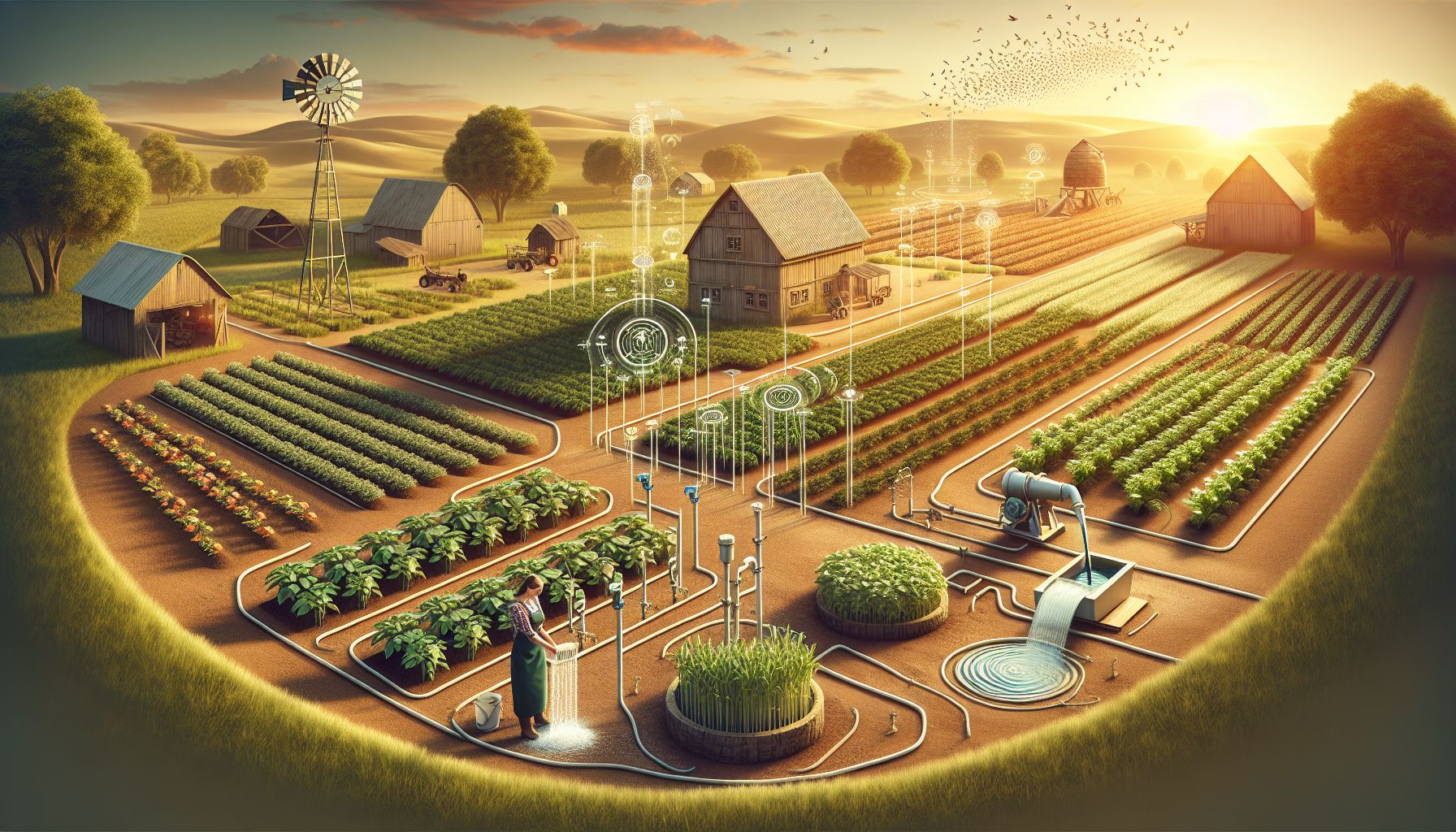
Agriculture is unquestionably one of the biggest users of water worldwide, consuming approximately 70% of freshwater supplies globally. This critical role in global water usage positions the agricultural sector uniquely in terms of its potential for contributing to the efficient use and conservation of water resources.
In this comprehensive guide, we dive into sustainable water management practices for agriculture, focusing on techniques that farmers and agricultural stakeholders can engage in to ensure their activities are both productive and environmentally friendly.
Understanding the Importance of Sustainable Water Management in Agriculture
Water management is essential in every aspect of agricultural development. It affects not only crop yields but also the environment, the sustainability of agriculture, and the livelihoods of millions of people who depend on this sector for their survival [1].
Sustainable water management seeks to balance the demand for water with its supply. It incorporates techniques that improve water efficiency, preserve water quality, and prevent water-related disasters such as flooding and drought.
Sustainable Water Management Techniques
The following methods can help farmers reduce their dependence on water while maintaining high productivity levels.
Drip Irrigation
Drip irrigation is a method where water is delivered directly to plant roots, reducing water loss through evaporation or runoff. This method can help farmers save up to 60% of water compared to traditional methods like flood irrigation [2].
Rainwater Harvesting
Collecting rainwater during wet periods and storing it for use during dry seasons can significantly reduce farmers’ dependence on external water sources. Rainwater can be collected from rooftops, greenhouses, or directly from the fields using earth dams and ponds.
Soil Moisture Management
Improving the soil’s ability to hold moisture can reduce the amount of irrigation water needed. Techniques include organic farming methods such as mulching and composting, which improve soil structure and moisture retention.
Controlled Traffic Farming
This technique reduces soil compaction through the consistent use of permanent traffic lanes. Reduced compaction enhances soil structure and promotes better water infiltration and retention [3].
Implementing Water-Saving Technologies
Advances in technology also offer opportunities for sustainable water management in agriculture. Examples of water-saving technologies include:
Weather Forecasting Tools
Predictive tools and models can help farmers anticipate weather conditions and adjust their irrigation schedules accordingly, thereby avoiding wastage of water.
Soil Moisture Sensors
These devices allow farmers to monitor soil moisture levels in real time. They can therefore irrigate more efficiently, applying water only when necessary.
Satellite Imaging
Remote sensing technologies provide valuable data on vegetation health and evapotranspiration rates, enabling farmers to optimize their irrigation practices.
The Way Forward
As we face increasing pressures from climate change and population growth, sustainable water management in agriculture has never been more critical. While the techniques and technologies highlighted in this article offer a starting point, solutions must be tailored to local contexts and integrated into wider water management frameworks.
Incentivizing farmers to adopt these practices also plays a key role. This could be through agricultural policies that reward water efficiency, or through the development of infrastructure that allows farmers to access and use water sustainably.
Ultimately, everyone has a role to play in promoting sustainable water management in agriculture. By adopting these practices and technologies, we can ensure a water-secure future for all.
References
-
Agriculture and the Value of Water United Nations.
-
Drip irrigation for small farmers Food and Agriculture Organization of the United Nations.
-
What is Controlled Traffic Farming? Meat and Livestock Australia.