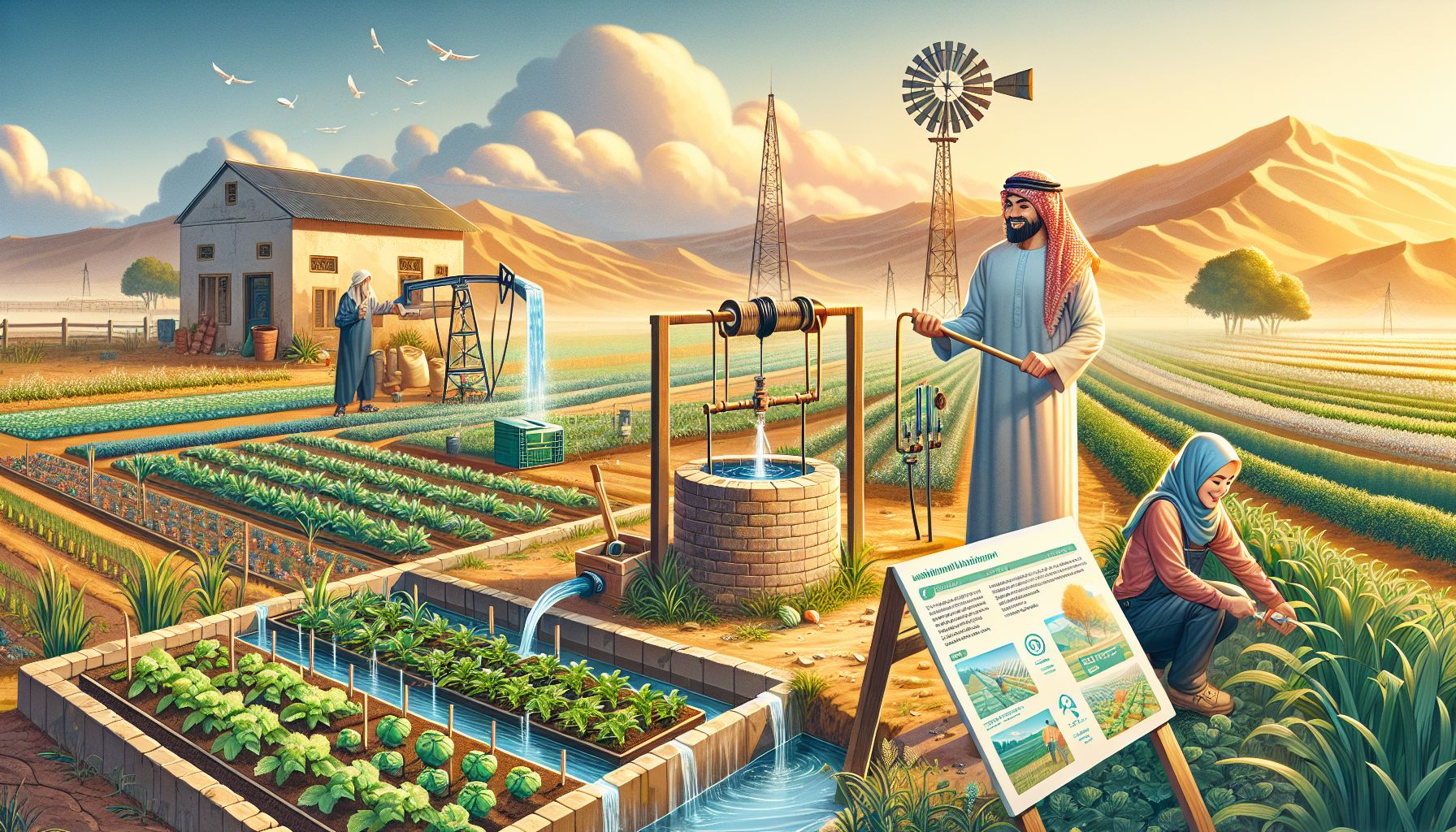
Modern farming faces various challenges, including climate change, rising water scarcity, and a growing global population. Among these challenges, water scarcity has forced farmers and policy-makers to rethink how water is used, prioritized, and conserved in agriculture. This article explores sustainable water management practices for agriculture that can help overcome these challenges.
Table of Contents
- Understanding the Importance of Water Management in Agriculture
- Key Principles of Sustainable Water Management
- Sustainable Water Management Techniques
- The Role of Technology in Sustainable Water Management
- The Path to Sustainable Agriculture
Understanding the Importance of Water Management in Agriculture
“Agriculture is the largest consumer of water resources, accounting for approximately 70% of all freshwater withdrawals” (FAO,2016). Therefore, managing this crucial resource sustainably is necessary to ensure food security, adapt to climate change, and preserve biodiversity.
Improper water management can lead to over-extraction, depletion of groundwater, land and water degradation, and loss of biodiversity. Adopting sustainable water management practices is vital to mitigate these impacts and ensure the longevity and productivity of agricultural systems.
Key Principles of Sustainable Water Management
Sustainable water management in agriculture incorporates three principals:
-
Water Efficiency – Techniques to increase water productivity, i.e., to produce more crops per drop. This includes precision irrigation, soil moisture monitoring, selection of drought-resistant plant varieties, and rainwater harvesting.
-
Water Recycling and Reuse – Practices such as using treated industrial wastewater or greywater for irrigation, especially in drought-prone areas.
-
Water Conservation – Measures to reduce water loss, such as reducing evaporation, improving soil health to retain moisture, preventing leaks in irrigation equipment, and using cover crops to protect against soil erosion.
Sustainable Water Management Techniques
Several farming practices have been developed that conserve water, increase water-use efficiency, and improve water quality. These include:
- Drip Irrigation: This is a form of micro-irrigation that involves slowly applying water directly to the plant’s root zone, limiting losses from evaporation and seepage (USDA,2020).
- Crop Rotation and Intercropping: Both practices improve soil health and its ability to retain water, reducing dependency on external water resources.
- Rainwater Harvesting: This involves collecting and storing rainwater for use during dry periods. It can involve simple techniques like constructing farm ponds and reservoirs or complex structures using gutters and pipes to channel the water.
- Land Leveling: This involves creating a level surface on fields to improve water delivery efficiency. It prevents soil erosion and reduces water wastage by ensuring uniform water distribution.
The Role of Technology in Sustainable Water Management
Technology can play a significant role in promoting sustainability by providing precise and timely data on the availability and use of water resources. Sensor-based irrigation systems, for instance, deliver water to crops only when needed, significantly reducing water consumption. Further, remote sensing technologies, such as satellite imagery, enable monitoring of soil moisture levels and weather conditions over a large area, aiding in efficient water management (World Bank,2020).
The Path to Sustainable Agriculture
There’s no denying that sustainable water management is a crucial aspect of the path towards sustainable agriculture. It requires collective effort from farmers, researchers, policy-makers, and consumers.
Farmers should be trained and incentivized to adopt sustainable practices. Policy-makers should devise regulations that encourage efficient water use and penalize waste. Researchers should continuously innovate to develop water-saving technologies. Lastly, consumers should demand sustainably produced food and be willing to pay a premium for it.
In summary, sustainable water management practices for agriculture are crucial to feed our burgeoning global population. These practices are not only beneficial for farmers, boosting yields and income, but also for the environment, preserving our precious water resources and promoting biodiversity. The future of agriculture and food security hinges on how well we manage our water today.