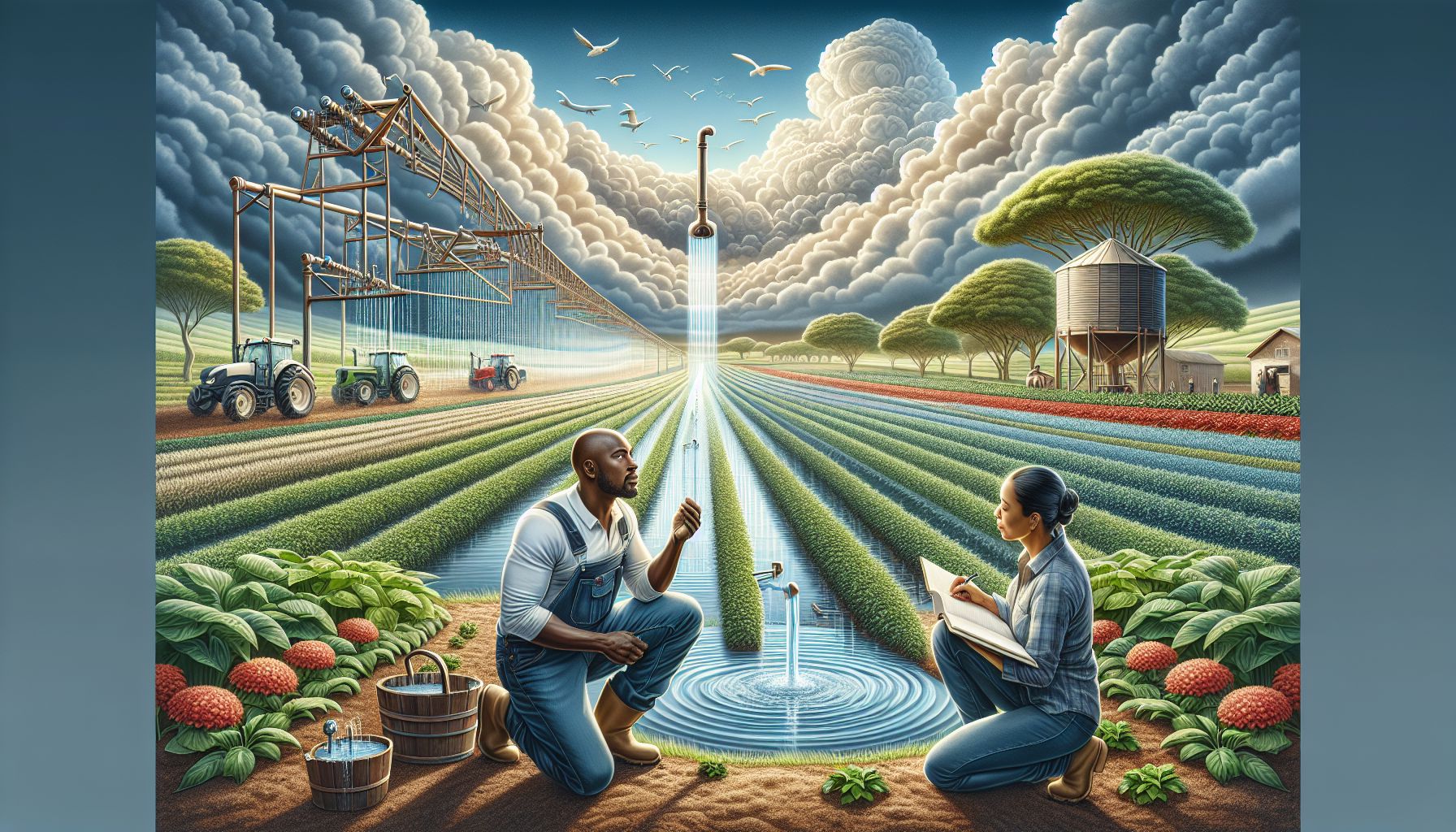
Our planet is grappling with the urgent challenge of reducing water waste and improving water management, particularly in agricultural practices. Agriculture is the largest consumer of water globally, accounting for around 70% of total consumption (FAO). Hence, the need for sustainable water management practices is increasingly important. This article discusses the importance and innovative approaches of sustainable water management in agriculture.
Importance of Sustainable Water Management in Agriculture
Sustainable water management refers to the preservation, development, and efficient utilization of water resources in a manner that is environmentally friendly and beneficial to current and future generations. In agriculture, this concept focusses on improving crop production efficiency per unit of water, reducing water wastage, and enhancing water storage and conservation (IWMI).
Global climate change, escalating populations, and increasing food demand have magnified the pressure on water resources. According to the World Bank, “water scarcity, exacerbated by climate change, could cost some regions up to 6% of their GDP, spur migration, and spark conflict”.
Moreover, inefficient water usage and management in agriculture can lead to environmental degradation, including soil degradation, groundwater depletion, and natural habitat loss.
Precision Farming
Precision farming or precision agriculture uses technology to monitor and optimize crop needs. Farmers use sensors, drones, GPS, and remote sensing to assess field variability in soil properties, moisture levels, and crop growth. These data-driven insights are used to apply precise amounts of water, fertilizers, and pesticides to maximize crop productivity and minimize wastage.
Drip Irrigation
Irrigation practices consume a significant portion of agricultural water. Drip irrigation, or trickle irrigation, is a high-efficiency system that delivers water directly to the plant root zone. It minimizes evaporation and runoff, reducing water usage by 30-60% compared to traditional irrigation methods FAO.
Soil Moisture Sensors
Soil moisture sensors provide real-time data on soil water content. This information allows farmers to irrigate when necessary, reducing unnecessary water applications. They are particularly useful in arid regions where over-irrigation can lead to salinity problems.
Rainwater Harvesting
Rainwater harvesting involves capturing and storing rainwater for future use. In agriculture, this water can be used for irrigation during dry seasons. Techniques vary from simple rain barrels to more complex structures like in-ground water storage tanks and ponds.
Water Recycling and Reuse
Recycling agricultural wastewater for irrigation can significantly reduce freshwater usage. This wastewater can be treated and reused for crop irrigation, preventing the pollution of other water bodies. Recycling also includes the reuse of treated urban wastewater for agriculture.
Conservation Agriculture
Conservation agriculture is a farming practice that promotes minimal soil disturbance, permanent soil cover, and crop rotations. It improves the soil’s ability to absorb and store water, thus reducing irrigation needs and improving crops’ resilience to drought.
Conclusion: A Sustainable Future
Adopting sustainable water management practices is not just a choice but a necessity for our collective future. As the demand for food continues to rise, farmers, researchers, and policymakers must work together to implement innovations that increase water efficiency and decrease environmental impact. By doing so, we can ensure a sustainable and food-secure future for all.
Sources
1. Food and Agriculture Organization (FAO)
2. International Water Management Institute (IWMI)
3. The World Bank Group (World Bank)