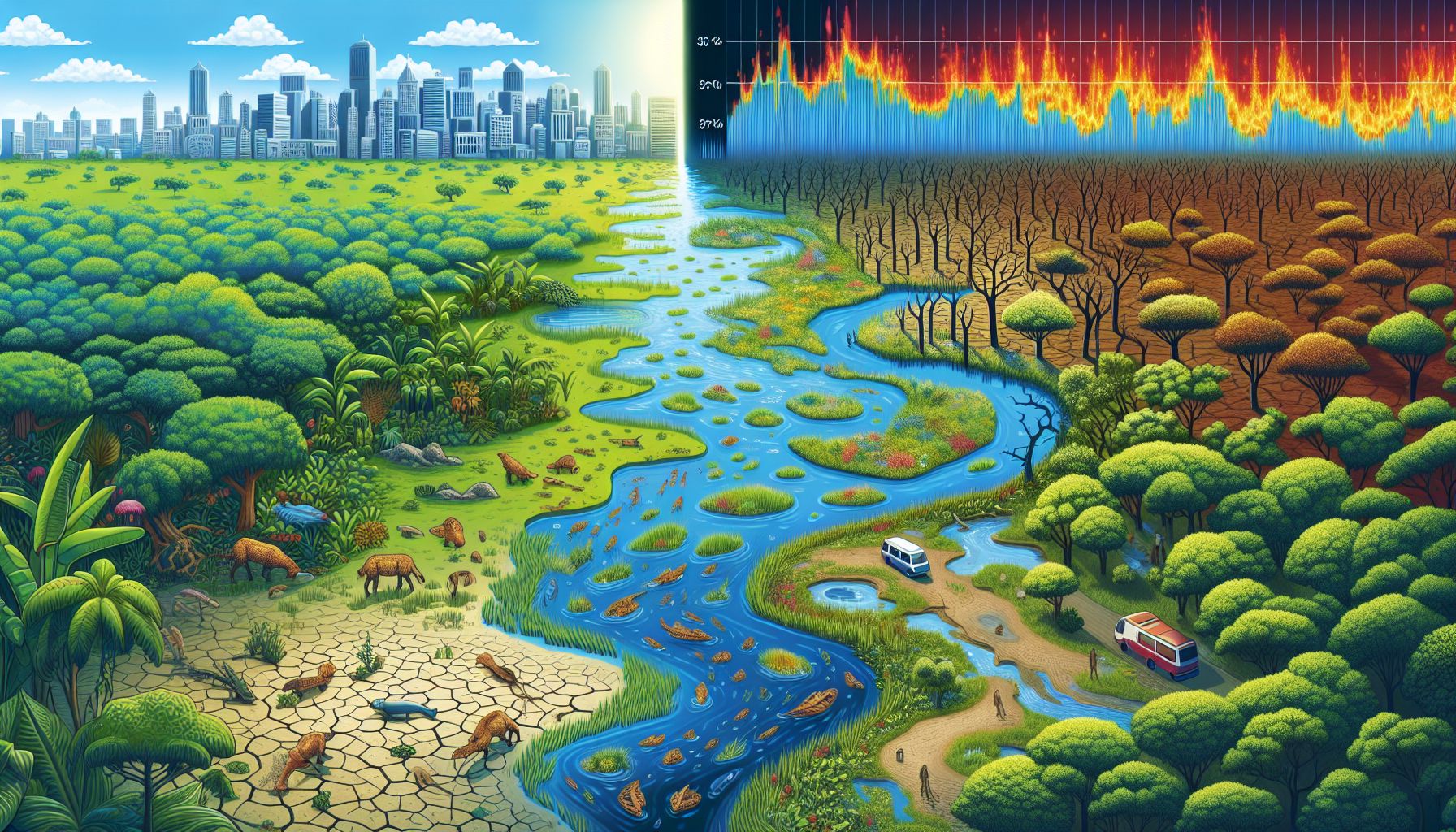
As the world grapples with the intensifying urgency of climate change, our society has increasingly started focusing on its various impacts. One of the most tangible and alarming effects is the impact on global water resources. The augmenting climate volatility, coupled with increasing average global temperatures, is reshaping the world’s hydrological systems, disrupting water supplies, and threatening the sustainability of our global water resources.
This article aims to delve into the profound implications of climate change on global water resources, potential repercussions, and the necessary adaptation measures.
Understanding the Relationship Between Climate Change and Water Resources
To fully recognize the implications climate change has on the world’s water resources, it is crucial to initially understand the complex and intertwined relationship between the two. Water is the primary medium through which we perceive the intensive effects of climate change (United Nations Water). From changes in precipitation patterns to the frequency of floods and droughts, the impacts are felt fundamentally in our water resources.
Climate change induces significant fluctuations in weather patterns, disrupting the natural scale of water level in the environment. As temperatures surge, evaporation increases, depleting water reservoirs and other resources while simultaneously contributing to the rise of greenhouse gases.
In a vicious cycle, these greenhouse gases trap more heat, thereby propelling global warming and the ensuing climate change.
Consequences of Climate Change on Global Water Resources
Uneven Distribution of Water Resources
Climate change exacerbates the uneven distribution of freshwater resources. As temperatures increase, some regions become significantly wetter, while others witness an exacerbation of dry conditions (US EPA).
Worsening of Water Scarcity
Rising temperatures and fluctuating precipitation patterns lead to an increase in evaporation rates, prompting a decline in water levels in reservoirs, lakes, and rivers. This phenomenon intensifies water scarcity issues and impedes water supply, especially in already water-stressed regions.
Glacier Meltdown and Sea Level Rise
Glaciers, a significant freshwater resource, are melting at an alarming rate due to the increase in global temperature. This not only severely threatens the long-term availability of freshwater in countries depending on glacial melt-water for their supply but also causes sea levels to rise. Increased sea levels can lead to coastal flooding and contaminate freshwater resources.
Impact on Water Quality and Ecosystems
Changes in climate can influence water quality. Warmer water temperatures can increase the rate of water pollution by reducing the amount of oxygen in the water, thus affecting fish and other aquatic habitats. In addition, dry climates might increase the concentration of pollutants in less voluminous waters, subsequently endangering the aquatic ecosystem (World Health Organization).
Adapting to the Impact of Climate Change on Water Resources
Adaptation is a crucial component of the collective response to climate change. As we brace ourselves for the changes brought about by a warming planet, here are a few adaptation strategies to consider in mitigating the effects on global water resources.
Integrated Water Resource Management
This approach aims at sustainable governance of water resources, prioritizing the conservation, protection, and efficient use of water. Global projections forecasting water supply alterations due to climate change should play a vital role in framing regulations and approaches.
Water Conservation and Efficiency
Promoting water conservation can help substantially mitigate the impact of climate change on global water resources. This includes strategies at various levels, from individual practices like using water-efficient appliances and fixtures, to policies encouraging industries to adopt water-saving technologies.
Investing in Infrastructure
Investing in suitable infrastructure can help manage the fallout from climate change in water resources. This can include the construction of reservoirs to capture surplus rain during wet periods, desalination plants in areas where sea levels are rising, and efficient irrigation systems to prevent water wastage.
Climate-Proofing of Water Supply and Sanitation Systems
Implementation of robust and adaptable systems can protect water resources from climate-induced hazards such as floods and droughts. These systems can ensure the resilience of water supply and sanitation services regarding climate change.
While efforts are being made globally to curb climate change’s progression, its current and future impacts require comprehensive measures for sustainable water management. As we move forward, we must re-envision water management strategies through the lens of climate resilience and adaptation. Understanding the intricate relationship between climate change and water resources is a paramount step towards achieving water security in a rapidly changing climate.
Sources: