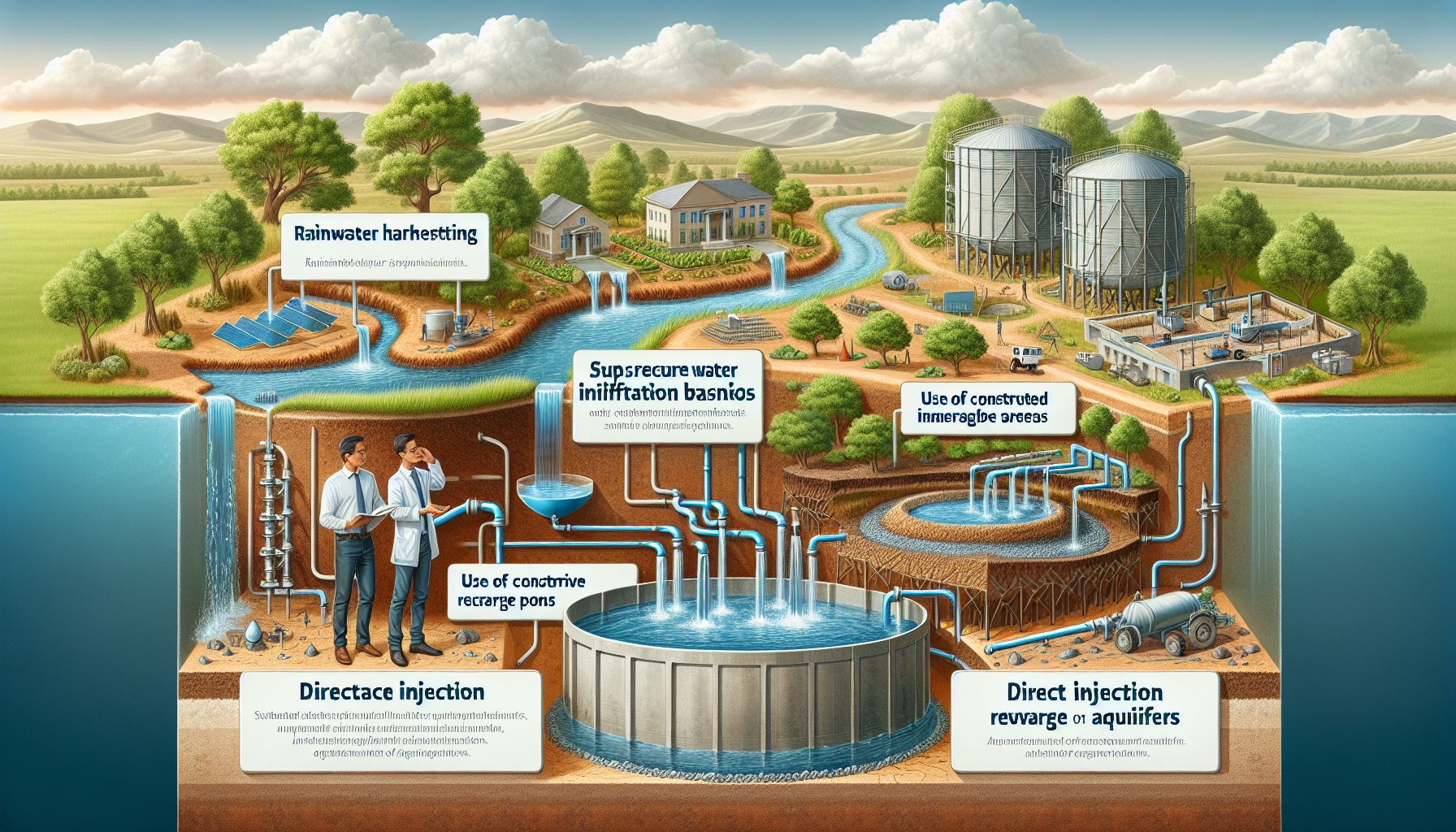
The dwindling water level in aquifers triggered by the insatiable demand for freshwater calls our attention to sustainable aquifer management practices. Groundwater recharge is an essential part of these efforts, aimed specifically at augmenting the underground water reserve using direct and indirect methods. This article will dive into the importance of aquifer management, various groundwater recharge techniques, and their respective benefits and limitations, supplemented by appropriate case studies.
Groundwater: The Unsung Hero of Water Sources
Groundwater is the water found underground in soils and in the cracks of rocks. It makes up approximately 22% of the world’s fresh water supply, with the rest being surface water in rivers, lakes, etc1. Unlike surface water that is highly susceptible to pollution and seasonal changes, groundwater is a reliable and cleaner source of water.
Importance of Aquifer Management
Aquifers, the saturated areas of groundwater storage, have been subjected to an alarming rate of depletion. Excessive withdrawal for commercial, agricultural, and residential uses without proper recharge measures and poor infiltration due to urban construction, have contributed to substantial groundwater depletion. This may lead to subsidence or sinking of land and saline intrusion into freshwater aquifers. To avoid these consequences, effective aquifer management is a dire necessity.
Groundwater Recharge: Breathing Life into Aquifers
Groundwater recharge is the process of replenishing the groundwater levels by enhanced infiltration of surface water. Here, we take a look at some of the most effective groundwater recharge techniques.
Surface Spreading
Surface spreading involves the spreading of water over large surface basins or ditches, facilitating its percolation into the ground. This method is effective in areas with permeable soils and shallow water tables.
Recharge Wells
In areas with low soil permeability, recharge wells expedite the process by directly injecting water into the aquifers. Recharge wells are highly efficient but require high-quality water to prevent clogging or contamination of the aquifer.
Rainwater Harvesting
Harvested rainwater can be used to recharge groundwater through artificial ponds or other percolation techniques. Small scale rainwater harvesting at household levels also contributes substantially to groundwater recharge.
Advantages of Groundwater Recharge
Groundwater recharge offers several advantages, including prevention of aquifer depletion, improved water quality, and reduction in the need for water imports in water-scarce regions.
Limitations and Solutions
Groundwater recharge is not without its challenges. Some regions possess low soil permeability, obstructing the infiltration process. This can be addressed through techniques such as recharge wells, as mentioned earlier. Another issue lies in the contamination risk when untreated or inadequately treated water is used. Advanced treatment methodologies need to be enforced to minimize the risks.
Case Study: San Joaquin Valley
San Joaquin Valley, one of the leading agricultural regions in the US, has battled critical depletion in aquifer levels due to heavy irrigation usage. When the Sustainable Groundwater Management Act (SGMA) was enacted in California, artificial recharge projects were accelerated across the valley. These efforts have significantly improved groundwater recharge, proving the effectiveness of such sustainable techniques.
Groundwater recharge is a practical and effective means of augmenting groundwater reserves and managing aquifers sustainably. The challenges faced in this area provide an open field for research and advancement, driving us towards a more sustainable future.
Sources
-
Howard Perlman, USGS – Groundwater: https://www.usgs.gov/special-topic/water-science-school/science/groundwater?qt-science_center_objects=0#qt-science_center_objects
-
California Department of Water Resources – Groundwater Recharge: https://water.ca.gov/Programs/Groundwater-Management/SGMA-Groundwater-Management/Managed-Groundwater-Recharge
-
University of California – Artificial Groundwater Recharge: https://vric.ucdavis.edu/pdf/irrigation_artificial_groundwater_recharge.pdf