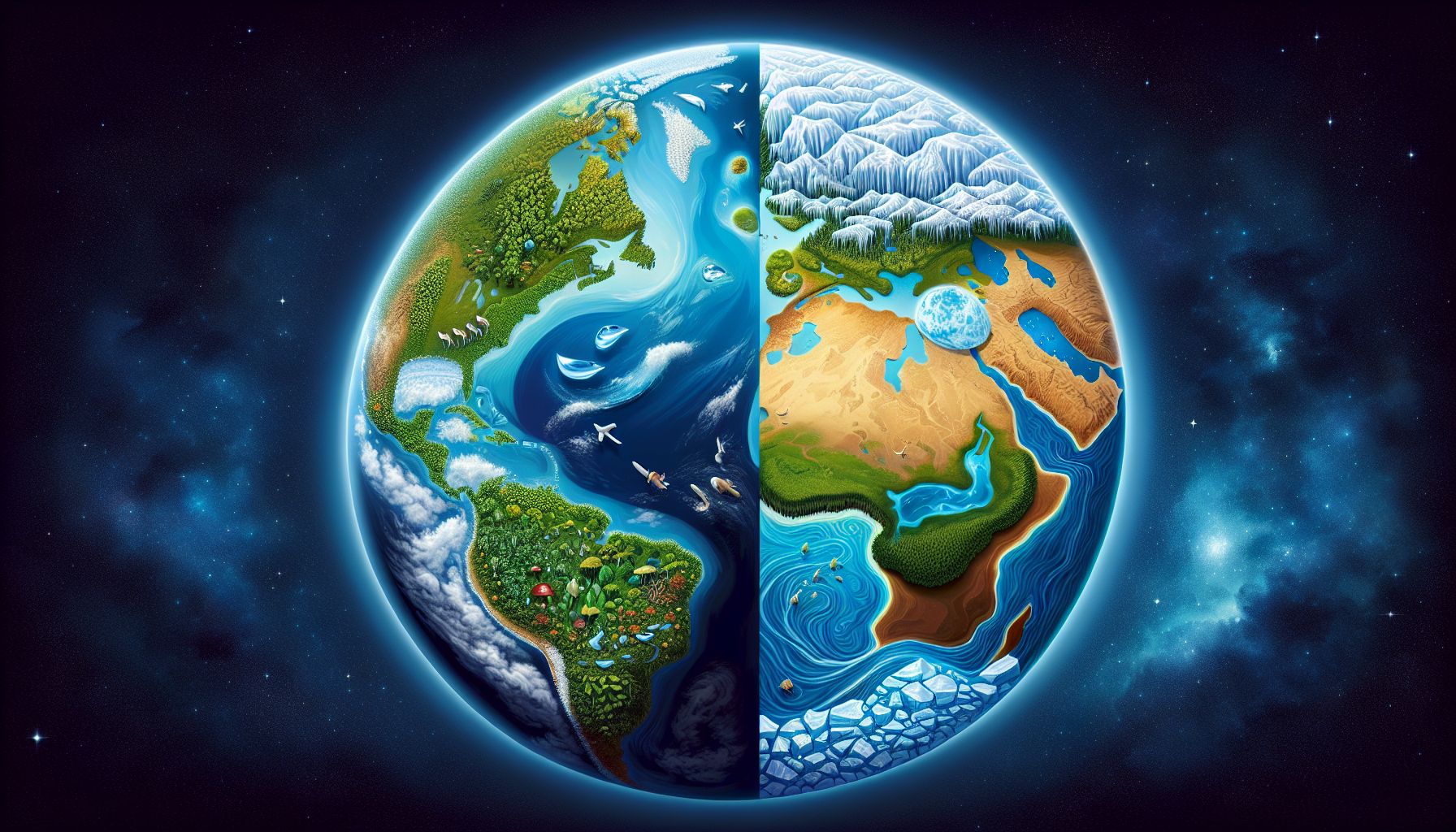
Climate change is not just a future problem. It is happening now, and its impacts are felt the world over, with profound and far-reaching implications for the global water cycle. Changes in temperature, precipitation, sea level, and extreme weather events are all affecting the quantity and quality of our water resources. In this article, we will examine the current scientific understanding of climate change’s impact on global water resources and discuss potential mitigation and adaptation strategies.
The Hydrologic Cycle and Climate Change
The hydrologic (or water) cycle describes how water evaporates from the surface of the earth, rises into the atmosphere, cools and condenses to form clouds, and falls back to the surface as precipitation. The water that falls to the earth is either evaporated back into the atmosphere or becomes runoff, which flows into rivers and eventually the sea.
Climate change impacts the hydrologic cycle in several ways. Increasing temperatures cause more evaporation, which can lead to more precipitation overall[^1^]. Changes in the amount and type of precipitation can affect runoff and groundwater recharge. Warming can also cause more intense rainfall, leading to increased flooding risk, while hotter, drier conditions in other areas may contribute to more severe droughts.
Impact on Water Quantity
In terms of water quantity, climate change may lead to shifts in precipitation patterns, contributing to increased risks of both floods and droughts. Warmer temperatures enhance the atmosphere’s capacity to hold moisture, leading to heavier rainfall and more extreme weather events. In contrast, areas experiencing lower precipitation may suffer from droughts and water scarcity. The mountain snowpack, a critical water source for many areas, may also diminish with warmer temperatures and earlier spring melts[^2^].
Impact on Water Quality
Climate change can also adversely affect water quality. Increased evaporation due to rising temperatures may increase the concentration of pollutants in bodies of water, leading to eutrophication and algal blooms. Higher sea levels can lead to saltwater intrusion into freshwater resources in coastal areas, further decreasing water quality. Increased rainfall and flooding can also lead wash pollutants into water bodies[^3^].
Mitigation and Adaptation Strategies
Addressing the impacts of climate change on global water resources requires both mitigating climate change itself and adapting to its effects. Mitigation strategies include efforts to reduce greenhouse gas emissions through energy efficiency, renewable energy, and carbon capture and storage. Adaptation strategies may involve changes in water management, such as promoting water conservation, developing drought-resistant crops, and improving water storage and distribution infrastructure. Emphasis is also increasingly placed on climate-resilient strategies that can ensure water security under a range of climate scenarios[^4^].
Conclusion
Climate change poses a significant threat to global water resources, with impacts on both water quantity and quality. Understanding the link between climate change and water is crucial in designing effective strategies to mitigate and adapt to these changes. As we move forward, it’s important to remember that water is more than just a resource – it is a life-sustaining element that underpins all aspects of societal well-being from health to economy to security, highlighting the urgency of addressing these challenges.
[^1^]: Trenberth, K.E., Dai, A., Rasmussen, R.M., & Parsons, D.B. (2003). The Changing Character of Precipitation. Bulletin of the American Meteorological Society, 84(9), 1205–1218. doi: 10.1175/bams-84-9-1205
[^2^]: Mote, P.W., Hamlet, A.F., Clark, M.P., & Lettenmaier, D.P. (2005). Declining mountain snowpack in western North America. Bulletin of the American Meteorological Society, 86(1), 39-49.
[^3^]: Kundzewicz, Z.W., Mata, L.J., Arnell, N.W., Doll, P., Jimenez, B., Miller, K., Oki, T., Sen, Z., & Shiklomanov, I. (2008). The implications of projected climate change for freshwater resources and their management. Hydrological sciences journal, 53(1), 3-10.
[^4^]: IPCC. (2014). Climate change 2014: Impacts, adaptation and vulnerability. Contribution of Working Group II to the fifth assessment report of the Intergovernmental Panel on Climate Change. Cambridge University Press.