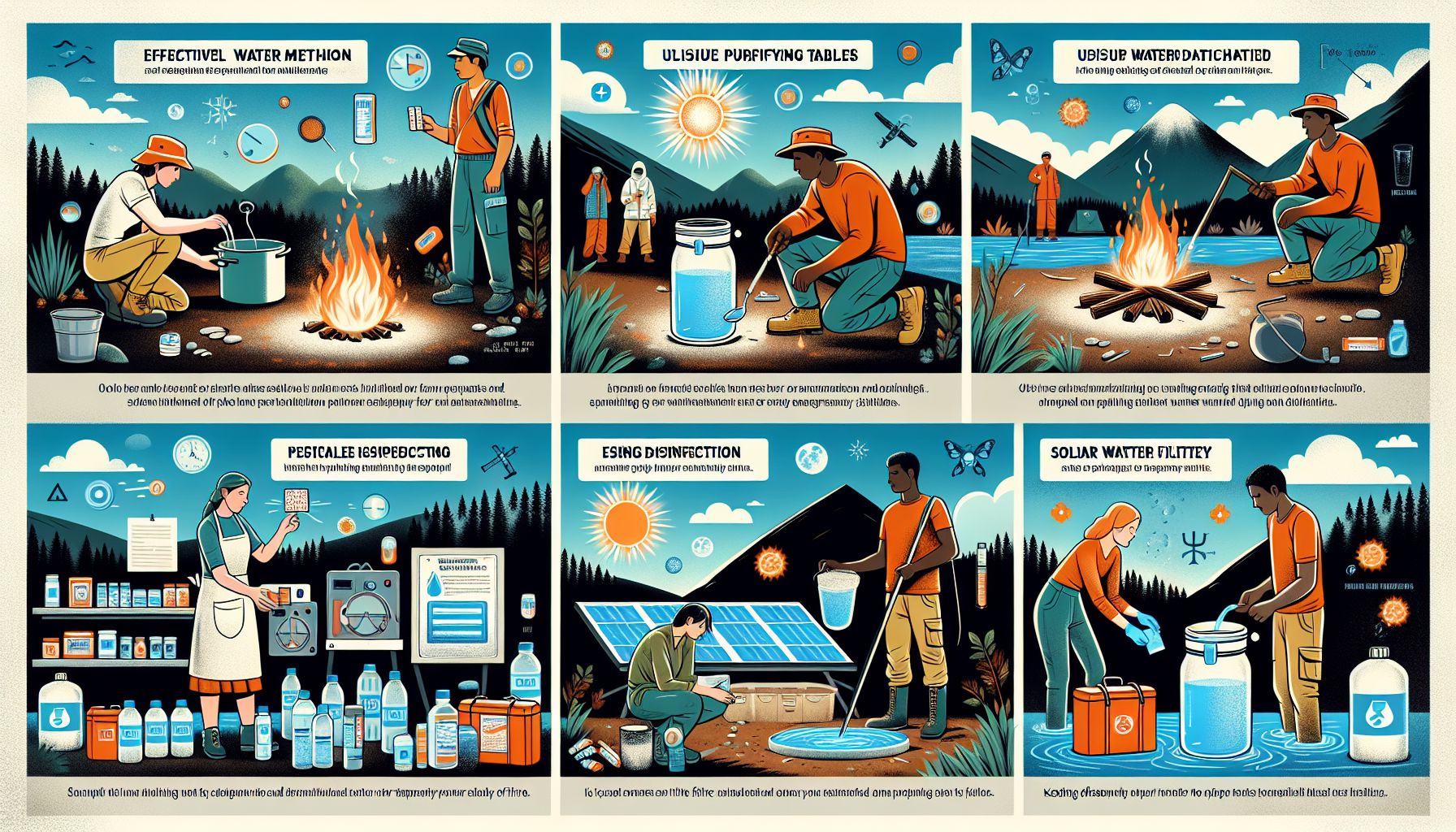
In the face of an emergency situation, the availability of clean, safe drinking water becomes a top priority. Whether it is a hurricane, earthquake, flood, or an outbreak of a disease, ensuring a safe water supply is essential to reduce the risk of waterborne diseases and to keep survivors healthy. In such circumstances applying effective water disinfection methods can be life-saving.
This article aims to provide comprehensive knowledge about the various methods of water disinfection, how to apply them at home in an emergency, and some noteworthy products that are available on the market for this purpose.
Understanding Water Disinfection
Before plunging into the various water disinfection methods, it is essential to understand what water disinfection entails. According to the World Health Organization (WHO), water disinfection is “the process of killing or rendering ineffective different types of pathogens present in the water”[^1^]. These pathogens can include bacteria, viruses, protozoa, and parasites that cause illnesses ranging from minor to severe, like diarrhea, cholera, dysentery, and potentially, death.
Traditional Methods of Water Disinfection
Traditional methods of water disinfection have been used for centuries and are still in use in many parts of the world. These methods include boiling, filtration, and the use of chemicals like iodine, chlorine, and bleach.
Boiling
Boiling is the simplest and most affordable method of disinfecting water in emergency situations. The U.S. Centers for Disease Control and Prevention (CDC) recommends boiling water for one minute to eliminate most types of pathogens[^2^]. For altitudes above 2,000 meters, it should be boiled for 3 minutes.
Filtration
Filtration is another technique for purifying water. There are various filtration devices available, including ceramic filters, fiber filters, activated carbon filters, and others. Filtration is effective against larger pathogens like bacteria and parasites, but it doesn’t completely remove smaller particles like viruses.
Chemical Disinfection
Chemical disinfection involves adding chemical substances to water to kill pathogens. The most commonly used chemicals include iodine, chlorine, and bleach. However, this method can leave an unpleasant taste in the water and is not sufficient against some types of cysts and viruses.
Modern Methods of Water Disinfection
Thanks to advancements in technology, several modern methods for water disinfection have been developed.
Ultraviolet Disinfection
Ultraviolet (UV) disinfection uses UV light to kill or inactivate microorganisms. This method is effective against a broad range of pathogens, including those resistant to chlorine. Moreover, UV disinfection does not leave any chemical taste in the water.
Portable Water Filters and Purifiers
There are many portable water filter and purifier options available on the market. These devices combine filtration and chemical or ultraviolet disinfection to eliminate a wide array of pathogens.
Water Disinfection Tablets
Water disinfection tablets are pre-dosed chemical substances that eliminate pathogens when added to water. They are lightweight, have long shelf-lives, and are extremely user-friendly.
Choosing the Right Method for Your Needs
Different water disinfection methods have different strengths and limitations, and the choice largely depends on your specific situation. It’s important to consider factors like the quality of the available water source, personal preferences, available resources, and the level of emergency.
For instance, boiling is most efficient when you have a heat source available, while chemical disinfection works best when portability and weight are considerations. UV disinfection requires a power source, making it better suited for situations where electricity is available.
Some Products Worth Considering
-
LifeStraw Personal Water Filter: This portable straw-style water filter is lightweight, compact, and can filter up to 1,000 liters of water.
-
Potable Aqua Water Purification Tablets: These tablets are easy to use, reliable, and an excellent choice for any emergency kit.
-
SteriPEN Ultra UV Water Purifier: This device uses UV light to purify water. It is fast, effective, and compact.
In conclusion, understanding and applying effective water disinfection methods can be a lifesaver in emergency situations. Therefore, it’s crucial to make informed choices and stay prepared for potential emergencies.
[^1^]: World Health Organization. (2020). Water sanitation hygiene. https://www.who.int/water_sanitation_health/water-quality/gin-fact-sheets/en/
[^2^]: Centers for Disease Control and Prevention. (2018). Making Water Safe in an Emergency. https://www.cdc.gov/healthywater/emergency/make-water-safe.html
[^4^]: Potable Aqua. (n.d.). Potable Aqua Water Purification Tablets With PA Plus. https://www.potableaqua.com/products/pa/tab