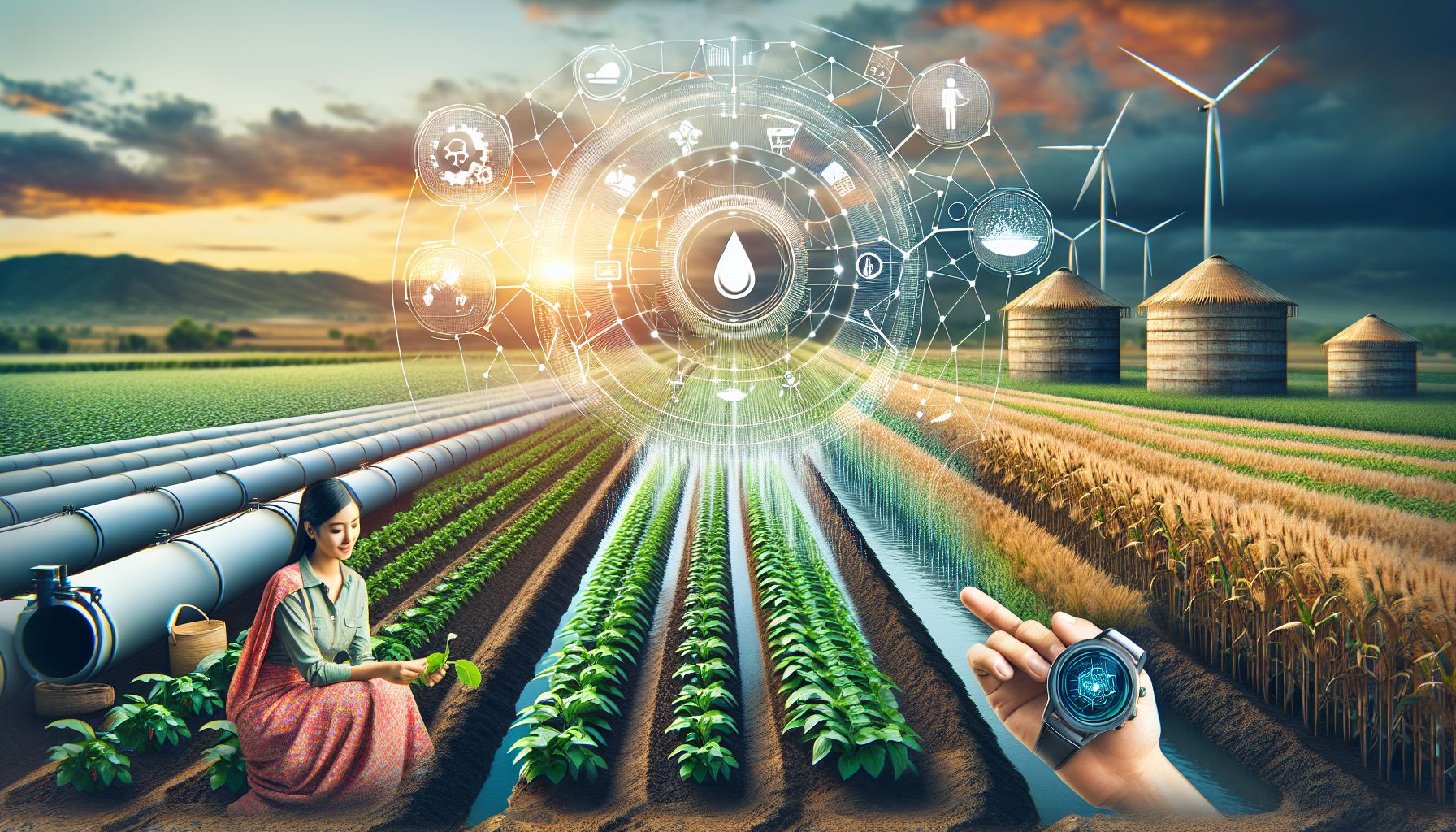
Agriculture has always been a cornerstone of human survival and economic stability. As the global population continues to swell, the demand for agricultural products climbs correspondingly. However, the agricultural sector is a significant consumer of freshwater resources, and with the hazards of climate change and population growth, a sustainable approach to water management in agriculture is paramount.
This article will explore sustainable water management practices vital for achieving efficient usage of this precious resource in the agricultural sector.
The Crucial Role of Water in Agriculture
Before delving into sustainable practices, it is essential to understand the role of water in agriculture. Water is fundamental to plants for photosynthesis, nutrient transportation, and maintaining structural integrity. A shortfall in proper watering can lead to reduced yields, crop stress and, ultimately, food insecurity.
The Challenge of Water Scarcity
The Food and Agriculture Organization (FAO) has outlined that water scarcity is among the main problems to be faced by many societies and the World in the 21st century. Water use has grown at more than twice the rate of population increase in the last century, and an increasing number of regions are reaching the limit at which water services can be sustainably delivered.
Sustainable Water Management Practices
1. Drip Irrigation
A renowned method for water conservation is drip irrigation. It involves slow and precise application of water to plant roots. This technique minimizes evaporation and runoff, hence conserving water while ensuring plants receive the moisture they need.
2. Rainwater Harvesting
Collecting and storing rainwater for agricultural use is another excellent practice for sustainable water management. It not only provides a free water source but also reduces reliance on groundwater and surface water.
3. Soil Moisture Conservation
Incorporating organic matter into the soil and using mulching techniques can significantly improve soil moisture retention. The organic matter increases the water-holding capacity of the soil while mulch reduces evaporation.
4. Choosing Water-Resilient Crops
Opting for crops that are well-suited to a region’s climate and soil type helps in reducing the need for excessive watering. Certain crops are more drought-resistant than others and can thrive on lower water inputs.
5. Controlled Environment Agriculture
Advancements like greenhouses and vertical farming allow for a controlled environment where water usage can be tightly regulated. These technologies help in optimizing plant growth conditions, reducing the overall water footprint.
6. Water Recycling and Reuse
Afarm’s water management system can recycle and treat water from various processes, enabling its reuse. For instance, water used for washing produce can be filtered and repurposed for irrigation.
7. Monitoring and Sensors
Employing moisture sensors and other monitoring technologies allows farmers to irrigate fields precisely according to the crops’ needs, avoiding water wastage caused by over-irrigation.
8. Smart Irrigation Systems
Smart irrigation utilizes weather forecasts, soil moisture levels, and plant water use data to automate and optimize irrigation schedules, delivering water when and where it’s most needed.
9. Agroforestry
Integrating trees into agricultural systems benefits both productivity and environmental sustainability. Trees can improve groundwater recharge and reduce water runoff, thus conserving water.
10. Policy and Education
Implementing policies that regulate water usage and pricing can encourage more efficient use. Equally important is educating farmers regarding sustainable water management practices.
Advancements and Innovations Supporting Sustainable Practices
In addition to these practices, ongoing advancements and innovations further support sustainable water management. For example, the development of drought-resistant seed varieties, satellite imagery and data analytics for precision agriculture, and advanced desalination technologies to make seawater suitable for irrigation.
Global Initiatives and Success Stories
Globally, there has been a push towards more sustainable water management in agriculture. Initiatives such as the Water Footprint Network and the Alliance for Water Stewardship (AWS) aim to promote best practices and sustainable water use.
Case Studies
Countries like Israel and the Netherlands are leading examples of efficient water use in agriculture. Israel, a country known for its water scarcity, has become a global leader in drip irrigation technology. Meanwhile, the Netherlands has excelled at maximizing yields with minimal water use through high-tech greenhouse farming.
Overcoming Challenges and Barriers
Transitioning to sustainable water management practices is not without its challenges. These include the high initial costs of new technologies, the stubbornness of old habits, and a lack of awareness or training.
Implementing Change
To achieve tangible change, governments, NGOs, industry bodies, and agricultural businesses ought to collaborate to create incentives, deliver education, and make technologies more affordable and accessible.
Conclusion
Agriculture can neither be sustained without water nor can the water supply endure without sustainable practices. It is in the hands of farmers, policymakers, scientists, and consumers to drive this change. We must nurture a culture of sustainability that embraces efficient water use as an essential component of a prosperous agricultural future.
Sources
- Food and Agriculture Organization of the United Nations (FAO) – Coping with water scarcity in agriculture
- Water Footprint Network
- Alliance for Water Stewardship (AWS)
Through proactive adoption of these practices, agriculture can flourish without undermining the world’s water resources. It’s through knowledge sharing, investments in appropriate technologies, and policy support that a new paradigm in water-conscious agriculture can be achieved.