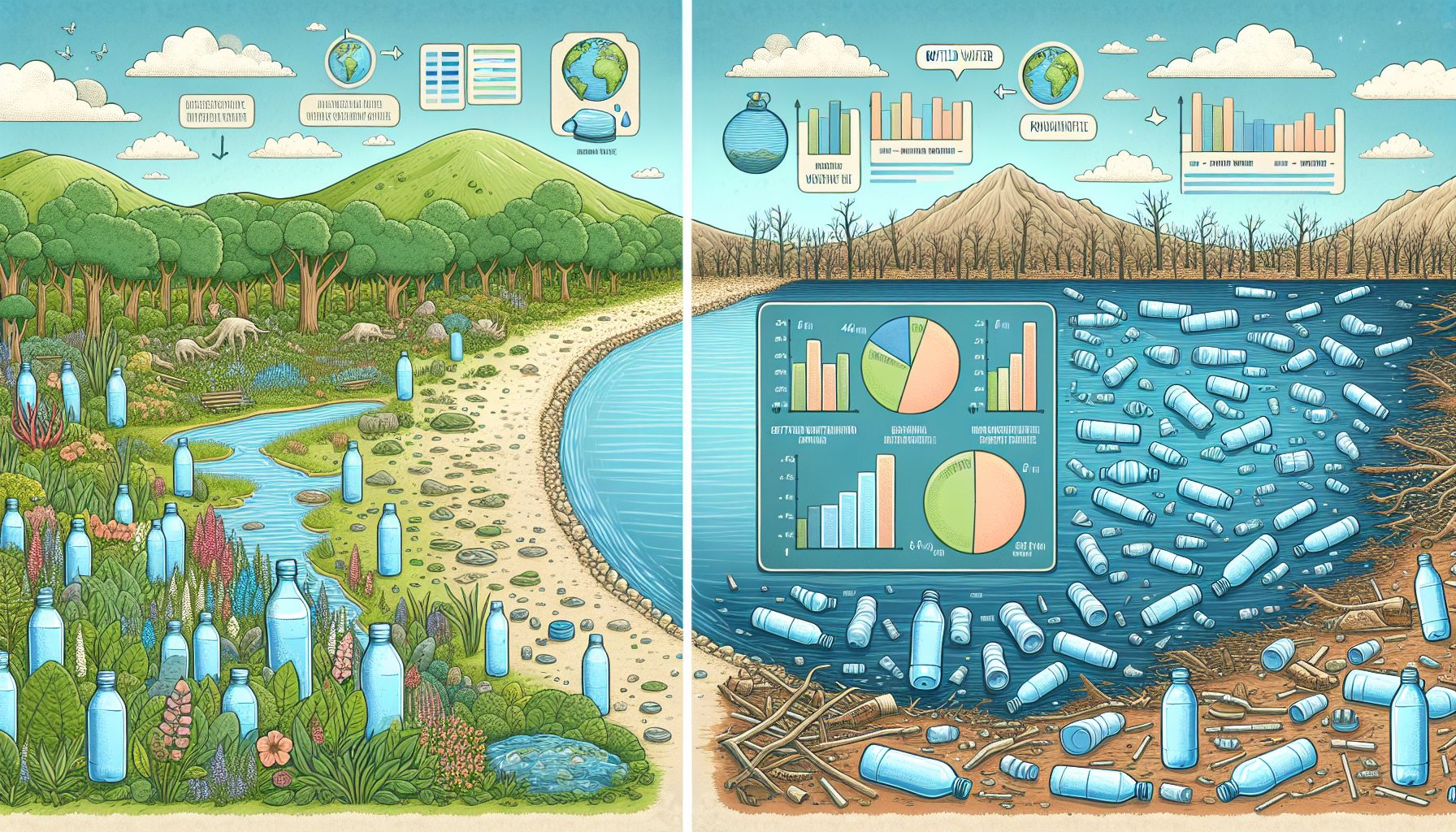
The bottled water industry has experienced a meteoric rise over the past few decades, with millions of consumers around the world opting for the convenience and purported purity of bottled water. However, this convenience comes at a significant environmental cost, particularly to our precious freshwater resources. In this article, we will delve into the ecological impact of the bottled water industry on freshwater resources.
The Surge of Bottled Water Demand
The global bottled water market has grown remarkably due to factors such as marketing campaigns that promote health benefits and the clean image of bottled water, public mistrust of tap water, and the convenience of on-the-go hydration. In 2022, the United States alone consumed over 14 billion gallons of bottled water, solidifying its place as one of the largest bottled water markets in the world (source: Statista). But beneath the surface of this booming industry lies a hidden ecological toll that impacts freshwater ecosystems.
A Closer Look at the Ecological Impact
Resource Extraction
Extracting the water required for the industry often involves tapping into natural springs, aquifers, or other freshwater sources. This extraction can lead to lower water tables and reduced water availability for nearby communities and ecosystems, causing harm to habitats that rely on consistent water levels.
Plastic Pollution
Bottled water is primarily packaged in single-use plastic bottles, which adds to the already severe global plastic pollution problem. According to the Environmental Protection Agency (EPA), the average recycling rate for single-use plastic bottles is just under 30 percent in the U.S.
The non-recycled bottles often end up polluting waterways, oceans, and landscapes, contributing to environmental degradation and harm to wildlife.
Carbon Footprint
The production and distribution of bottled water entail the burning of fossil fuels, leading to the emission of greenhouse gases. From manufacturing the bottles to refrigerating and transporting the water—often across vast distances—the carbon footprint of bottled water is significant compared to tap water, which is delivered through energy-efficient water infrastructure.
Disposal of Bottles
The lifecycle of a bottled water doesn’t end with consumption. Improper disposal can lead to plastic bottles ending up in landfills, where they can take up to 1,000 years to bio-degrade, releasing toxic additives such as phthalates and bisphenol A (BPA) into the soil and groundwater.
Alternatives to Reduce Impact
Transitioning towards sustainable practices within the bottled water industry and a shift in consumer behavior is imperative to mitigate the damage being inflicted upon freshwater resources.
Promoting Tap Water
Communities can invest in public awareness campaigns about the safety, quality, and environmental benefits of drinking tap water. Renovating public water infrastructure to ensure clean tap water for all can reduce reliance on bottled water.
Increased Recycling Efforts
Improving recycling rates through better facilities, public education, and incentivization can reduce the amount of plastic entering natural ecosystems. Deposits on bottles or pay-as-you-throw trash policies can prove effective in this endeavor.
Reshaping Industry Practices
Companies within the bottled water industry could adopt eco-friendly practices such as using recycled plastic (rPET), exploring biodegradable packaging options, and reducing water extraction from vulnerable sources.
Policy Interventions
Governments can introduce stricter regulations on water extraction by bottled water companies, enforce higher standards for bottled water production, and provide subsidies for environmentally friendly packaging solutions.
Community-Based Solutions
Grassroots initiatives like municipal water refill stations and community-supported programs encouraging the use of reusable water bottles can significantly reduce the demand for bottled water.
Conclusion
The ecological impact of the bottled water industry extends far beyond the depletion of freshwater sources; it encompasses wider environmental repercussions, including plastic waste, carbon emissions, and long-term damage to ecosystems. Whether through legislative reforms, corporate responsibility, or individual consumer choices, the collective effort required to alleviate the strain placed on freshwater resources by this industry is both a necessity and a responsibility for all stakeholders involved.
In advocating for sustainable water consumption, it is crucial to consider the broader implications of our choices. By focusing on long-term sustainability, investing in infrastructure and innovation, and embracing a culture of environmental stewardship, we can start to address and potentially reverse the ecological damage caused by the bottled water industry.
The dichotomy of our reliance on clean water for survival, and the damage our methods of consumption cause to the environment, presents a critical challenge that needs to be addressed with urgency and commitment.
Sources:
- Statista. (2022). U.S. Bottled Water Market – Statistics & Facts. Retrieved from https://www.statista.com/topics/1245/bottled-water-market/
- Environmental Protection Agency. (2020). Plastics: Material-Specific Data. Retrieved from https://www.epa.gov/facts-and-figures-about-materials-waste-and-recycling/plastics-material-specific-data
- Container Recycling Institute. (n.d.). Plastic. Retrieved from https://www.container-recycling.org/index.php/facts-statistics/plastic
- Natural Resources Defense Council. (n.d.). The Truth About Tap. Retrieved from https://www.nrdc.org/stories/truth-about-tap