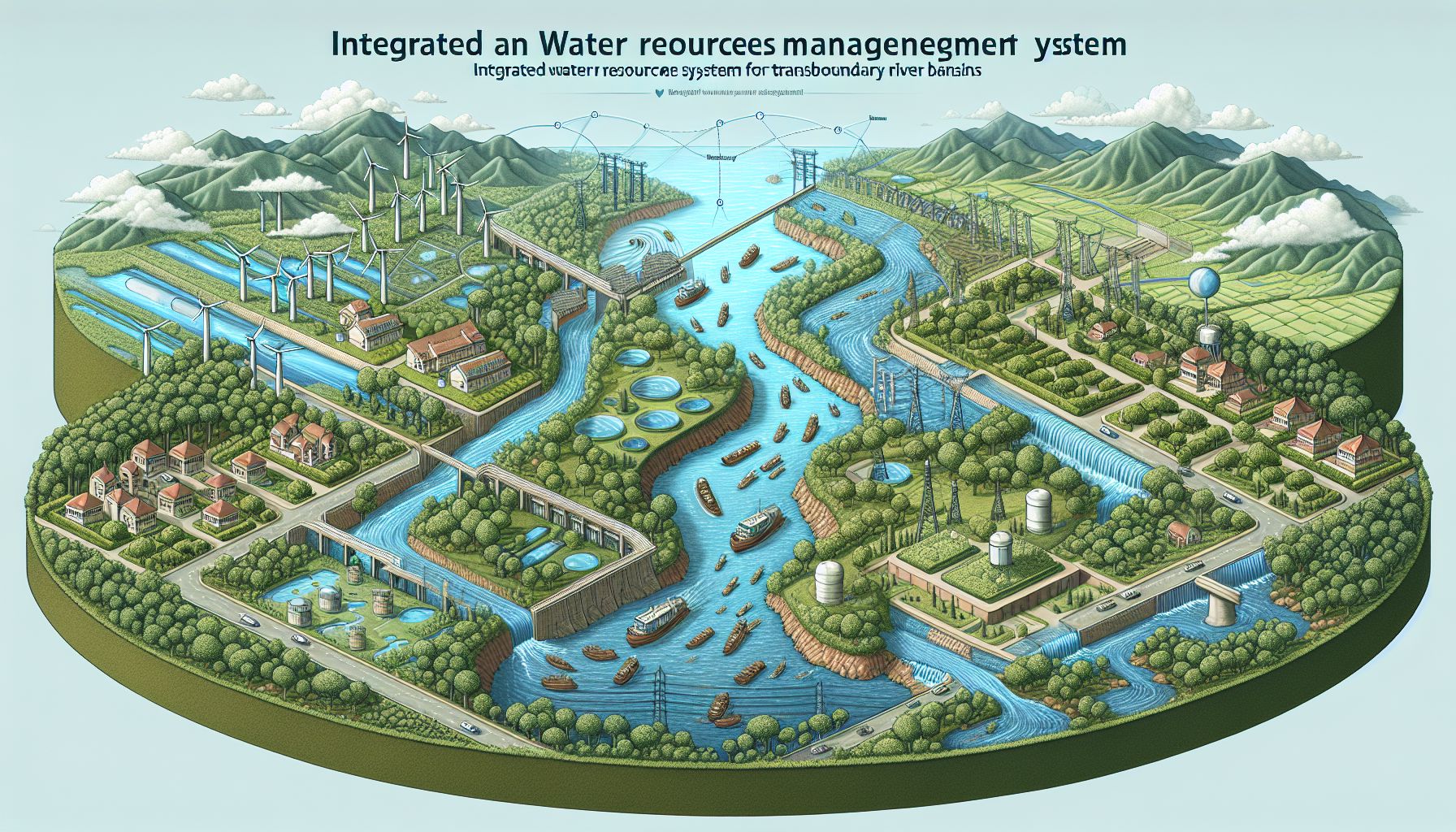
Water is a critical resource for life on Earth, and the management of water resources is a complex issue that spans geographical boundaries, political entities, and social structures. With the increasing demands on water supplies and the necessity for sustainable management practices, the concept of Integrated Water Resources Management (IWRM) has become central in addressing water challenges, especially in the context of transboundary river basins.
Transboundary river basins are water systems that cross at least one political border, whether it be a country, state, or jurisdiction. These basins are sources of livelihood, ecosystems services, and economic opportunities. However, they are also grounds for conflict and cooperation due to the shared nature of the water resource.
In this article, we will delve into the principles of IWRM, its importance, challenges, and strategies for effective implementation in the context of transboundary river basins.
Defining Integrated Water Resources Management (IWRM)
The Global Water Partnership defines IWRM as:
“A process which promotes the coordinated development and management of water, land and related resources, in order to maximize economic and social welfare in an equitable manner without compromising the sustainability of vital ecosystems.”
IWRM is an approach that takes into account the multiple uses and values of water, aiming to manage it in a holistic way. This ensures that the social, economic, and environmental needs are balanced, policy decisions are informed and coherent, and that water resources are utilized sustainably for the benefit of all.
The Importance of IWRM in Transboundary River Basins
As many countries share these transboundary basins, cooperative IWRM becomes essential for multiple reasons:
- Avoiding Conflicts: Countries reliant on shared water resources may have competing needs. IWRM ensures that all stakeholders engage in dialogue, promoting peace and stability.
- Ecosystem Protection: Transboundary basins support diverse ecosystems. IWRM contributes to the conservation of these ecosystems by considering ecological impacts in decision-making.
- Promotion of Sustainable Development: By balancing various needs and preserving water quality and quantity, IWRM promotes long-term development goals across borders.
Challenges for IWRM in Transboundary Contexts
Implementing IWRM in transboundary river basins presents unique challenges:
- Political and Jurisdictional Issues: Negotiating agreements across different jurisdictions and with different sets of laws and policies can be complicated.
- Data Sharing: Effective IWRM requires data sharing, which might be hindered due to trust issues or lack of data standardization.
- Varied Socioeconomic Contexts: Differences in economic development levels can affect countries’ capacities to participate effectively in IWRM.
- Climate Change: Changing climate patterns, resulting in floods or droughts, adds an additional layer of complexity to sustainable water management.
Strategies for Implementing IWRM in Transboundary River Basins
- Fostering Cooperation and Developing Legal Frameworks: Laying down clear legal frameworks and treaties helps set the rules for cooperation and conflict resolution.
- Capacity Building: Strengthening the technical and managerial capacities of all stakeholders, particularly in developing nations, ensures meaningful participation in IWRM processes.
- Joint Monitoring and Data Sharing: Sharing information about water quality, quantity, and usage is vital for transparency and informed decision-making.
- Involving a Wide Range of Stakeholders: Engaging local communities, non-governmental organizations, and private companies alongside government bodies helps in achieving an inclusive approach.
- Adopting a Basin-wide Approach: Implementing policies and projects with a view of the basin as a single ecological and hydrological system.
- Promoting Sustainable Practices: Encouraging water-saving technologies and practices, pollution control, and protection of water-related ecosystems.
Case Study: The Danube River Basin
The Danube River, flowing through 10 countries, is a prime example where IWRM principles have been successfully applied. The International Commission for the Protection of the Danube River (ICPDR) is an organization comprising member states cooperating to ensure the sustainable and equitable use of waters within the Danube basin. Focused on the whole river basin district, the ICPDR facilitates:
- Regular meetings and negotiations between countries.
- Consensus-building for basin-wide water management plans.
- A forum for discussing and solving transboundary water management issues.
The ICPDR has been able to develop river basin management plans, reduce pollution, and protect the water ecosystem by implementing IWRM strategies in a transboundary context.
Conclusion
Integrated Water Resources Management for transboundary river basins is an evolving field that offers a pragmatic foundation for coordinating the multiple aspects of water resource usage and protection. The challenges are formidable, but the potential for sustainable development and peace is significant.
As we look towards a future where water resources are under increasing pressure, the need for integrated management cannot be overstated. It is essential that countries and stakeholders work collaboratively to ensure the health and sustainability of these shared water systems.
Sources
- Global Water Partnership. IWRM ToolBox. https://www.gwp.org/en/learn/iwrm-toolbox/
- International Commission for the Protection of the Danube River. http://www.icpdr.org/main/
- UN-Water: Transboundary Waters. https://www.unwater.org/water-facts/transboundary-waters/
By understanding the principles, embracing the challenges, and working towards effective strategies, we can ensure that our shared waters are a source of cooperation rather than conflict, providing benefit for all the peoples and ecosystems that depend on them.