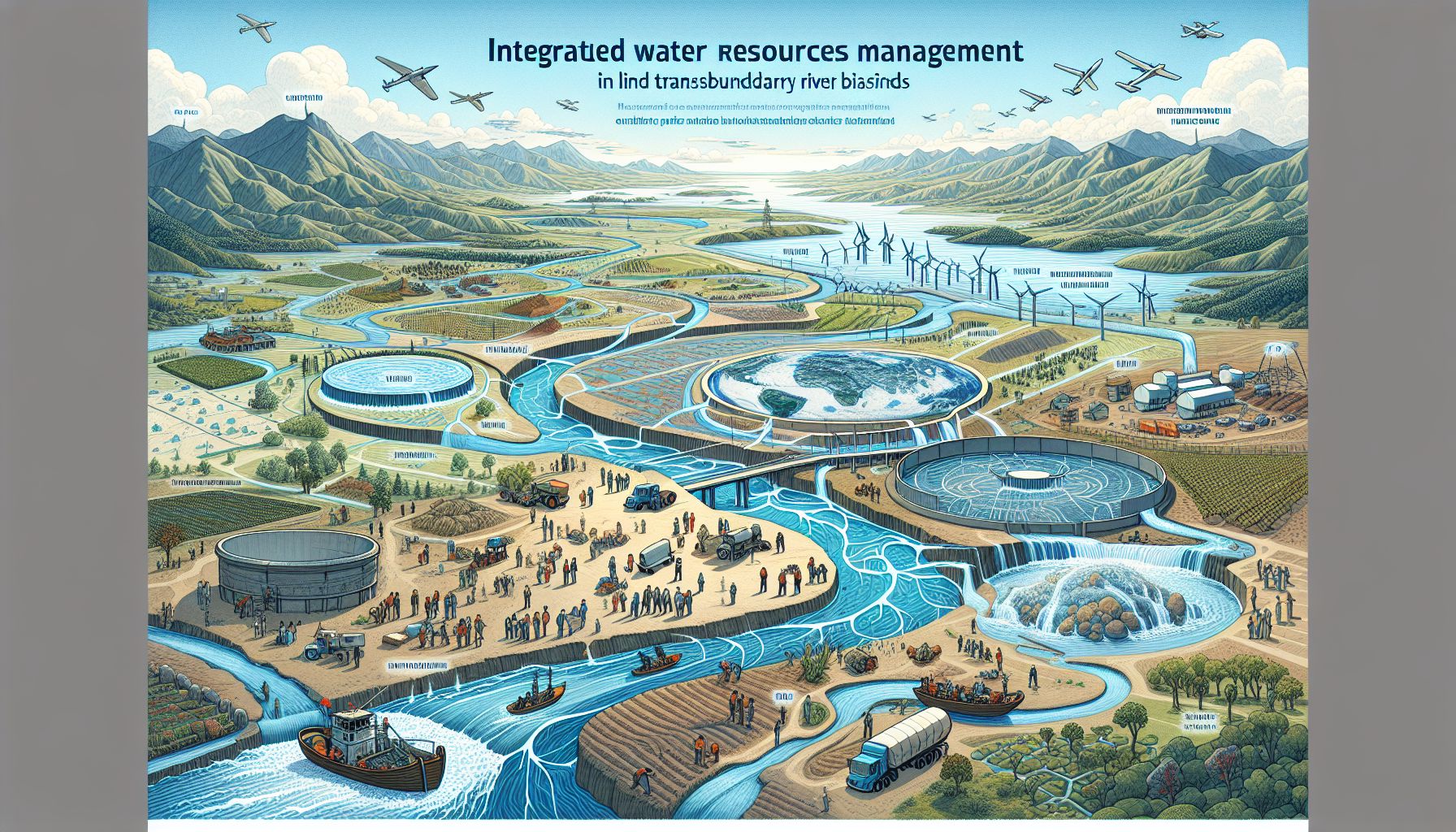
Water is the lifeblood of our planet, critical for the survival of ecosystems, agriculture, industry, and human communities. With the increasing pressure on water resources due to population growth, economic development, and climate change, the effective management of these resources is more crucial than ever. This is especially true for transboundary river basins, where water crosses political borders and becomes a shared resource among different nations. Integrated Water Resources Management (IWRM) offers a framework for managing water resources sustainably and equitably across such complex geopolitical landscapes.
Understanding Transboundary River Basins
A transboundary river basin is an area where a river flows across at least one political boundary, whether it be international or within state lines. These basins are sources of freshwater for millions, if not billions, of people. They are also the setting for a variety of human activities, from agriculture and hydropower generation to natural habitat preservation.
However, managing the water resources in a transboundary basin presents unique challenges. Different nations or regions might have conflicting interests, varying levels of economic development, diverse cultural practices, and differing regulatory frameworks. This complexity can lead to disagreements and, in some cases, conflicts.
What is Integrated Water Resources Management (IWRM)?
The Global Water Partnership (GWP) defines IWRM as a process that promotes the coordinated development and management of water, land, and related resources to maximize economic and social welfare without compromising the sustainability of vital ecosystems. IWRM is not a specific model but rather a set of principles and practices that can be adapted to different contexts, including transboundary river basins.
Principles of IWRM:
-
River Basin as the Unit of Management: This principle emphasizes that the natural geographic and hydrological unit, the river basin, should be the basic unit of management, rather than political or administrative units.
-
Cross-sectoral Approach: IWRM recognizes that water is an integral component of the environment, crucial for socioeconomic activities and affects various sectors. Hence, it calls for coordination beyond just the water sector.
-
Inclusivity and Participation: IWRM advocates for participatory decision-making, involving stakeholders at all levels – from policy-making to implementation.
-
Economic Efficiency, Equity, and Sustainability: The approach promotes the equitable and efficient use of water resources, ensuring their sustainability for future generations.
Implementation of IWRM in Transboundary Contexts
Approaches to IWRM in transboundary river basins include the establishment of joint management institutions, legal frameworks, and active cooperation among the states sharing the basin.
1. Institutional Frameworks
Joint commissions or river basin organizations (RBOs) are established to facilitate cooperation among basin countries. Examples include the Mekong River Commission and the International Commission for the Protection of the Danube River. These institutions help in data sharing, joint monitoring, and the coordinated management of shared waters.
2. Legal Instruments
Bilateral and multilateral treaties serve as the legal foundation for cooperation over transboundary waters. The UN Watercourses Convention provides a general legal framework to guide states in their management of international watercourses.
3. Integrated Policies
The integration of water management policies across borders ensures that actions in one country do not negatively impact another. Policies are developed considering the basin as a whole, engaging multiple sectors and stakeholders.
4. Shared Information and Knowledge
Data sharing is key to IWRM in a transboundary context. Sharing knowledge about water flows, usage, and forecasts allows for informed decision-making and helps build trust among nations.
5. Conflict Resolution Mechanisms
Given the potential for disputes, establishing mechanisms for conflict resolution is pivotal. These can range from dialogue forums to legal adjudication processes.
Examples and Case Studies
The implementation of IWRM in complex transboundary river basins has seen varying levels of success. Case studies can provide valuable insights:
-
The Nile Basin Initiative (NBI): The NBI brings together ten countries to find equitable and sustainable ways to share and manage the Nile River Basin’s water resources. Cooperation has been difficult due to the diverse interests of upstream and downstream countries, yet the initiative has made progress in fostering dialogue and joint projects.
-
The Rhine River: European nations along the Rhine have successfully cooperated for decades, leading to improved water quality and sustainable management of the river basin.
Challenges and Opportunities
Transboundary IWRM faces numerous challenges, including political tensions, varying levels of development, and climate change impacts. Yet, these challenges present opportunities for innovation, diplomacy, and strengthened regional integration.
Conclusion
Integrated Water Resources Management for transboundary river basins is a complex, yet essential, endeavor. Through collaboration, shared goals, and the recognition of the interconnected nature of water resources, nations can effectively manage these critical systems for the benefit of all.
References
- Global Water Partnership. (n.d.). What is IWRM? https://www.gwp.org/en/learn/iwrm-toolbox/What_is_IWRM/
- United Nations. (1997). Convention on the Law of the Non-Navigational Uses of International Watercourses (UN Watercourses Convention). https://legal.un.org/ilc/texts/instruments/english/conventions/8_3_1997.pdf
- Nile Basin Initiative. (n.d.). About us. https://nilebasin.org/index.php/about-us
Implementing IWRM in transboundary river basins can help address the challenges of the twenty-first century by promoting sustainable and peaceful coexistence, fostering economic growth, and protecting vital ecosystems. Efficient management of shared water resources requires continuous effort, commitment, and innovation from all stakeholders involved.