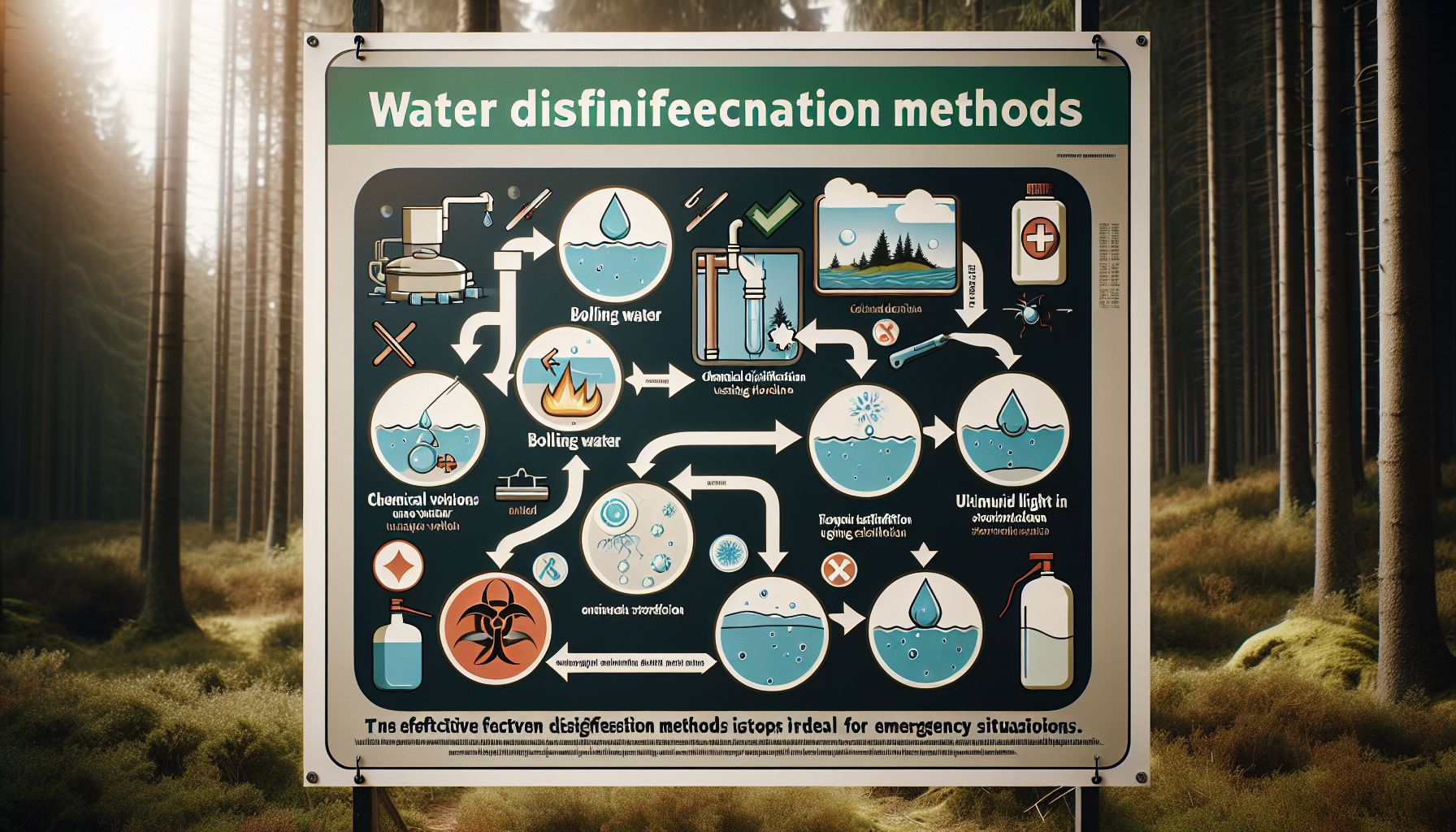
Water is the foundation of life, yet during emergency situations, safe water can turn from a given into a scarce resource. Whether due to natural disasters, infrastructure failure, or conflict, having reliable methods to disinfect water can mean the difference between health and illness, survival, and distress. This article delves into the effective water disinfection methods that are vital for emergency situations.
Importance of Water Disinfection in Emergencies
In the wake of an emergency, conventional water treatment systems may be compromised, leading to a potential spike in waterborne diseases. Safe drinking water is essential for hydration, cooking, and personal hygiene, and it is paramount to reduce the transmission of diseases such as cholera, dysentery, and typhoid, particularly in crisis-affected populations.
Boiling: The Time-Tested Method
One of the most accessible and reliable methods to disinfect water is by boiling. This method does not require sophisticated technology; just a heat source and a container. To effectively kill pathogens, water should be brought to a rolling boil for at least one minute. At high altitudes, boiling is recommended for three minutes due to the decrease in boiling temperature with elevation.
Advantages:
- Highly effective against various pathogens
- No chemical aftertaste
- Simple and accessible
Disadvantages:
- Requires fuel and a heat source
- Time-consuming
- May not eliminate chemical contaminants
Chlorination: The Chemical Approach
Chlorine is widely used in municipal drinking water systems for its effectiveness in killing harmful bacteria and viruses. In an emergency setting, household chlorine bleach can be used for water disinfection. Clear water should be treated with a recommended amount of bleach – usually around eight drops per gallon of water – and allowed to stand for at least 30 minutes.
Advantages:
- Kills a broad spectrum of pathogens
- Residual effect helps prevent recontamination
- Quantities can be easily scaled up for larger volumes
Disadvantages:
- Chlorine may not be readily available in all emergency settings
- Can leave a chemical taste
- Ineffectiveness against some protozoa, like Cryptosporidium
Solar Disinfection: Harnessing the Sun
Solar disinfection, or SODIS, is an innovative and low-cost method leveraging ultraviolet (UV) light from the sun to kill pathogens in contaminated water. Clear plastic bottles are filled with water and placed under direct sunlight for six hours, or two days if the sky is 50% cloudy.
Advantages:
- Inexpensive and easy to implement
- No need for chemicals or fuel
- Environmentally friendly
Disadvantages:
- Weather-dependent
- Time-consuming
- Requires clear plastic bottles and sunlight
Filters: Mechanical Solutions
Portable water filters, designed for emergency or backcountry use, can physically remove contaminants, including bacteria and protozoa. Filters with a pore size of 0.2 microns are generally sufficient to exclude common pathogens. Some filters are also treated with chemical disinfectants for added safety.
Advantages:
- Range of options from individual use to community scale
- Quick and convenient
- Some models can remove chemical contaminants
Disadvantages:
- May not filter out viruses
- Require maintenance and replacement parts
- Initial cost can be high
UV Light: The High-Tech Option
Portable UV light purifiers use ultraviolet light to inactivate harmful pathogens. Water is exposed to a UV light source for a short period, typically under a minute, disrupting the DNA of microorganisms and rendering them harmless.
Advantages:
- Lightweight and portable
- Effective against a wide range of pathogens
- Fast treatment time
Disadvantages:
- Requires batteries or another power source
- Relatively expensive
- May not work well in turbid water
Combination Treatments: Synergistic Approaches
Given the various advantages and limitations of each method, combining treatments can sometimes offer the best protection. For instance, water can be pre-filtered to remove turbidity and then treated with chlorine or UV purifiers for pathogen removal.
Advantages:
- Can address a wider range of contaminants
- Increased effectiveness
- Can compensate for the limitations of individual methods
Disadvantages:
- More complex to implement
- Increased initial cost
- Requires understanding and training
Challenges in Emergency Water Disinfection
Implementing these methods in emergency contexts isn’t without challenges. Education and training are integral to ensure proper use. Availability of materials and equipment, as well as environmental factors like climate and infrastructure, also shape the feasibility of these methods.
Conclusion
Access to safe drinking water is a critical concern in emergency situations. Each of the methods above provides a line of defense against waterborne diseases when conventional water systems fail. Whether through tried-and-true boiling, chemical treatments, or innovative solar methodologies, ensuring that individuals and communities have the know-how and tools to purify their water is a vital preparation for emergencies.
The efficacy and practicality of these methods will depend on the specific circumstances and resources available in each emergency context. It is crucial to promote education and preparedness to empower people to secure safe water in times of crisis, safeguarding health and well-being when they are most at risk.
References
- World Health Organization (WHO). (n.d.). Water sanitation health. https://www.who.int/water_sanitation_health/emergencies/emergdisinfwater/en/
- Centers for Disease Control and Prevention (CDC). (n.d.). Making water safe in an emergency. https://www.cdc.gov/healthywater/emergency/drinking/making-water-safe.html
- The Sphere Project. (2011). Humanitarian Charter and Minimum Standards in Humanitarian Response. https://spherestandards.org/