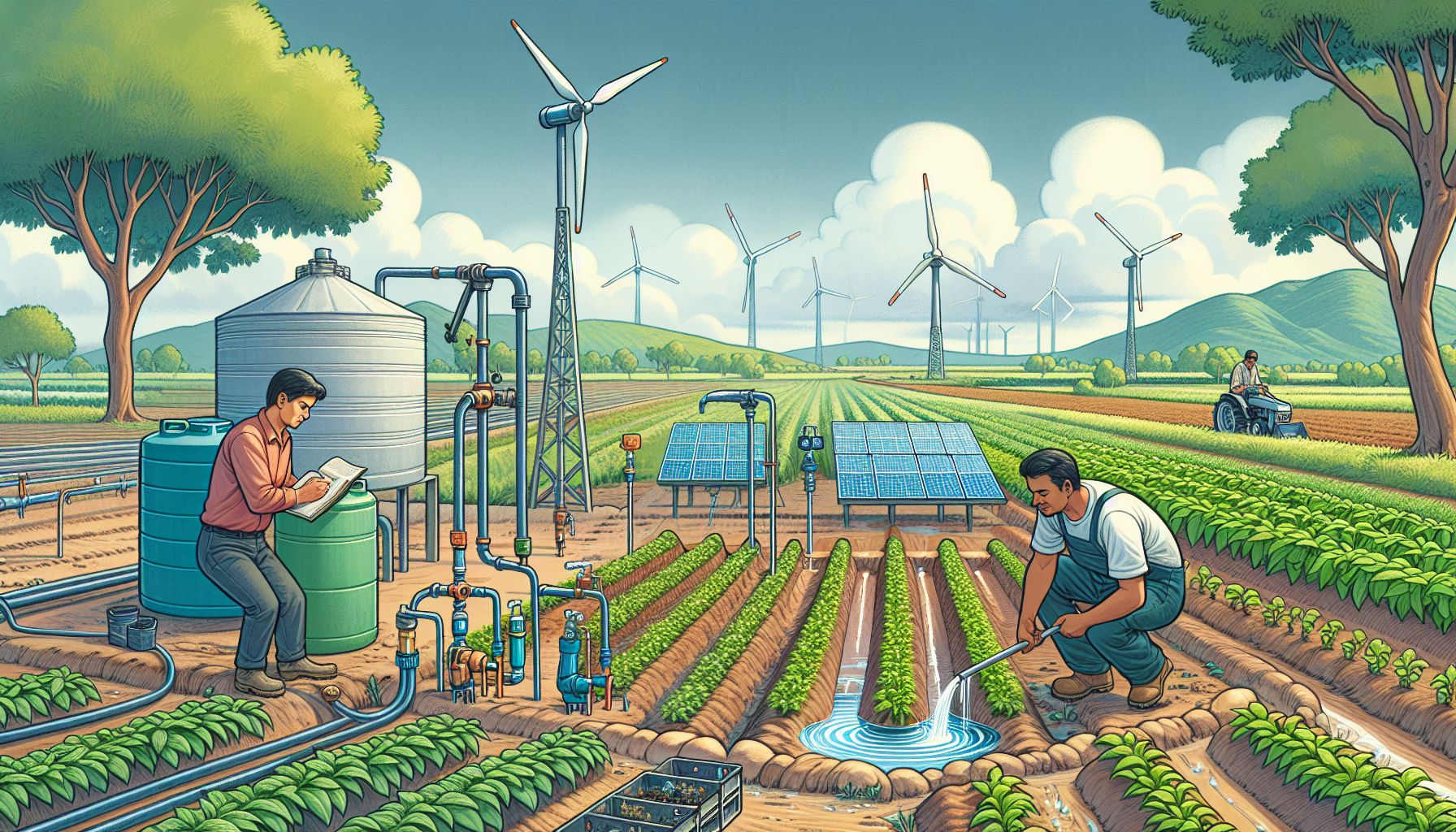
Agriculture is a major consumer of fresh water globally, accounting for about 70% of all freshwater withdrawals. As the world’s population grows and the effects of climate change intensify, the need for sustainable water management in agriculture becomes increasingly crucial. This article discusses various practices and strategies that can be adopted to conserve water and ensure its efficient use in agricultural settings.
Understanding Water Usage in Agriculture
Before deep diving into the sustainable practices, it’s essential to understand how and why water is used in agriculture. Irrigation is the most common use of water in agriculture, used to grow crops in dry regions or during periods of insufficient rainfall. Livestock farming also requires considerable amounts of water for animals to drink, for cleaning, and for processing animal products.
The Challenge of Water Scarcity
Water scarcity is a growing concern, particularly in drought-prone areas. Factors contributing to water scarcity include increased demand from various sectors, reduced supply due to climate change-induced changes in rainfall patterns, and pollution of water sources.
Sustainable Water Management Practices
To address these challenges, sustainable water management practices have been developed and are being increasingly adopted by farmers around the globe. Below is a list of some of these practices.
1. Improved Irrigation Techniques
Drip Irrigation: This system delivers water directly to the plant roots, minimizing evaporation and runoff. It’s highly efficient and can lead to significant water savings.
Sprinkler Systems: More efficient than traditional flood irrigation, modern sprinkler systems can be designed to reduce water waste and provide uniform water distribution.
2. Soil Moisture Management
Conservation Tillage: This practice limits soil disturbance, aiding in the retention of soil moisture and reducing the need for water.
Mulching: Applying a layer of organic matter on the soil surface can reduce evaporation and help retain moisture.
3. Rainwater Harvesting
Collecting and storing rainwater for irrigation is an age-old practice that can supplement irrigation requirements, especially in water-scarce regions.
4. Crop Selection
Opting for drought-resistant or native crop varieties can significantly reduce water dependency.
5. Water Recycling
Using treated wastewater for irrigation can conserve freshwater sources and reduce environmental pollution.
6. Scheduling and Monitoring
Irrigation Scheduling: This involves watering crops only when necessary based on weather conditions, soil moisture levels, and crop needs.
Remote Sensing: Satellite imagery and sensors can help farmers monitor crop health and water requirements more accurately.
7. Integrated Pest and Nutrient Management
Efficient use of fertilizers and pesticides reduces the need for excess irrigation, which is often used to flush out these chemicals from over-saturated soils.
8. Agroforestry
Integrating trees into agricultural systems helps in maintaining groundwater levels and reducing soil evaporation.
9. Constructed Wetlands
Creating wetlands within or near agricultural land helps in natural water filtration and can supply a secondary water source for irrigation.
10. Policy and Farmer Support
Implementing policies that promote water conservation and providing education and resources to farmers can lead to the adoption of more sustainable practices.
The Role of Technology
Technology plays a significant role in sustainable agricultural water management. Precision agriculture, which includes the use of drones, IoT devices, and smart sensors, can monitor crop health, soil conditions, and weather patterns. This information allows for better decision-making regarding irrigation and resource allocation.
The Benefits of Sustainable Water Management
By adopting sustainable water management practices, farmers receive several benefits:
- Increased crop yield: Proper water management can lead to healthier crops and potentially higher yields.
- Reduced costs: Efficient water use can lower water bills and reduce the need for expensive water transport infrastructure.
- Environmental benefits: Sustainable practices help conserve water and protect local ecosystems from agricultural runoff and overextraction of water resources.
- Resilience to climate change: Better water management makes agricultural systems more resilient to erratic weather patterns and prolonged droughts.
Challenges in Implementation
Despite the benefits, there are barriers to implementing sustainable water management practices:
- Initial Costs: Some techniques require a significant initial investment in infrastructure, which may be a deterrent, especially for small-scale farmers.
- Knowledge Gap: Farmers may not be aware of these practices or know how to implement them effectively.
- Inconsistent Policies: Supportive policies and subsidies are crucial to encourage farmers to adopt sustainable practices, but these are often inconsistent across regions.
Case Studies and Models of Success
There are numerous success stories where sustainable water management practices have proven successful. For example, Israel, a country with limited water resources, has become a global leader in drip irrigation technology. Similarly, the System of Rice Intensification (SRI), developed in Madagascar, is a method that significantly reduces water usage while increasing rice yields.
Looking Forward
For sustainable water management practices to be widely adopted, concerted efforts from governments, NGOs, the private sector, and the farmers themselves are necessary. Education and training programs, along with financial and policy support, will be critical in driving this change.
Conclusion
Sustainable water management practices in agriculture represent a beacon of hope for the future of not just farming, but the entire ecosystem. With the intelligent application of these practices and supportive policies, the agricultural sector can contribute to the preservation of this vital resource while ensuring food security for the growing global population.
Sources
- Food and Agriculture Organization of the United Nations (FAO) – Coping with water scarcity in agriculture
- United States Department of Agriculture (USDA) – Irrigation & Water Use
- International Water Management Institute (IWMI) – Solutions for Sustainable Agriculture and Environment
Implementing these practices and promoting sustainability in water use are essential for the long-term viability of the agriculture industry, as well as for the health of our planet. It requires a shared understanding and collective effort to manage this precious resource judiciously.