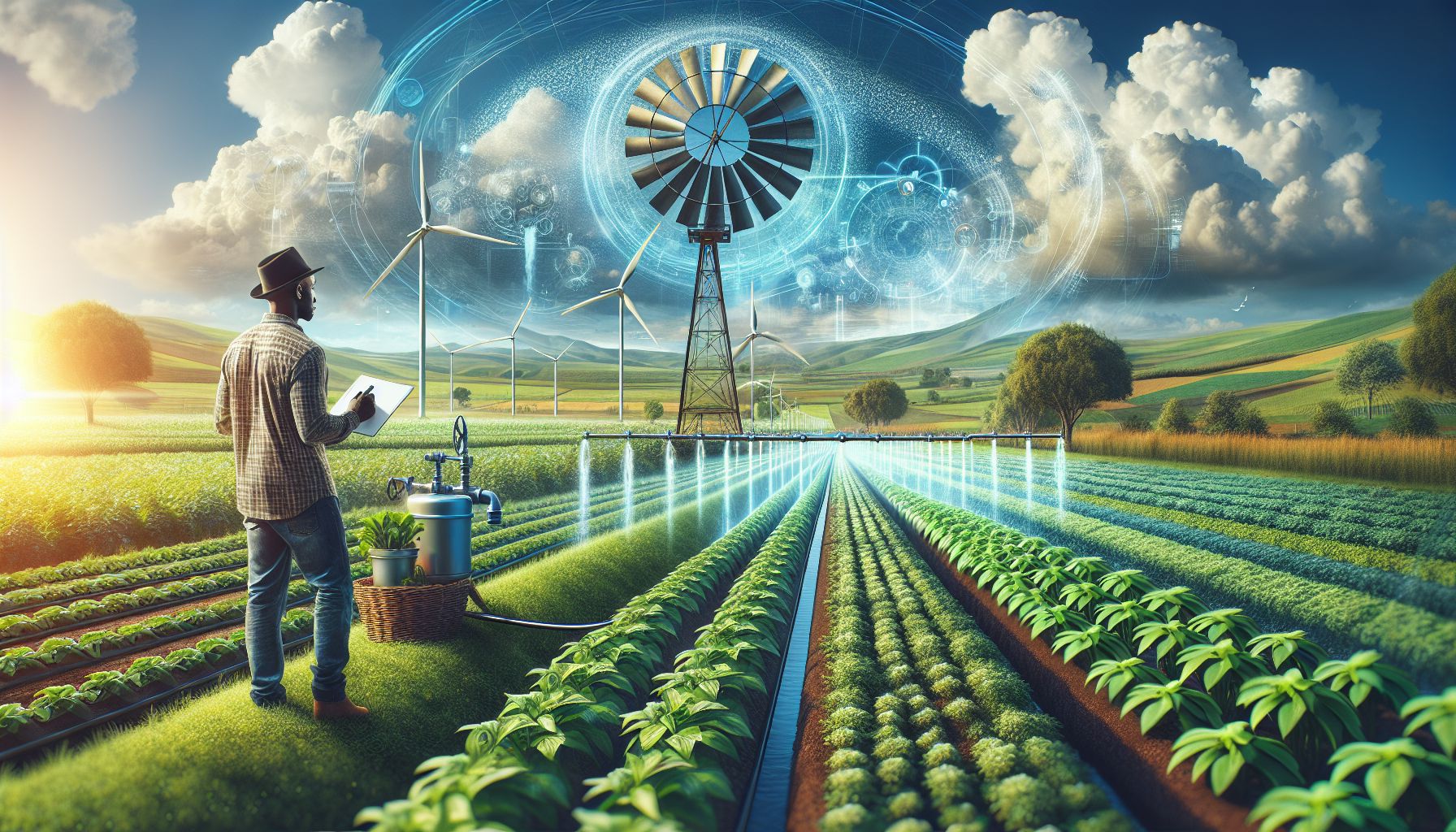
The nourishment of our planet and the livelihood of countless individuals depend on agriculture. Yet, agriculture is both a victim and a contributor to water scarcity issues. As populations rise and climate change exacerbates the strain on water resources, sustainable water management in agriculture isn’t just a choice anymore; it’s imperative for survival. This article delves into sustainable water management practices essential for modern agriculture, aiming to secure long-lasting water availability for future generations while supporting the agrarian community.
The Necessity for Sustainable Water Management in Agriculture
With agriculture consuming about 70% of the freshwater withdrawals globally, efficient water use is pivotal to balance the needs of our growing population with environmental sustainability. As noted by FAO, agriculture’s water management needs to evolve to meet the dual challenge of producing more food while using less water, particularly in areas with limited water resources.
Conservation Tillage
Conservation tillage involves reducing the frequency of soil tillage and maintaining a protective cover of organic material on the soil surface. This method retains water in the soil by decreasing evaporation and runoff, improving water infiltration, and enriching the soil’s water-holding capacity.
Crop Rotation and Diversification
Rotating crops and cultivating various species in the same field not only breaks pest cycles and enhances soil health but also regulates water use. Different plants have varying water needs; through strategic planning, farmers can maximize yield and minimize water waste.
Drip Irrigation
Drip irrigation targets water directly to the plant roots, minimizing evaporation and runoff. It is one of the most efficient irrigation methods, with efficiencies upwards of 90% compared to 60% for traditional flood irrigation. The system can be further optimized by automating irrigation schedules based on real-time data about soil moisture, weather forecasts, and plant water use.
Rainwater Harvesting
Collecting and storing rainwater for irrigation purposes can significantly reduce reliance on groundwater or surface water. Simple solutions like rain barrels or more complex systems involving ponds and reservoirs can be implemented to harvest rainwater.
Soil Moisture Sensing and Weather Monitoring
Precision agriculture employs sensors and weather stations to provide real-time data on soil moisture and climatic conditions. By integrating this data with smart irrigation systems, watering can be optimized to match the exact needs of crops, preventing overuse or underuse of water.
Mulching
Mulching involves covering the soil around plants with organic materials like straw, leaves, or compost. This practice reduces evaporation, maintains consistent soil temperatures, and adds organic matter to the soil, increasing its ability to retain water.
Agroforestry and Cover Crops
Integrating trees (agroforestry) and cover crops into agricultural systems provides shade and reduces soil temperature, thereby reducing evaporation. Moreover, they help in maintaining soil structure and preventing erosion, improving the soil’s water retention ability.
Managed Aquifer Recharge
Managed aquifer recharge (MAR) is a technique where excess surface water is intentionally infiltrated into groundwater aquifers for later recovery and use. It’s an effective strategy for storing surplus water during wet periods for usage during dry spells.
Water Recycling and Reuse
Agricultural runoff and wastewater can be treated and reused for irrigating crops. Technologies like constructed wetlands or simple settling ponds can be employed to clean this water to an appropriate quality for irrigation.
Farmer Education and Training
Education is critical in implementing sustainable agriculture practices. Training farmers to understand the value of water conservation, as well as how to effectively use new technologies and techniques, is fundamental to achieving sustainable water management.
Policy Support and Incentives
Governments and organizations need to establish policies and incentives that encourage the adoption of sustainable practices. Subsidies for water-efficient technology, grants for research, and regulations that promote water conservation can play a crucial role in managing agricultural water sustainably.
International Examples of Sustainable Water Management
Israel’s Drip Irrigation
Israel is renowned for pioneering modern drip irrigation systems. According to a case study by Irrigation Direct Canada, this nation has become a leader in efficient water use and agricultural productivity, demonstrating how arid regions can thrive agronomically.
California’s Sustainable Groundwater Management Act
California has taken legislative steps to ensure groundwater sustainability through its Sustainable Groundwater Management Act (SGMA). It requires the development of Groundwater Sustainability Plans, a legislative move other regions could mirror (California Department of Water Resources).
The Netherlands’ Precision Farming
The Netherlands has long focused on precision farming, using high-tech methods to minimize water and fertilizer use while maximizing crop yields. The country’s agricultural success story is directly linked to its investment in innovative and sustainable practices.
Conclusion
Sustainable water management in agriculture is a multifaceted endeavor that calls for the integration of traditional knowledge with advanced technology. By combining methods like conservation tillage, crop rotation, drip irrigation, and rainwater harvesting with policies that support sustainable practices, agriculture can thrive without compromising our precious water resources.
As the global population continues to grow and climate uncertainty increases, these strategies will be vital in securing food security and ecological balance. The health of our planet and the stability of future generations depend on our ability to adapt and adopt more sustainable water management practices in the field of agriculture.